Addressing a field that has been dominated by astronomers, physicists, engineers, and computer scientists, the contributors to this collection raise questions that may have been overlooked by physical scientists about the ease of establishing meaningful communication with an extraterrestrial intelligence. These scholars are grappling with some of the enormous challenges that will face humanity if an information-rich signal emanating from another world is detected. By drawing on issues at the core of contemporary archaeology and anthropology, we can be much better prepared for contact with an extraterrestrial civilization, should that day ever come.
Dr. Francesco D’Eugenio: “The galaxy looks like a calm, rotating disc. That tells us it didn’t suffer a major, disruptive merger with another galaxy.”
What were galaxies like in the early universe? This is what a recent study published in Nature Astronomy hopes to address as an international team of scientists investigated the formation and evolution of the first galaxies after the Big Bang. This study has the potential to help scientists better understand the conditions of the early universe and what this could mean for the development of life throughout the cosmos.
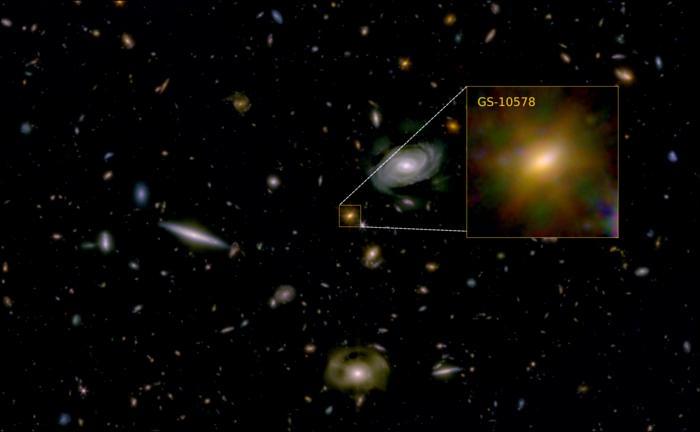
For the study, the researchers used a combination of data obtained from NASA’s James Webb Space Telescope (JWST) and the Atacama Large Millimeter Array (ALMA) located in Chile to examine “Pablo’s Galaxy” (officially designated as GS-10578) and is estimated to have existed approximately three billion years after the Big Bang. For context, the Big Bang is estimated to have occurred approximately 13.8 billion years ago. Using this data, the researchers discovered that Pablo’s Galaxy had a very short lifespan due to a lack of star formation from the galaxy’s black hole heated all of the cold gas, preventing new stars from forming.
For 21 years, between 1999 and 2020, millions of people worldwide loaned UC Berkeley scientists their computers to search for signs of advanced civilizations in our galaxy.
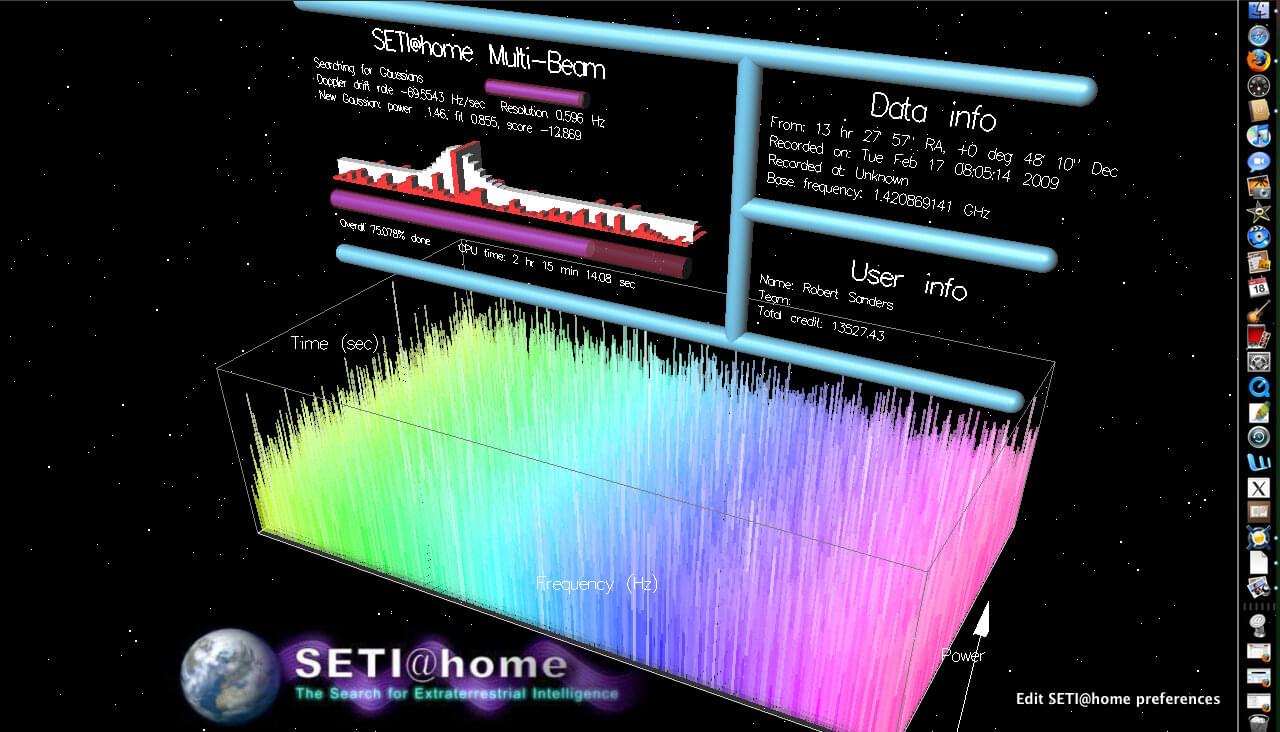
The project—called SETI@home, after the Search for Extraterrestrial Intelligence (SETI)—generated a loyal following eager to participate in one of the most popular crowd-sourced projects in the early days of the internet. They downloaded the SETI@home software to their home computers and allowed it to analyze data recorded at the now-defunct Arecibo Observatory in Puerto Rico to find unusual radio signals from space.
All told, these computations produced 12 billion detections— momentary blips of energy at a particular frequency coming from a particular point in the sky, according to computer scientist and project co-founder David Anderson.
This video explores aliens, mind uploading to other species, genetic engineering, and future robots.
SOURCES: • https://en.wikipedia.org/wiki/Eagle_eye#:~… https://www.scientificamerican.com/ar… • https://en.wikipedia.org/wiki/Human_c… ___ 💡 Future Business Tech explores the future of technology and the world. Examples of topics I cover include: • Artificial Intelligence & Robotics • Virtual and Augmented Reality • Brain-Computer Interfaces • Transhumanism • Genetic Engineering SUBSCRIBE: https://bit.ly/3geLDGO ___ This video explores the future of ChatGPT and 10 ways it could change society. Other related terms: aliens, alien species, advanced civilization, genetic engineering, robot, mind upload, mind uploading, brain computer interface, artificial intelligence, ai, future business tech, future technology, future technologies, etc. ℹ️ Some links are affiliate links. They cost you nothing extra but help support the channel so I can create more videos like this. #alien #aliens #avatar #avatar2 #geneticengineering #braincomputerinterface. • https://vcahospitals.com/know-your-pe… • https://www.scientificamerican.com/ar… • https://en.wikipedia.org/wiki/Human_c…
💡 Future Business Tech explores the future of technology and the world.
Examples of topics I cover include: • Artificial Intelligence & Robotics. • Virtual and Augmented Reality. • Brain-Computer Interfaces. • Transhumanism. • Genetic Engineering.
This video explores the future of ChatGPT and 10 ways it could change society. Other related terms: aliens, alien species, advanced civilization, genetic engineering, robot, mind upload, mind uploading, brain computer interface, artificial intelligence, ai, future business tech, future technology, future technologies, etc.
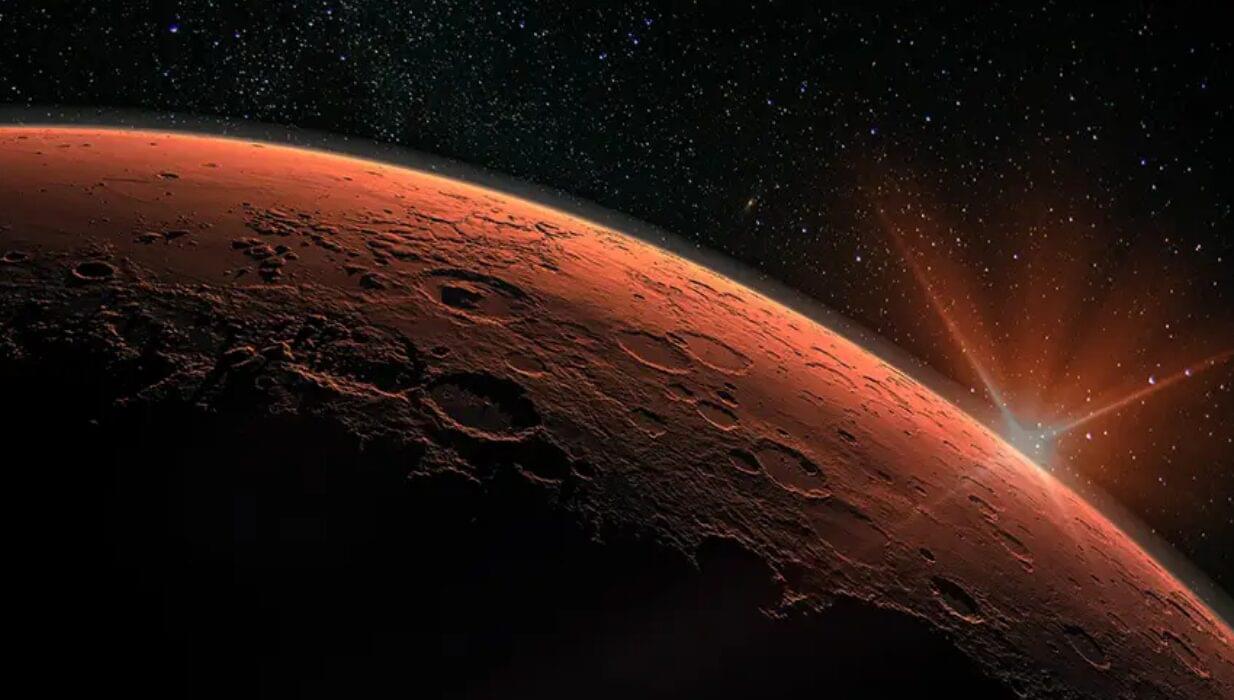
Hidden ice beneath Mars’ surface may mark the spot where humanity first sets foot on the Red Planet. A newly identified region on Mars may hold the key to future human landings. Researchers found evidence of water ice less than a meter beneath the surface, close enough to be harvested for water, oxygen, and fuel. The location strikes a rare balance between sunlight and cold, helping preserve the ice. It could also offer clues about whether Mars once supported life.
Before humans can make the long trip to another world, scientists must identify a safe and practical place to land. New research led by a University of Mississippi scientist suggests one region on Mars may meet many of the requirements for future human missions.
Erica Luzzi, a planetary geologist and postdoctoral researcher with the Mississippi Mineral Resources Institute, led a study that uncovered signs of water ice located just below the Martian surface. The research, published in the Journal of Geophysical Research: Planets, points to a possible local water supply that astronauts could rely on during extended stays on Mars.
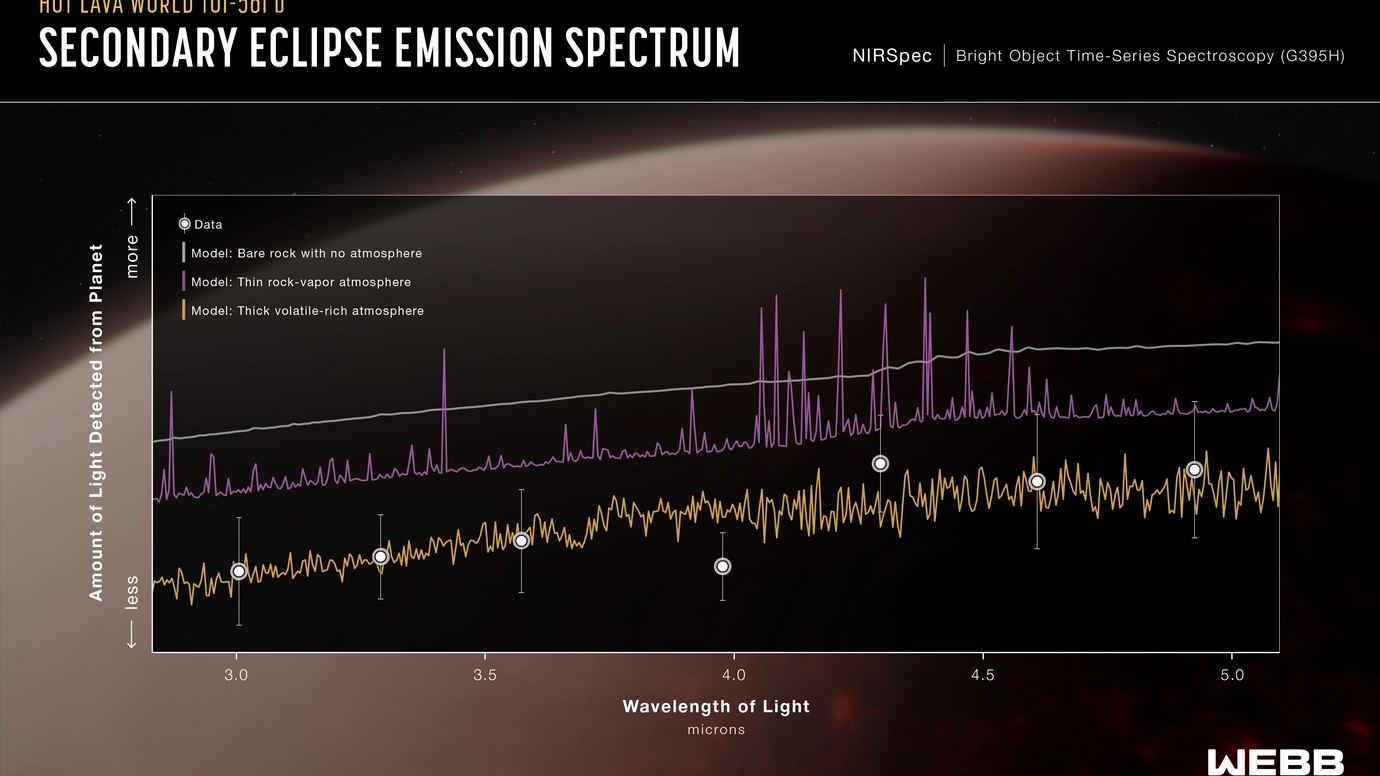
A Carnegie-led team of astronomers detected the strongest evidence yet of an atmosphere around a rocky planet beyond our solar system. Their work, published in The Astrophysical Journal Letters, used NASA’s JWST to reveal an alien atmosphere in an unexpected place—an ancient, ultra-hot super-Earth that likely hosts a magma ocean.
TOI-561 b is a rocky world that’s about twice Earth’s mass but bears little resemblance to our home planet due to its proximity to its host star. Although the star is slightly less massive and cooler than our sun, the planet orbits at one fortieth the distance of Mercury in our own solar system. On TOI-561 b, a year lasts just 10.56 hours, and one side of the planet is in perpetual daylight.
“Based on what we know about other systems, astronomers would have predicted that a planet like this is too small and hot to retain its own atmosphere for long after formation,” explained Carnegie Science Postdoctoral Fellow Nicole Wallack, the paper’s second author. “But our observations suggest it is surrounded by a relatively thick blanket of gas, upending conventional wisdom about ultra-short-period planets.”
Is there other life out there in the universe? Do aliens really exist? If so, then where are they all?! In this most epic of episodes, Dom has his favourite film (Aliens) interrupted by an extraterrestrial visitor — how very inconsiderate! As he prepares his arsenal to avoid alien abduction, he investigates the odds of life being out there in the galaxy, why we haven’t found it yet and what it might look like if we ever do.
A huge thanks to Vlogbrothers for their sponsorship of this video.
Credits DOP/Cam Op — Phil Beastall. Assistant Camera/ Focus Puller — Richard Bertenshaw. Script Minder — Nicki Burgess. Boom Mic/ Runner — Joe Simkins. Runner — Carrick Stimson-Machers. Everything else — Dom Burgess.
*Thank you to my Patrons!* Alfie Renn. Andrew Rice. Chad Trotter. Chris Harrison. Curiository. Dominique Toepfer. Kevin O’Connor. Luke Roulstone. Neuro Transmissions. Richard Peter Hunter. Shaun Steenkamp. Steven Clarke. Louis Klein. Nefreyu.
The universe should be full of alien civilisations. Billions of stars, billions of planets… yet all we hear is silence. This mystery is known as the Fermi Paradox. But what if the silence isn’t natural? What if it’s enforced?
The Berserker Hypothesis suggests that advanced civilisations may have unleashed self-replicating machines designed to seek out and exterminate intelligent life. These deadly Von Neumann probes could roam the galaxy, wiping out civilisations one by one, leaving behind only empty, lifeless worlds.
In this video, we explore:
The origins of the Berserker Hypothesis in both science fiction and science.
Stephen Wolfram, a physicist, computer scientist and founder of Wolfram Research, has been hunting for a theory of everything since his first days as a particle physicist at Caltech. Wolfram put that mission to the side to focus on his business, but the success of artificial intelligence and computational science has encouraged Wolfram to pick up the quest to understand the universe once again, with renewed vigour.
About New Scientist: New Scientist was founded in 1956 for “all those interested in scientific discovery and its social consequences”. Today our website, videos, newsletters, app, podcast and print magazine cover the world’s most important, exciting and entertaining science news as well as asking the big-picture questions about life, the universe, and what it means to be human.
A new study led by a Georgia State University astronomy graduate student is a major step forward in the search for stars that could host Earth-like planets that may prove to be good havens for life to develop. Sebastián Carrazco-Gaxiola shared the results at the January 2026 meeting of the American Astronomical Society in Phoenix, Ariz.
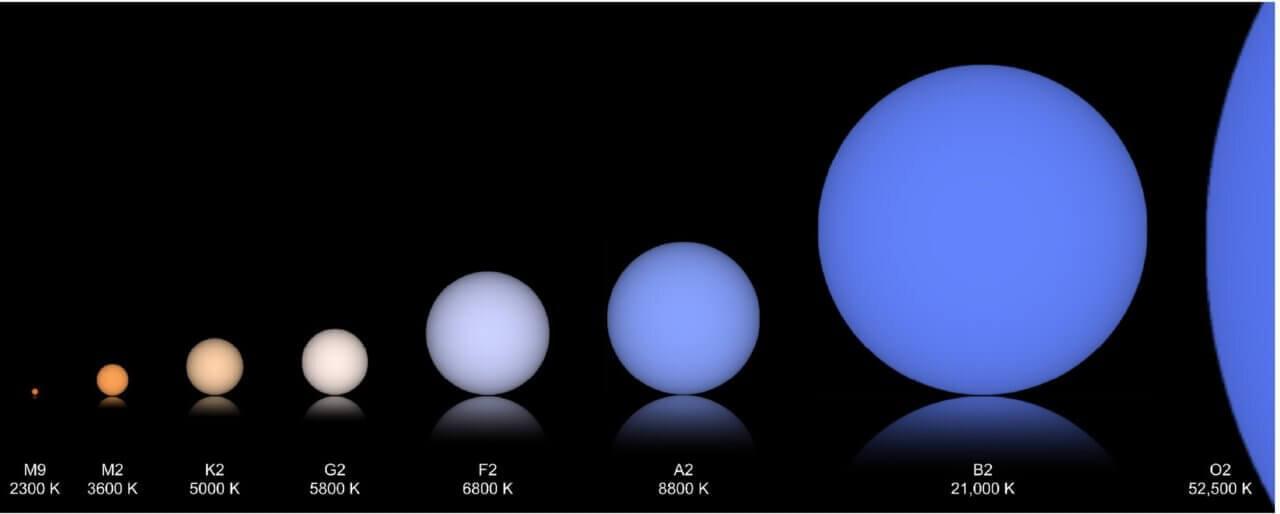
“This survey marks the first comprehensive look at thousands of the sun’s lower-mass cousins,” Carrazco-Gaxiola said. “These stars, known as ‘K dwarfs,’ are commonly found throughout space, and they provide a long-term, stable environment for their planetary companions.”