Toggle light / dark theme

Filipina High School Student Discovered ‘Aratiles’ Fruit as Potential Cure for Diabetes, Wins Intel International Science and Engineering Fair (ISEF) in Phoenix, Arizona, USA

This 16-year-old high school student from Iloilo went viral after discovering the properties of Aratiles fruit or Sarisa that can cure diabetes.

The young Filipina scientist was identified as Maria Isabel Layson, was one of the winners of the 2019 National Science and Technology Fair (NSTF), that was held last February.

She was also one of the 12 candidates sent to the International Science and Engineering Fair in Phoenix, Arizona USA to represent the Philippines in one of the biggest pre-college science research competition in the world and was the first in her batch to receive Gokongwei Brothers Foundation Young Scientist Award.


New twist on CRISPR technology

In a classic episode of an old-school TV comedy called I Love Lucy, we see Lucille Ball stepping into an assembly line job at a candy factory. As the pace of the conveyor belt exceeds her ability to wrap the candy, the frenzy gets the best of her. She shoves candy into her pockets, into her hat, into her mouth—it’s a job fail.

As we know, faster doesn’t always mean better. And precision can take a big bite out of speed.

Sometimes, though, innovative minds come up with a new strategy that improves both efficiency and precision.

‘Transhumanist’ eternal life? No thanks, I’d rather learn not to fear death

While the transhumanism movement is making progress, it isn’t without its skeptics. Some don’t think it will ever work the way we want it to, because it asks science to turn back a natural process of aging that has an uncountable number of manifestations. Critics of anti-aging research envision any number of dystopian futures, in which we defeat many of the causes of death before very old age, leaving only the most ghastly and intractable — but not directly lethal — maladies.


Lest you think this concept is limited to snake-oil salesmen and science-fiction writers, the idea that aging is not inevitable is now in the mainstream of modern medical research at major institutions around the world. The journal Nature dubbed research from the University of California at Los Angeles a “hint that the body’s ‘biological age’ can be reversed.” According to reporting by Scientific American on research at the Salk Institute for Biological Studies: “Aging Is Reversible — at Least in Human Cells and Live Mice.”

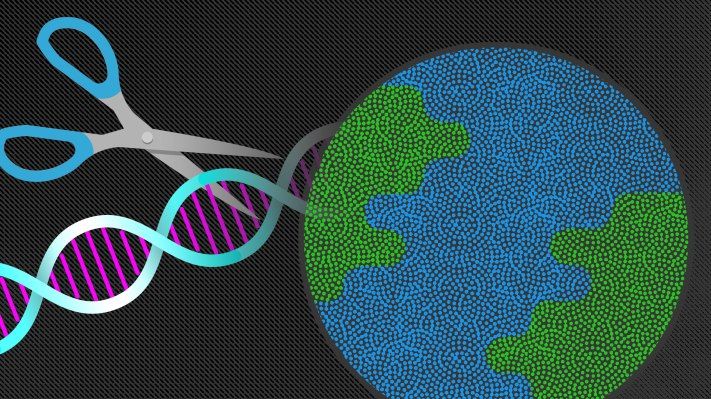
You’ve heard of CRISPR, now meet its newer, savvier cousin CRISPR Prime

CRISPR, the revolutionary ability to snip out and alter genes with scissor-like precision, has exploded in popularity over the last few years and is generally seen as the standalone wizard of modern gene-editing. However, it’s not a perfect system, sometimes cutting at the wrong place, not working as intended and leaving scientists scratching their heads. Well, now there’s a new, more exacting upgrade to CRISPR called Prime, with the ability to, in theory, snip out more than 90% of all genetic diseases.

Just what is this new method and how does it work? We turned to IEEE fellow, biomedical researcher and dean of graduate education at Tuft University’s school of engineering Karen Panetta for an explanation.

Bacteria in the gut may alter aging process, study finds

This could be happening to me.


An international research team led by Nanyang Technological University, Singapore (NTU Singapore) has found that microorganisms living in the gut may alter the aging process, which could lead to the development of food-based treatment to slow it down.

All , including human beings, coexist with a myriad of microbial species living in and on them, and research conducted over the last 20 years has established their important role in nutrition, physiology, metabolism and behavior.

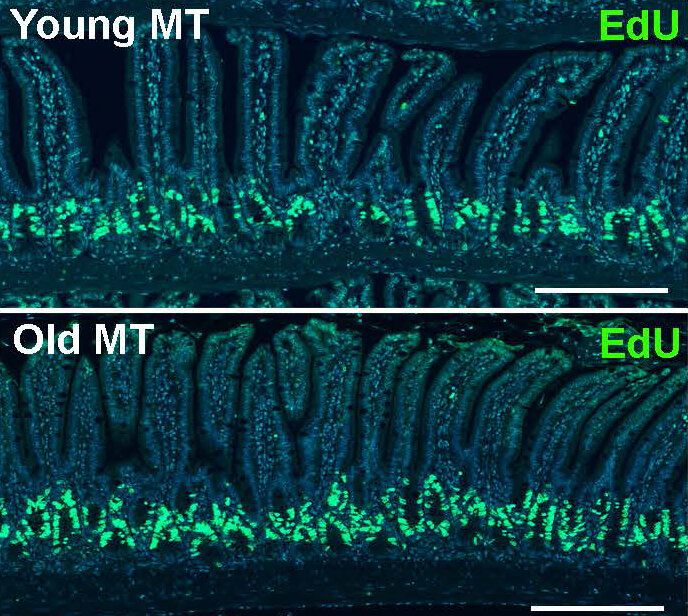
Using , the team led by Professor Sven Pettersson from the NTU Lee Kong Chian School of Medicine, transplanted gut microbes from (24 months old) into young, germ-free mice (six weeks old). After eight weeks, the had increased intestinal growth and production of neurons in the brain, known as neurogenesis.

/* */