Toggle light / dark theme

Senescent cells after pregnancy may fuel postpartum breast cancer spread

Postpartum breast cancer is diagnosed five to ten years after giving birth. It is associated with a higher risk of metastasis and a lower survival rate compared with women who have not been pregnant or those diagnosed during pregnancy. A team from the Institut Pasteur set out to understand the mammary gland mechanisms involved in tumor formation during involution, a major tissue remodeling process that occurs after pregnancy.

In a preclinical study, the scientists revealed how senescence, a cellular response inducing stable cell cycle arrest, plays an ambivalent role during mammary gland involution. While it is crucial for the normal tissue remodeling process in the mammary gland, senescence can also be hijacked by tumor cells to help them spread. This discovery, published in Nature Aging on February 18, 2026, suggests that targeting senescent cells during mammary gland involution could reduce the risk of postpartum breast cancer.

How ADHD Stimulants

In a large US-based brain imaging study, researchers found that these drugs do not primarily affect attention networks, but instead act on systems linked to arousal, sleep, and motivation.

The puzzle of ADHD stimulants

Prescription stimulants such as methylphenidate and amphetamines are among the most used psychoactive drugs in children and adolescents with ADHD, where they remain a first-line treatment. Estimates for receiving a prescription for ADHD medication among diagnosed children vary from 38–81%. Despite their widespread use, there is still disagreement about how these drugs work in the brain.

Sjögren Syndrome Candidate Autoantigen AQP5 Triggers AQP4 CNS Autoimmunity Through Self-Antigen Mimicry

Tumor-immune-neural circuit in cancer cachexia.

The mechanisms involved in cancer-mediated cachexia and anorexia are not well understood.

The researchers in this study delineate an interplay among tumor cells, immune cells, and the nervous system that drives cancer cachexia and anorexia.

The authors show thay loss of GDF15 protects against appetite loss, muscle wasting, and fat loss in pancreatic, lung, and skin cancers.

Disrupting this feedforward loop with GDF15-neutralizing antibody, anti-CSF1R antibody, or Rearranged during Transfection (RET) inhibitor alleviates cachexia and anorexia across cancer models. sciencenewshighlights ScienceMission https://sciencemission.com/Tumor-immune-neural-circuit


Shi et al. delineate an interplay among tumor cells, immune cells, and the nervous system that drives cancer cachexia and anorexia. Specifically, tumor-derived CSF1 induces macrophage GDF15, which signals through the GFRAL-RET neural axis to enhance β-adrenergic activity and systemic wasting. Disrupting this feedforward loop alleviates cachexia across cancer models.

Did Life Begin in the Cold? New Experiments Point to an Icy Origin

Experiments reveal that unsaturated lipid membranes promote vesicle fusion and DNA retention during freeze–thaw cycles, highlighting icy environments as potential drivers of protocell evolution. Today’s cells are extraordinarily intricate. They contain internal scaffolding known as cytoskeletons.

Developmental ‘switch’ in brain may shape lifelong obesity risk

Researchers at UT Southwestern Medical Center have discovered that a crucial developmental process in the brain’s hypothalamus may influence how susceptible individuals are to obesity. Their preclinical findings, published in Neuron, show that a transcription factor called Otp acts as a molecular “switch” that directs immature hypothalamic neurons toward either appetite-suppressing or appetite-stimulating fates—their ultimate identities as specialized cells. The researchers found that disrupting this switch alters feeding behavior and protects mice from diet-induced obesity.

“These findings show that early developmental decisions in the hypothalamus have a long-lasting impact on energy balance,” said senior author Chen Liu, Ph.D., Associate Professor of Internal Medicine and Neuroscience and an Investigator in the Peter O’Donnell Jr. Brain Institute at UT Southwestern.

“By uncovering this fate-switching program, we can begin to understand how the brain establishes lifelong metabolic set points.”

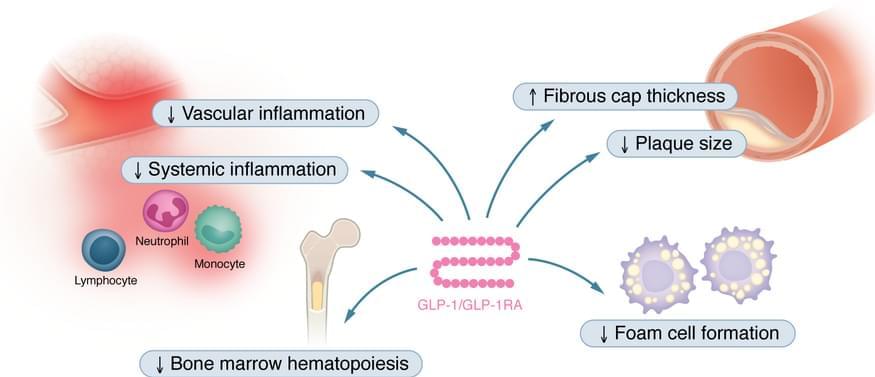
Abstract: GLP-1 and the cardiovascular system

As part of JCI’s Review Series on Clinical Innovation and Scientific Progress in GLP-1 Medicine Florian Kahles, Andreas L. Birkenfeld, & Nikolaus Marx summarize the effects of GLP-1 and GLP-1RAs in the cardiovascular system as well as clinical data of GLP-1RAs in individuals with cardiovascular disease or in those at high risk.


1Department of Internal Medicine I, University Hospital Aachen, RWTH Aachen, Aachen, Germany.

2German Center for Diabetes Research (DZD), Neuherberg, Germany.

3Department of Internal Medicine IV, Diabetology, Endocrinology and Nephrology, Eberhard-Karls University Tübingen, Tübingen, Germany.

/* */