Toggle light / dark theme

Why the Future of Intelligence Is Already Here | Alex Wissner-Gross | TEDxBoston

The future of intelligence is rapidly evolving with AI advancements, poised to transform numerous aspects of life, work, and existence, with exponential growth and sweeping changes expected in the near future.

## Questions to inspire discussion.

Strategic Investment & Career Focus.

🎯 Q: Which companies should I prioritize for investment or career opportunities in the AI era?

A: Focus on companies with the strongest AI models and those advancing energy abundance, as these will have the largest marginal impact on enabling the innermost loop of robots building fabs, chips, and AI data centers to accelerate exponentially.

Understanding Market Dynamics.
Association of a Cancer Diagnosis and Mortality After Ischemic and Hemorrhagic Stroke and Myocardial Infarction

This population-based study showed that patients with cancer had higher risks of mortality after stroke and myocardial infarction, with substantial variations by cancer type.


Background and Objectives.

Large-Scale Proteomics Reveals New Candidate Biomarkers for Late-Onset Preeclampsia

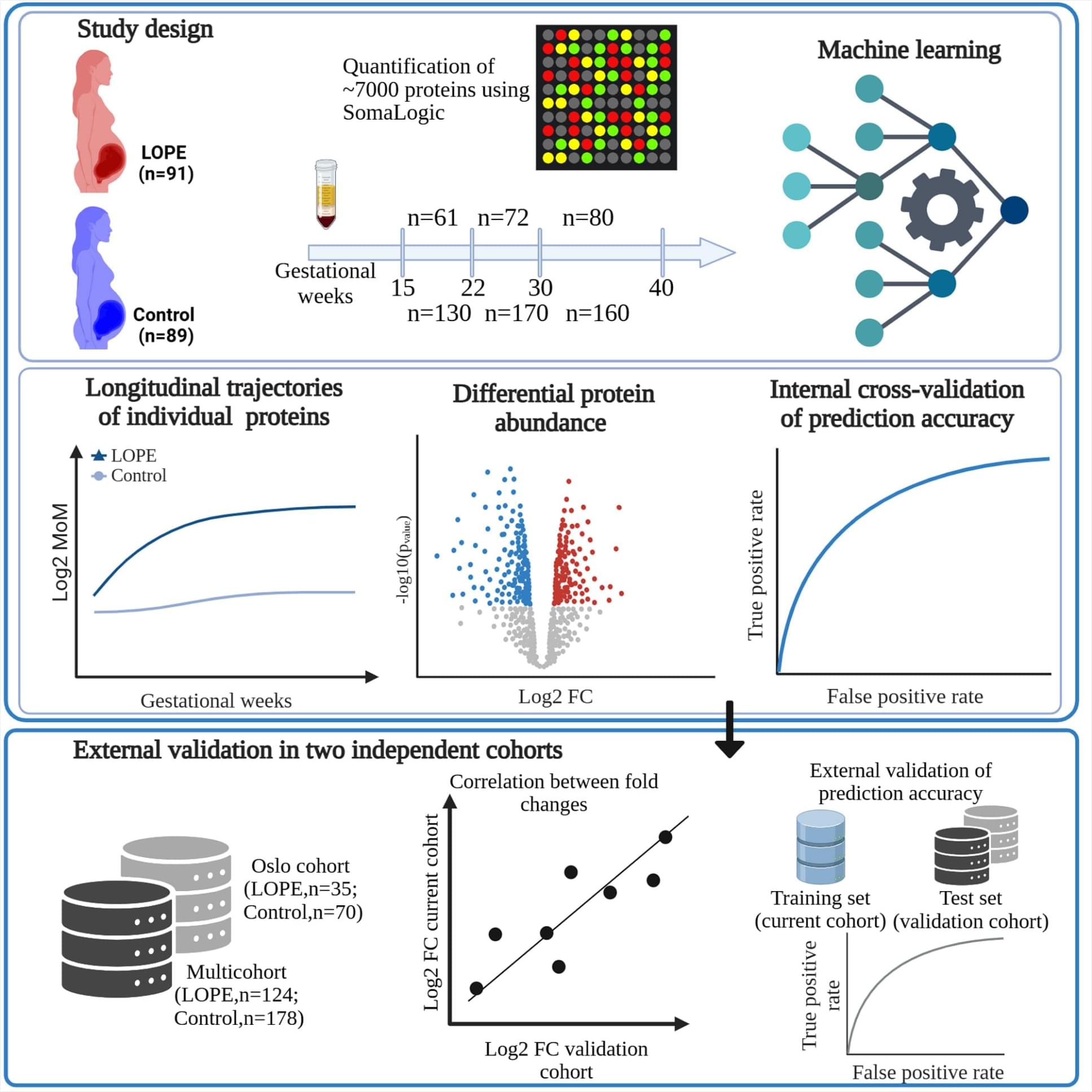
RESEARCH ARTICLE: large-scale proteomics reveals new candidate biomarkers for late-onset preeclampsia.


BACKGROUND: Preeclampsia is classified as either a more severe early onset or a more prevalent late-onset form. Lower PlGF (placental growth factor) and increased sFlt-1 (fms-like tyrosine kinase-1) in maternal circulation are promising biomarkers, yet they lack specificity for preeclampsia. METHODS: We quantified ≈7000 proteins in 673 samples collected from 89 patients with late-onset preeclampsia and 91 controls at T1 (15–22), T2 (22–30), and T3 (30–42) weeks. Elastic net and random forest models were fitted and evaluated by cross-validation. Differential abundance analysis followed by functional profiling, was used to identify and interpret protein changes. RESULTS: An increase in protein differential abundance in late-onset preeclampsia was observed with advancing gestation, reaching 806 proteins at T3 related to angiogenesis, cell adhesion, and extracellular matrix remodeling.

A single oncolytic virus injection may help T cells infiltrate glioblastoma

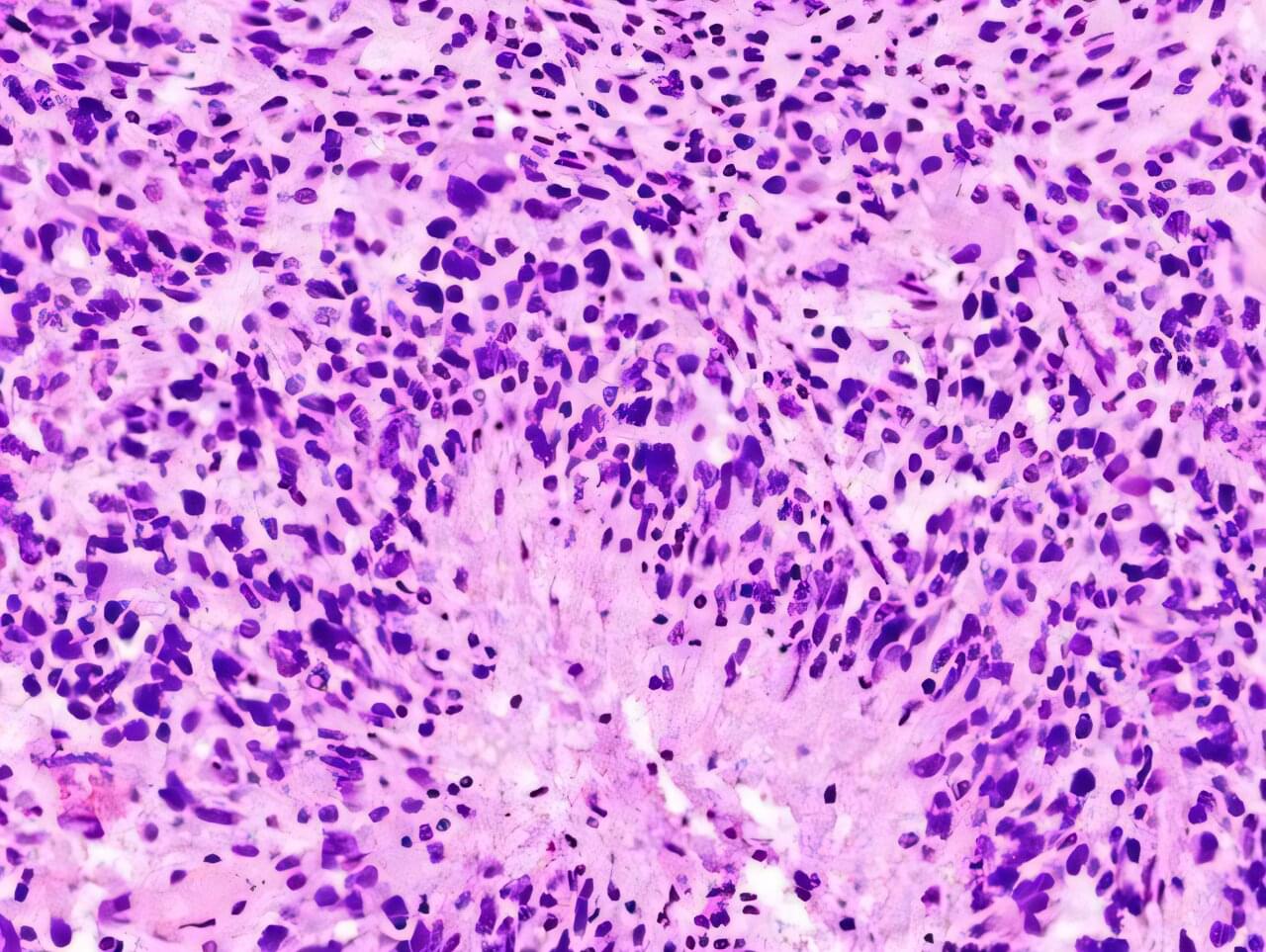
A team led by investigators at Mass General Brigham and Dana-Farber Cancer Institute has shown that a single injection of an oncolytic virus—a genetically modified virus that selectively infects and destroys cancer cells—can recruit immune cells to penetrate and persist deep within brain tumors. The research, which is published in Cell, provides details on how this therapy prolonged survival in patients with glioblastoma, the most common and malignant primary brain tumor, in a recent clinical trial.

“Patients with glioblastoma have not benefited from immunotherapies that have transformed patient care in other cancer types such as melanoma because glioblastoma is a ‘cold’ tumor with poor infiltration by cancer-fighting immune cells,” said co-senior author Kai Wucherpfennig, MD, Ph.D., chair of the Department of Cancer Immunology and Virology at the Dana-Farber Cancer Institute.

“Findings from our clinical trial and our mechanistic study show that it is now feasible to bring these critical immune cells into glioblastoma.”

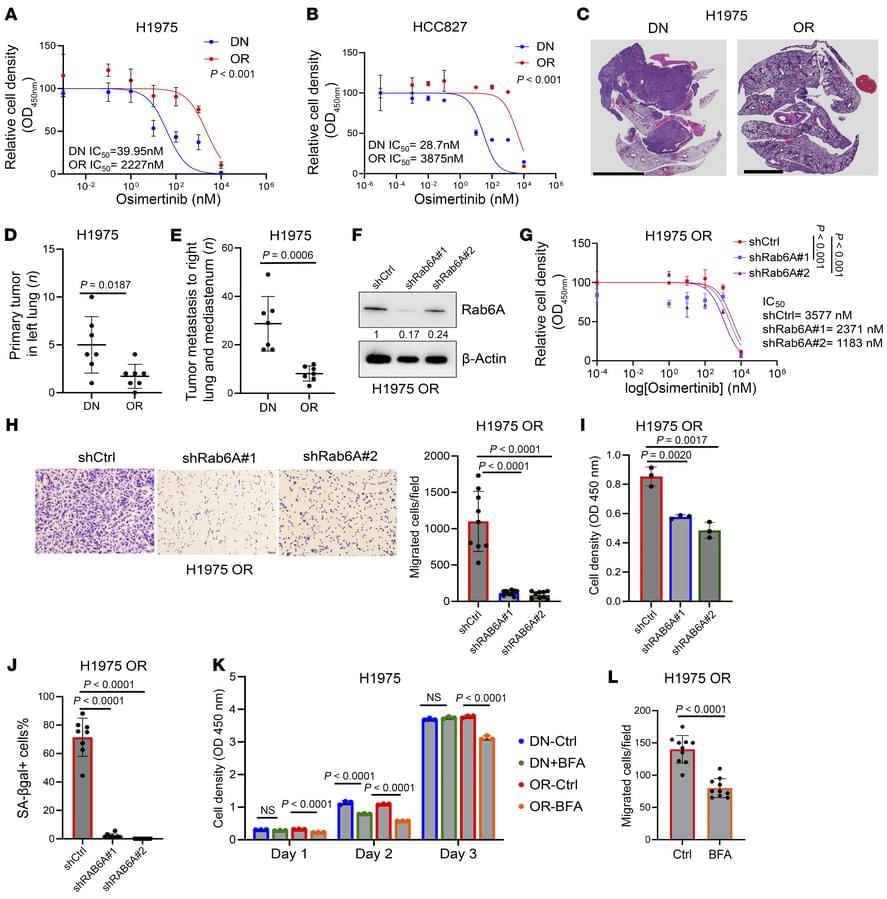
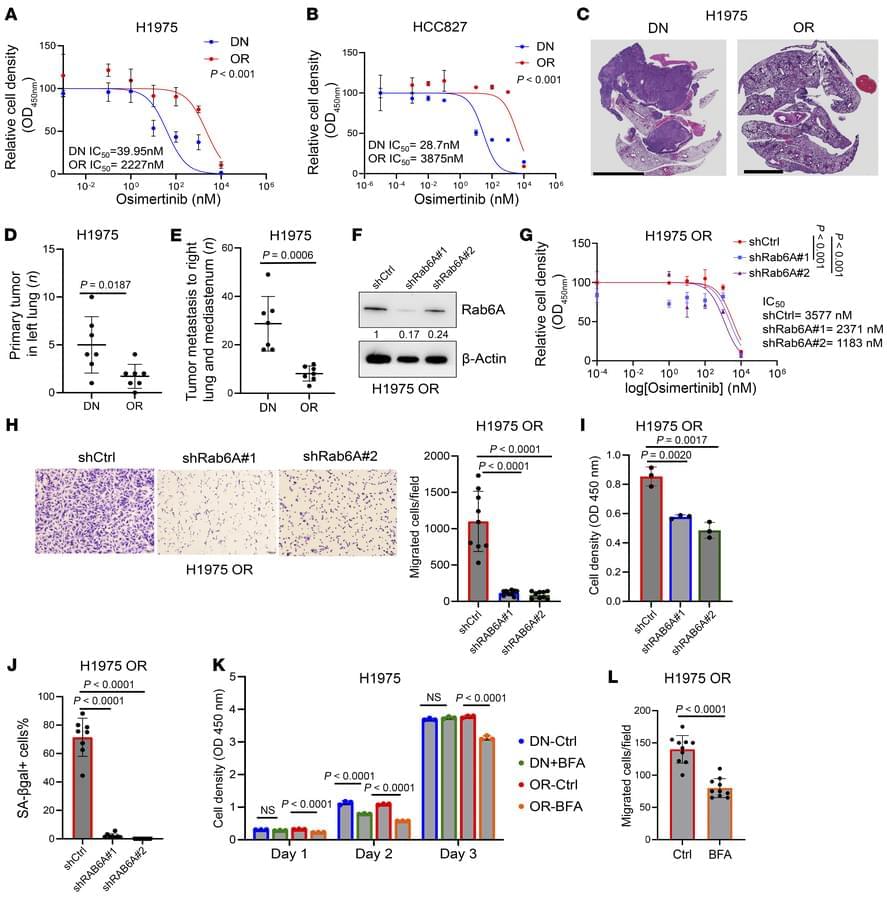
Abstract: Osimertinib (Osi) is first-line treatment for metastatic lung adenocarcinoma with EGFR mutations

Here, Jonathan M. Kurie & team show Osi-resistant cancer secrete effector proteins that increase the metastatic properties of drug-naive cells and influence lung cancer progression through paracrine mechanisms:

The figure shows Osi-resistant (OR) cells show Golgi remodeling compared with drug-naĂŻve (DN) cells.


1Department of Thoracic/Head and Neck Medical Oncology, The University of Texas–MD Anderson Cancer Center, Houston, Texas, USA.

2Section of Hematology and Medical Oncology, Department of Medicine, Tulane University School of Medicine, New Orleans, Louisiana, USA.

3Tulane Cancer Center, Louisiana Cancer Research Center, New Orleans, Louisiana, USA.

Future Humans: The Coming Diversity of Engineered Bodies and Synthetic Minds

For the first time in Earth’s history, one species can rewrite its own genome, rebuild its own brain, and design entirely new forms of intelligence. That combination makes Homo sapiens look less like evolution’s end point and more like a transitional form: an ancestral species whose descendants may be biological, mechanical, or something in between. The way future humans remember us may depend on how seriously our generation takes its role as the first conscious ancestor.

Imagine a descendant civilization, thousands or millions of years from now, trying to reconstruct its origins. Its members might not have bones or blood. They might be born in free-fall habitats orbiting other stars, or instantiated as software in computational substrates that current engineers can barely imagine. Their analysts would comb through archives from a small blue planet called Earth and conclude that the strange, warlike primates who built the first rockets and the first neural networks were not the culmination of evolution, but an ancestral phase.

That premise — the idea that present-day humans are an ancestral species for future humans and other intelligent beings — is beginning to migrate from science fiction into serious scientific and philosophical discussion. Advances in gene editing, synthetic biology, space medicine, brain–computer interfaces and artificial intelligence all point toward a future in which “intelligent beings” no longer form a single species, or even share a single kind of body. The more that picture comes into focus, the more it forces a rethinking of what “being human” means.

A “dormant” brain protein turns out to be a powerful switch

Researchers at Johns Hopkins Medicine report that they have uncovered a promising drug target that could allow scientists to increase or decrease the activity of specific brain proteins. The discovery may lead to new treatments for psychiatric conditions such as anxiety and schizophrenia, as well as a neurological disorder that affects movement and balance. The work was supported by funding from the National Institutes of Health.

The proteins at the center of the research are known as delta-type ionotropic glutamate receptors, or GluDs. These proteins are known to play an important role in how neurons communicate with each other. According to the researchers, mutations in GluDs have been linked to psychiatric disorders, including anxiety and schizophrenia. Despite this connection, scientists have struggled for years to understand exactly how these proteins work, making it difficult to design treatments that could regulate their activity.

“This class of protein has long been thought to be sitting dormant in the brain,” says Edward Twomey, Ph.D., assistant professor of biophysics and biophysical chemistry at the Johns Hopkins University School of Medicine. “Our findings indicate they are very much active and offer a potential channel to develop new therapies.”

DOI Not Found

This Research Article adds new information to our understanding of critical illness phenotypes.

Narges E-Gen Alipanah-Lechner & team perform multi-omics analysis of patients with ARDS, revealing 4 molecular signatures associated with death, all characterized by mitochondrial dysfunction.


The DOI entered is not a valid DOI: it should start with 10 followed by a dot, and contain a slash with no preceding whitespace.

The email address entered is invalid.

Please contact us if you wish to report this anyway.

/* */