Oxford scientists have set a world record for quantum precision, achieving just one error in 6.7 million operations using microwave-controlled ions.
A research team has achieved the holy grail of quantum computing: an exponential speedup that’s unconditional. By using clever error correction and IBM’s powerful 127-qubit processors, they tackled a variation of Simon’s problem, showing quantum machines are now breaking free from classical limitations, for real.
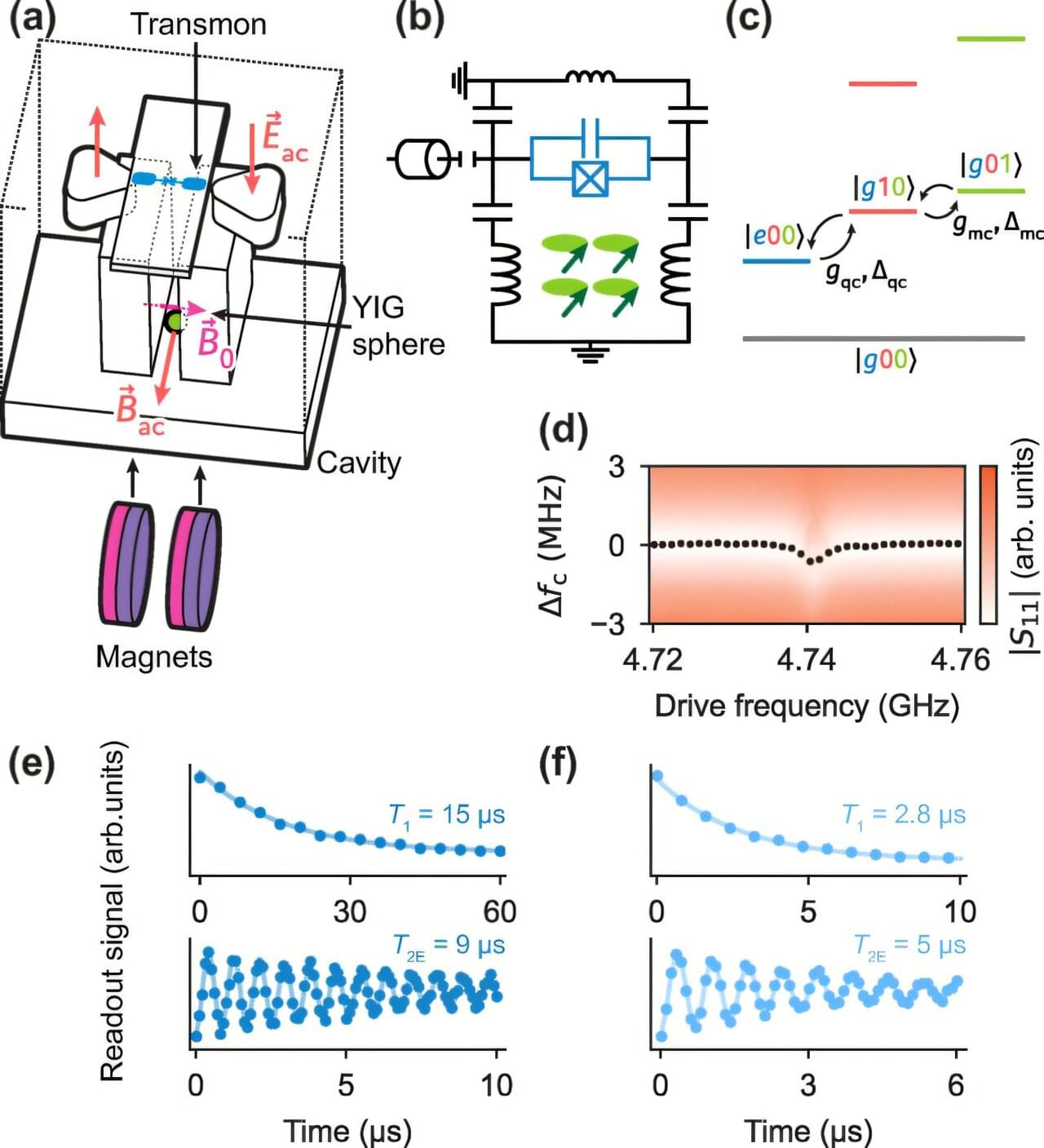
Devices taking advantage of the collective quantum behavior of spin excitations in magnetic materials—known as magnons—have the potential to improve quantum computing devices. However, using magnons in quantum devices requires an in-depth understanding of their nature and limitations. A new experimental technique uses superconducting qubits to sensitively characterize magnon behavior in previously unexplored regimes.
Researchers in the Grainger College of Engineering at the University of Illinois Urbana-Champaign have reported in the journal Physical Review Applied that highly excited magnon behavior in ferromagnetic materials can be accurately characterized by coupling the material to a superconducting qubit via a microwave cavity. This setup allowed the researchers to characterize both the number of magnons and their lifetimes when thousands of excitations are present, a regime that has not been studied well.
“To be useful in quantum computing applications, limitations on magnon systems need to be understood properly,” said Sonia Rani, the study’s lead author. “The problem is that there isn’t a good theory for when certain effects become important, and if we should expect them to lead to detrimental effects.

The race to build the first useful quantum computer is on and may revolutionize the world with brand new capabilities, from medicine to freight logistics.
Tech companies all want to take the crown, with Microsoft announcing the first of its kind quantum chip in February, only days before Google’s breakthrough on quantum error correction.
As the race heats up, companies are turning to a new ultracold solution—neutral atoms—which Swinburne University of Technology has been exploring and making discoveries in for two decades.

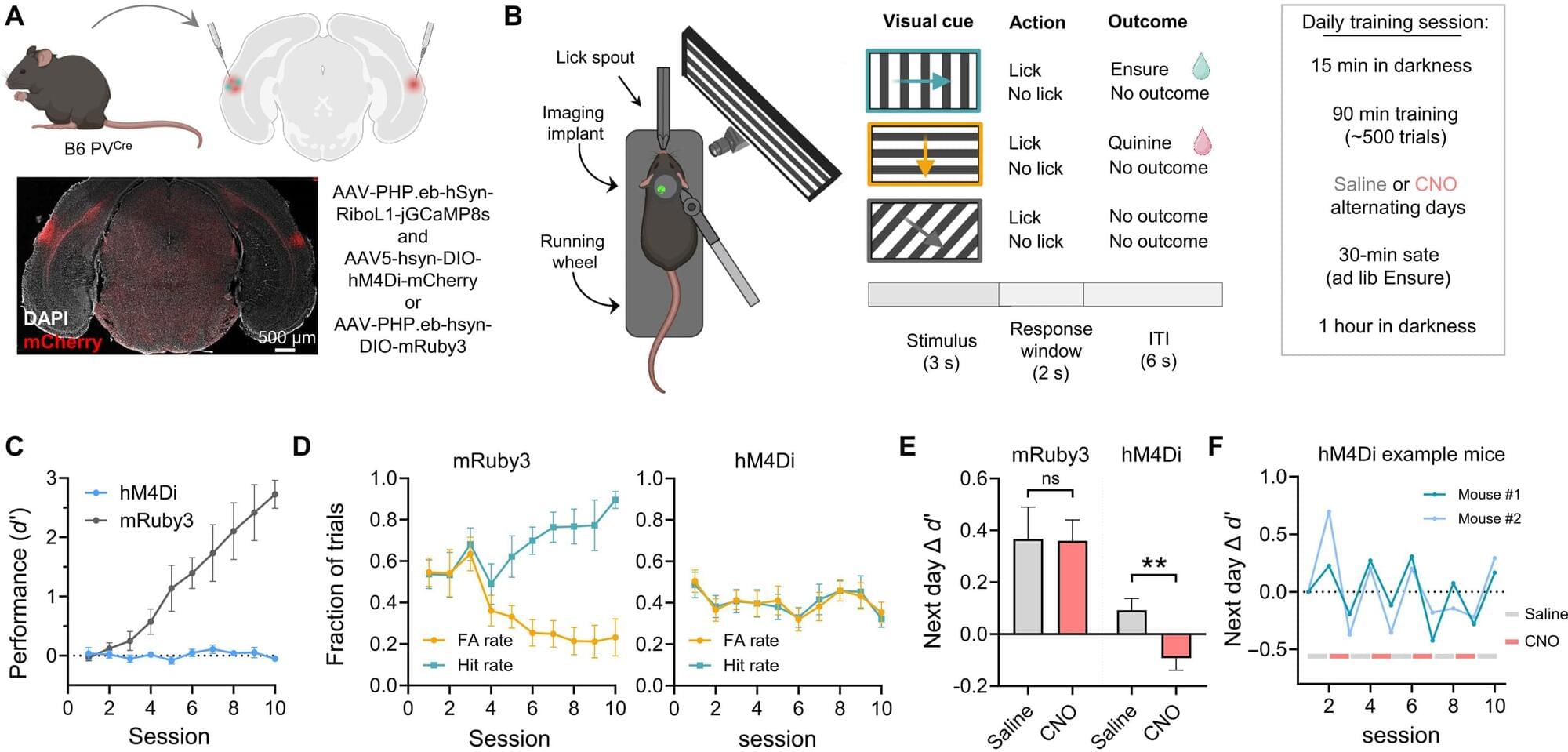
How does the brain store knowledge so that you actually remember what you have learned the next day or even later? To find out, researchers at the University of Oslo disconnected one type of nerve cell in the brain of mice while the animals rested after having learned something new. This gave new answers to what actually happens when you remember earlier experiences for later use. The study is published in the journal Science Advances.
In the first phase of this experiment, mice were trained to recognize that an image with a particular pattern meant that they would be given a reward in the form of a sweet drink. Two different groups of mice were then put in front of a computer screen where they were able to see several images containing different patterns. In order to demonstrate that they remembered which image led to a reward, the mice had to lick a small “nozzle” that dispensed the drink.
While the mice performed this action, researchers at the University of Oslo monitored the activity in their brain cells using a special microscope. “It took some time before the mice understood which pattern triggered a reward. We could see what was happening with their neurons while they mastered the task,” says researcher Kristian K. Lensjø, who works at the Institute of Basic Medical Sciences and the Department of Biosciences at the University of Oslo.

Until recently, practical attempts rarely pushed beyond proof-of-concept.
Now researchers have used the teleportation trick to forge a working logic gate between two separate quantum chips sitting about six feet apart, hinting at a future where clusters of modest processors act as one mighty computer.
A qubit is valuable because it can be zero and one at the same moment, yet that superposition collapses if the qubit feels a nudge from the outside world.