Toggle light / dark theme

Scientists Invented a Way to Store Data in Plastic Molecules and It Could Someday Replace Hard Drives

If you thought storing data inside DNA was cool, here’s something even more fascinating. Scientists at the University of Texas at Austin (UT Austin) have invented a way to store digital information inside synthetic polymer molecules. In short, they are transforming tiny bits of plastic into memory banks.

They even used their molecular system to encode a complex 11-character password and then decode it using only electrical signals, without any power, and the expensive and bulky tools typically used for reading molecular data.

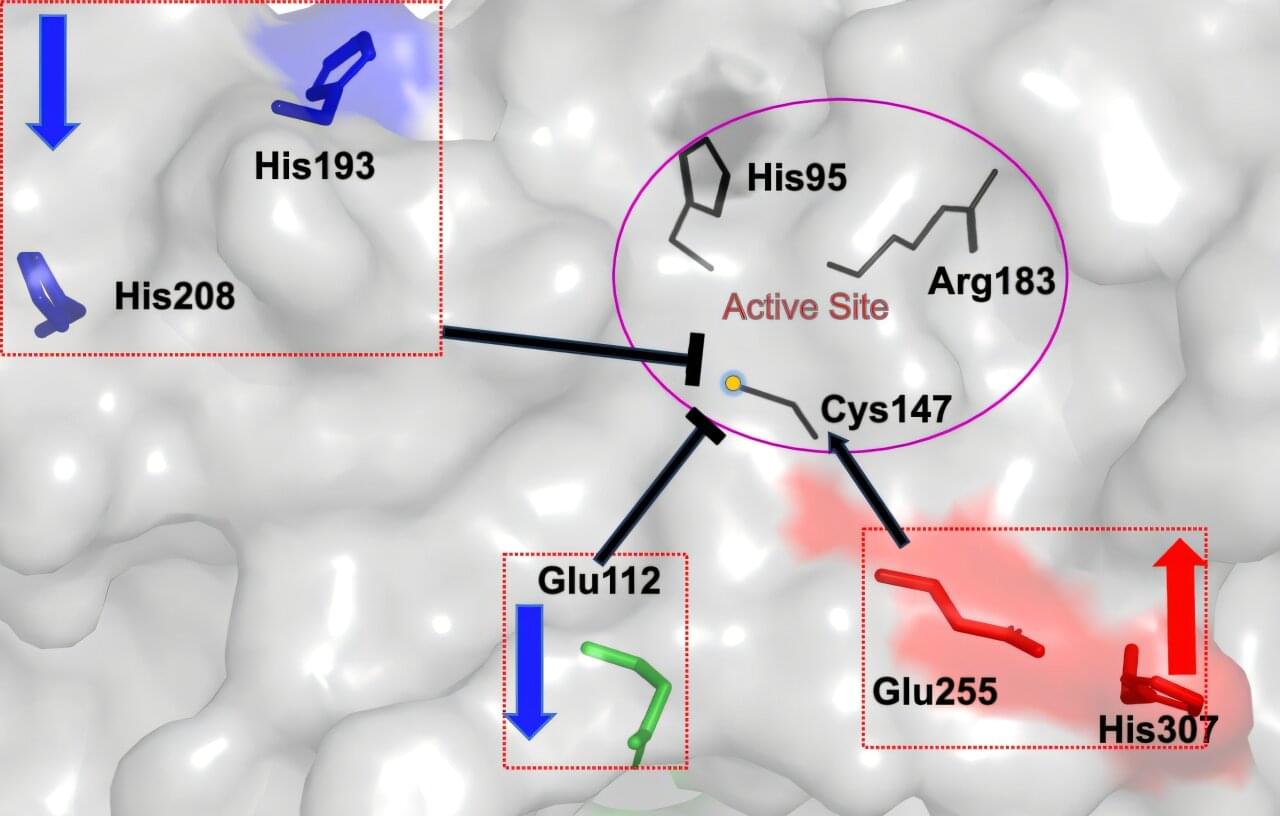
Atomic-level view of plant cell death enzyme offers path to safer crop protection

In a discovery three decades in the making, scientists at Rutgers and Brookhaven National Laboratory have acquired detailed knowledge about the internal structures and mode of regulation for a specialized protein and are proceeding to develop tools that can capitalize on its ability to help plants combat a wide range of diseases.

The work, which exploits a natural process where plant cells die on purpose to help the host plant stay healthy, is expected to have wide applications in the agricultural sector, offering new ways to protect major food crops from a variety of devastating diseases, the scientists said.

In a study published in Nature Communications, a team led by Eric Lam at Rutgers University-New Brunswick and Qun Liu at Brookhaven National Laboratory in New York reported that advanced crystallography and computer modeling techniques have enabled them to obtain the best picture yet of a pivotal plant protease, a that cuts other proteins, known as metacaspase 9.

Exploiting the full potential of multiferroic materials for magnetic memory devices

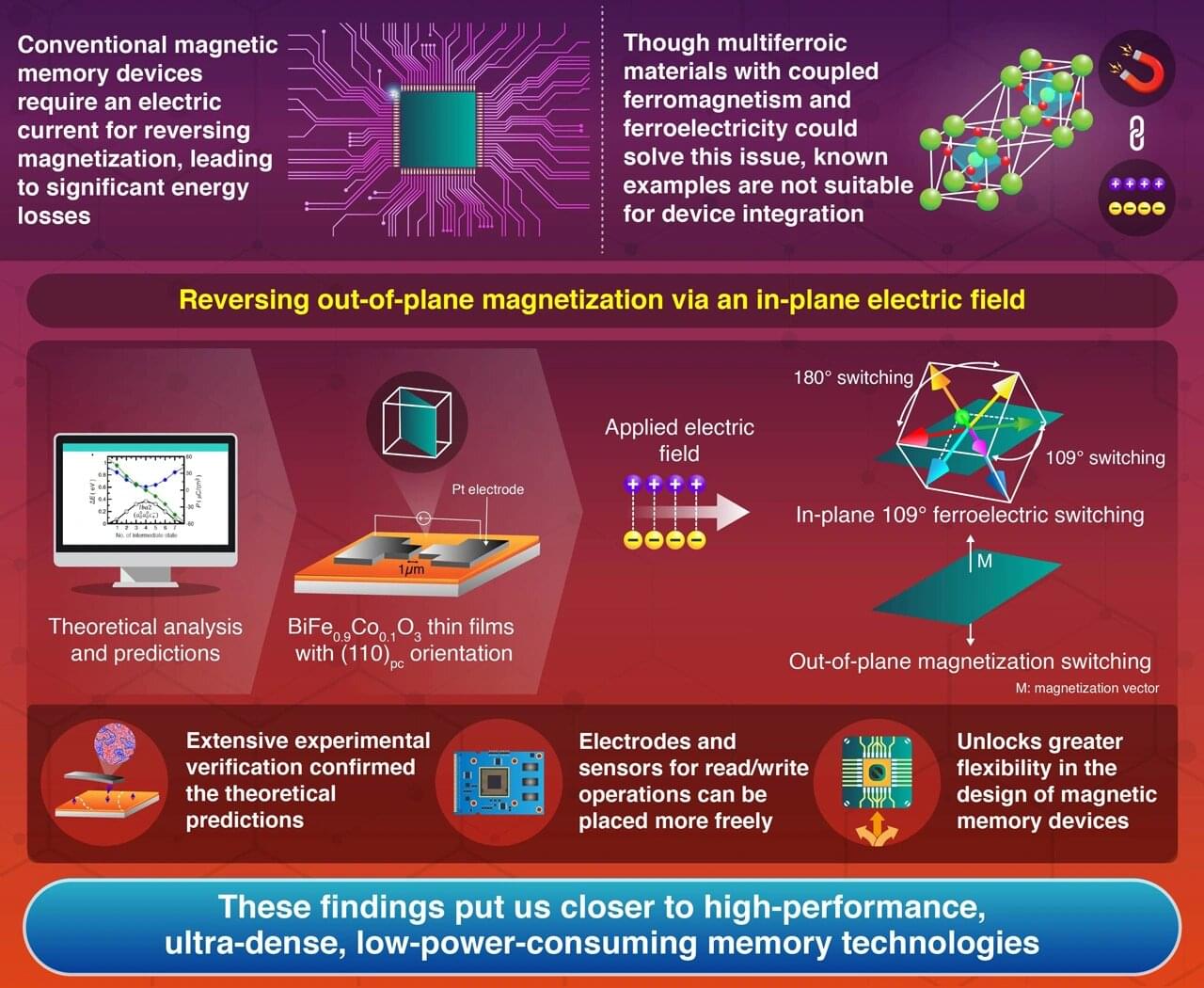
As the digital world demands greater data storage and faster access times, magnetic memory technologies have emerged as a promising frontier. However, conventional magnetic memory devices have an inherent limitation: they use electric currents to generate the magnetic fields necessary to reverse their stored magnetization, leading to energy losses in the form of heat.

This inefficiency has pushed researchers to explore approaches that could further reduce in magnetic memories while maintaining or even enhancing their performance.

Multiferroic materials, which exhibit both ferroelectric and ferromagnetic properties, have long been considered potential game changers for next-generation memory devices.

Customizable chips mimic real-life blood vessel structures for disease research

Blood vessels are like big-city highways; full of curves, branches, merges, and congestion. Yet for years, lab models replicated vessels like straight, simple roads.

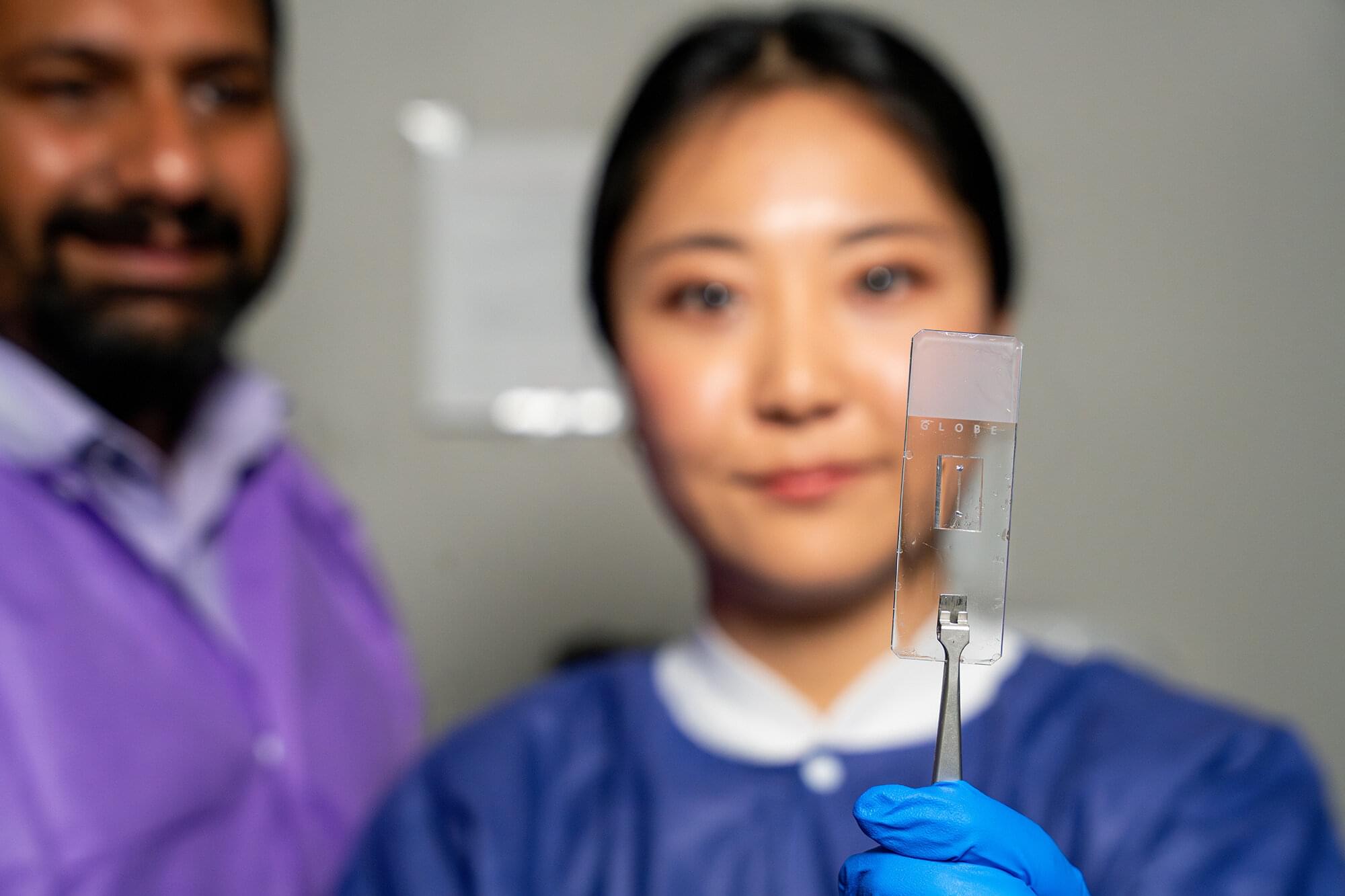
To better capture the complex architecture of real human , researchers in the Department of Biomedical Engineering at Texas A&M University have developed a customizable vessel-chip method, enabling more accurate vascular disease research and a drug discovery platform.

Vessel-chips are engineered microfluidic devices that mimic human vasculature on a microscopic scale. These chips can be patient-specific and provide a non-animal method for pharmaceutical testing and studying . Jennifer Lee, a biomedical engineering master’s student, joined Dr. Abhishek Jain’s lab and designed an advanced vessel-chip that could replicate real variations in vascular structure.

Quantum visualization technique confirms UTe₂ is an intrinsic topological superconductor

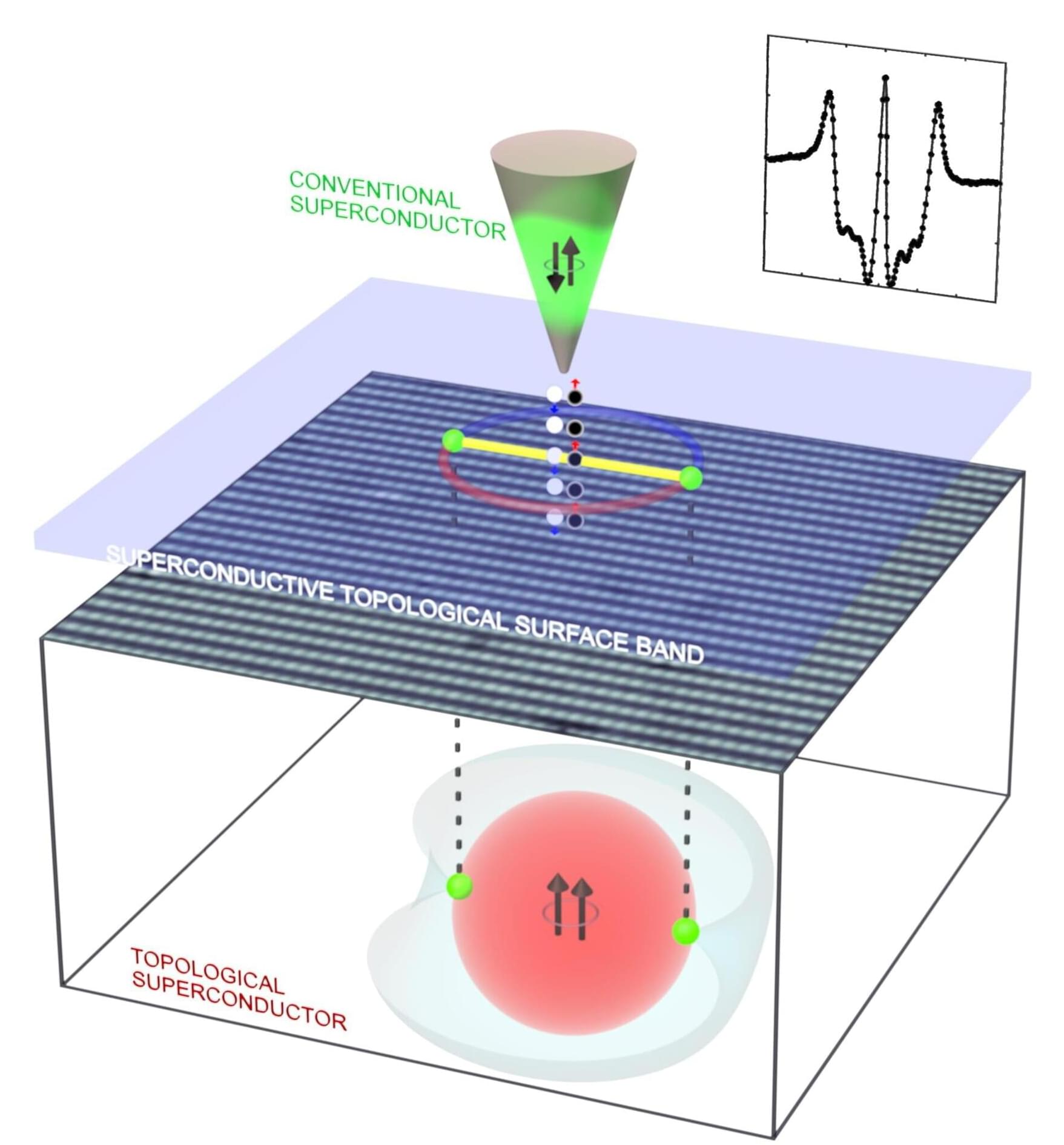
Scientists at University College Cork (UCC) in Ireland have developed a powerful new tool for finding the next generation of materials needed for large-scale, fault-tolerant quantum computing.

The significant breakthrough means that, for the first time, researchers have found a way to determine once and for all whether a material can effectively be used in certain quantum computing microchips.

The major findings have been published in Science and are the result of a large international collaboration which includes leading theoretical work from Prof. Dung-Hai Lee at the University of California, Berkeley, and material synthesis from professors Sheng Ran and Johnpierre Paglione at Washington University in St. Louis and the University of Maryland, respectively.

Laser qubits in the sky over Long Island — scientists test quantum communication in the air

American scientists plan to implement a project to test quantum communication in free space. Using lasers, they want to launch qubits over the Long Island Sound.

It is noted, that three laser beams from the telescope on top of the Kline Tower on the Yale University campus will be directed across the Long Island Sound at a distance of nearly 43.5 km and captured on the opposite side by a similar telescope on the roof of the University Hospital Stony Brook.

The goal of the Quantum Laser Across the Sound project is to expand the ability to send and receive quantum information and demonstrating the potential for possible future quantum computing infrastructures. The telescope on top of the Kline Tower will send entangled photons 43.4 km across the Long Island Sound.

Superconducting diode bridge efficiently converts AC to DC for quantum circuits

Superconductivity is an advantageous property observed in some materials, which entails an electrical resistance of zero at extremely low temperatures. Superconductors, materials that exhibit this property, have proved to be highly promising for the development of various electronic components for both classical and quantum technologies.

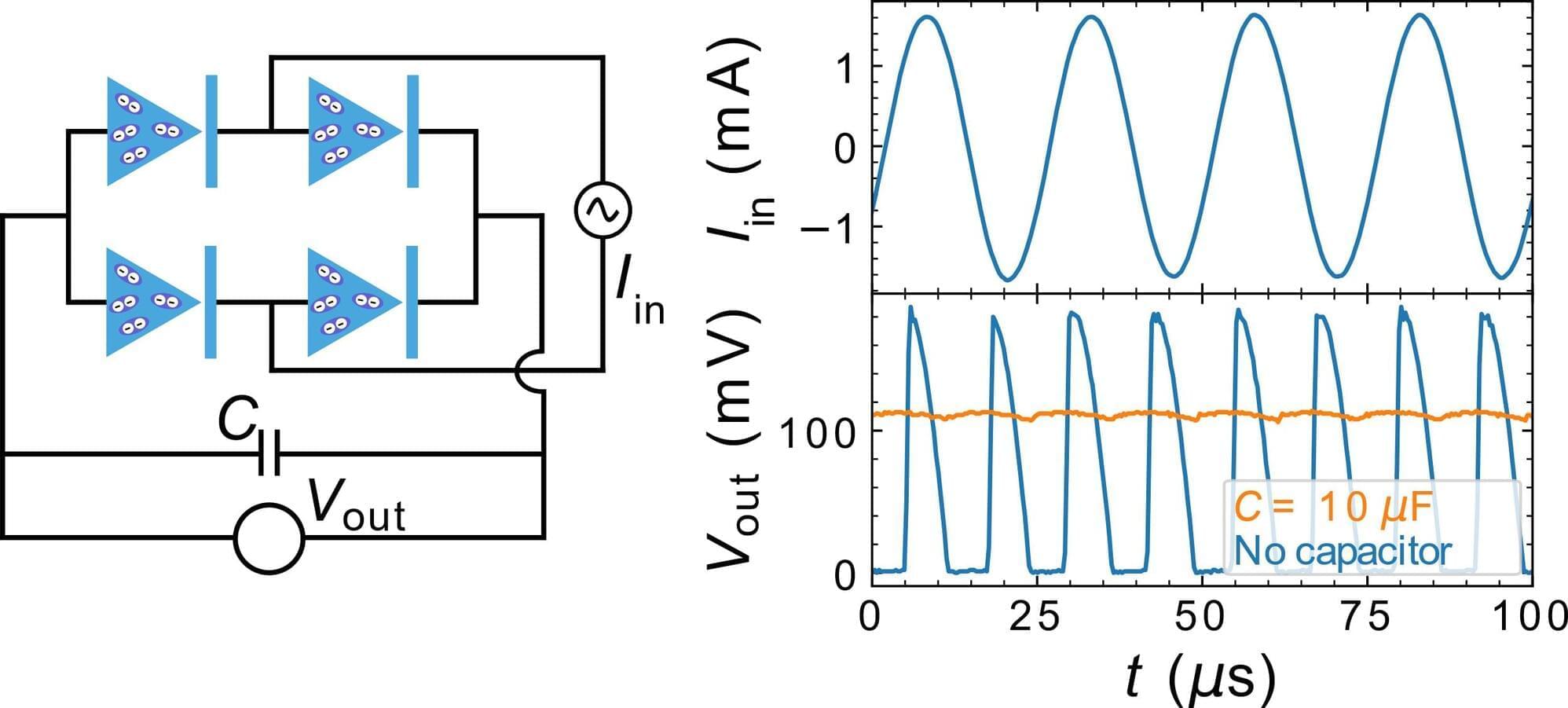
Researchers at Massachusetts Institute of Technology (MIT), University of California–Riverside and SEEQC Inc. recently introduced a new system comprised of four superconducting diodes (SDs), which are that allow electric current to flow in only one direction and are made of .

Their superconducting diode bridge, introduced in a paper published in Nature Electronics, was found to perform remarkably well at cryogenic temperatures, achieving rectification efficiencies as high as 42% ± 5%.

/* */