Science has done many things that seem miraculous. Why not transfer your consciousness to a machine?

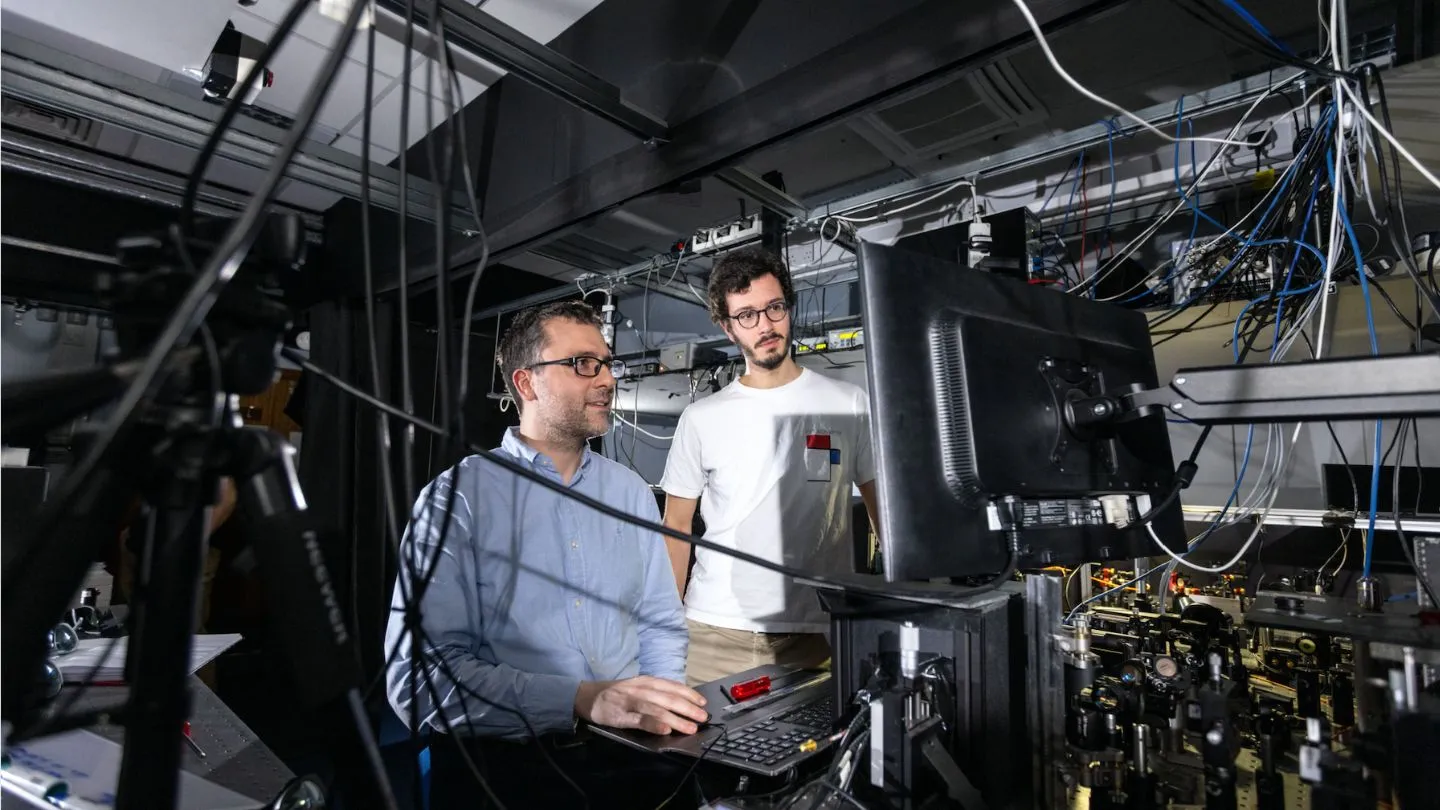
The significance of this experiment extends beyond telecommunications, computing, and medicine. Metamaterials like the ones used in this research could have broader applications in industries such as energy, transportation, aerospace, and defense.
For instance, controlling light at such a fine level might enable more efficient energy systems or advanced sensor technologies for aircraft and vehicles. Even black hole physics could be explored through these new quantum experiments, adding to the wide-ranging impact of this research.
As technology advances, the role of metamaterials and quantum physics will become increasingly critical. The ability to manipulate light in space and time holds the promise of reshaping how we interact with the world, offering faster, more efficient, and more precise tools across industries.
Valve founder Gabe Newell’s neural chip company Starfish Neuroscience announced it’s developing a custom chip designed for next-generation, minimally invasive brain-computer interfaces—and it may be coming sooner than you think.
The company announced in a blog update that it’s creating a custom, ultra-low power neural chip in collaboration with R&D leader imec.
Starfish says the chip is intended for future wireless, battery-free brain implants capable of reading and stimulating neural activity in multiple areas simultaneously—a key requirement for treating complex neurological disorders involving circuit-level dysfunction. That’s the ‘read and write’ functions we’ve heard Newell speak about in previous talks on the subject.
Gabe Newell, co-founder of Valve, sat down with IGN for a chat about the company, the promise of VR, and Newell’s most bleeding edge project as of late, brain-computer interfaces (BCI).
Whenever I used to think about brain-computer interfaces (BCI), I typically imagined a world where the Internet was served up directly to my mind through cyborg-style neural implants—or basically how it’s portrayed in Ghost in the Shell. In that world, you can read, write, and speak to others without needing to lift a finger or open your mouth. It sounds fantastical, but the more I learn about BCI, the more I’ve come to realize that this wish list of functions is really only the tip of the iceberg. And when AR and VR converge with the consumer-ready BCI of the future, the world will be much stranger than fiction.
Be it Elon Musk’s latest company Neuralink —which is creating “minimally invasive” neural implants to suit a wide range of potential future applications, or Facebook directly funding research on decoding speech from the human brain—BCI seems to be taking an important step forward in its maturity. And while these well-funded companies can only push the technology forward for its use as a medical devices today thanks to regulatory hoops governing implants and their relative safety, eventually the technology will get to a point when it’s both safe and cheap enough to land into the brainpan’s of neurotypical consumers.
Although there’s really no telling when you or I will be able to pop into an office for an outpatient implant procedure (much like how corrective laser eye surgery is done today), we know at least that this particular future will undoubtedly come alongside significant advances in augmented and virtual reality. But before we consider where that future might lead us, let’s take a look at where things are today.
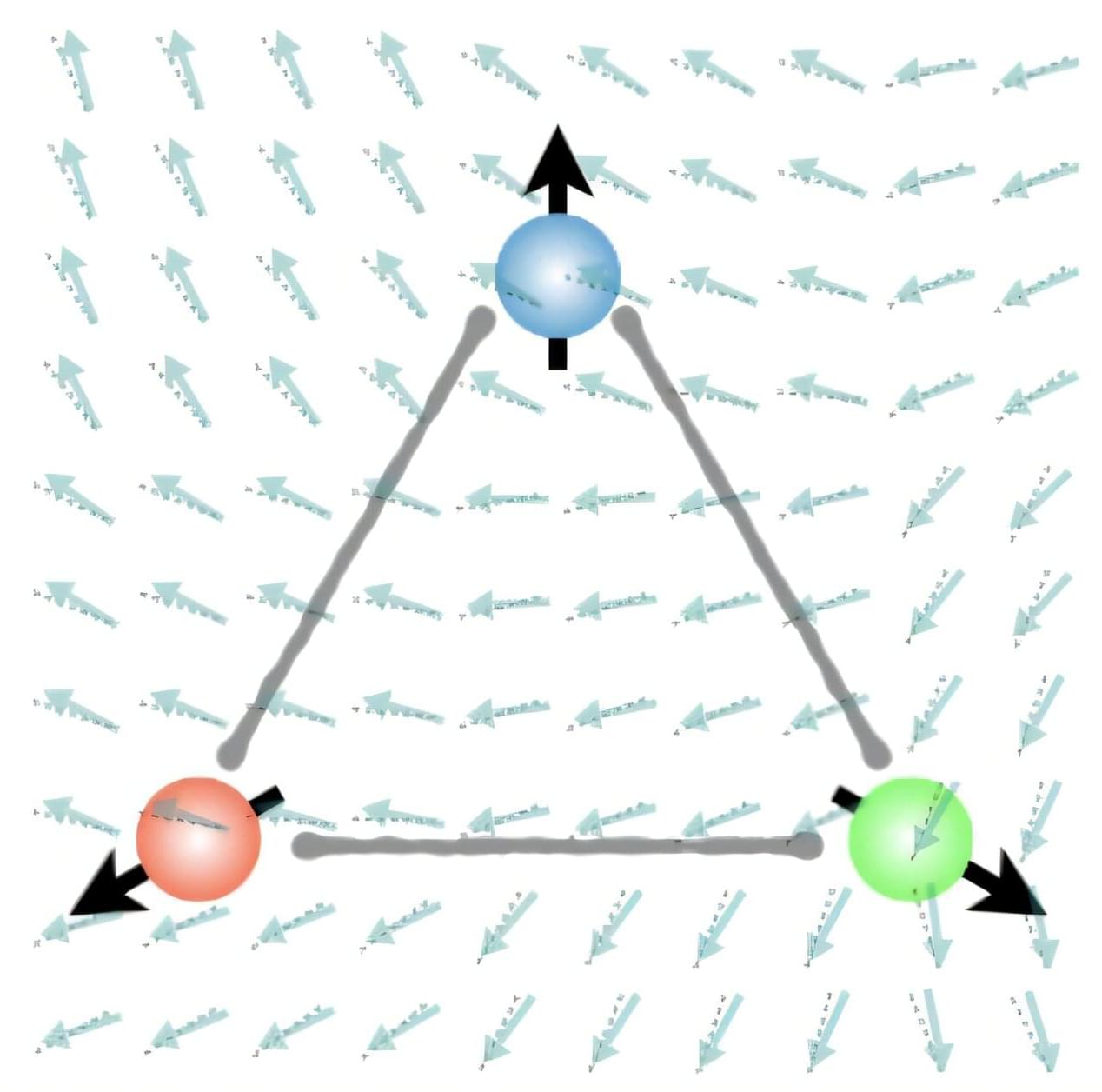
What if the magnon Hall effect, which processes information using magnons (spin waves) capable of current-free information transfer with magnets, could overcome its current limitation of being possible only on a 2D plane? If magnons could be utilized in 3D space, they would enable flexible design, including 3D circuits, and be applicable in various fields such as next-generation neuromorphic (brain-mimicking) computing structures, similar to human brain information processing.
KAIST and an international joint research team have, for the first time, predicted a 3D magnon Hall effect, demonstrating that magnons can move freely and complexly in 3D space, transcending the conventional concept of magnons. The work is published in the journal Physical Review Letters.
Professor Se Kwon Kim of the Department of Physics, in collaboration with Dr. Ricardo Zarzuela of the University of Mainz, Germany, has revealed that the interaction between magnons (spin waves) and solitons (spin vortices) within complex magnetic structures (topologically textured frustrated magnets) is not simple, but complex in a way that enables novel functionalities.
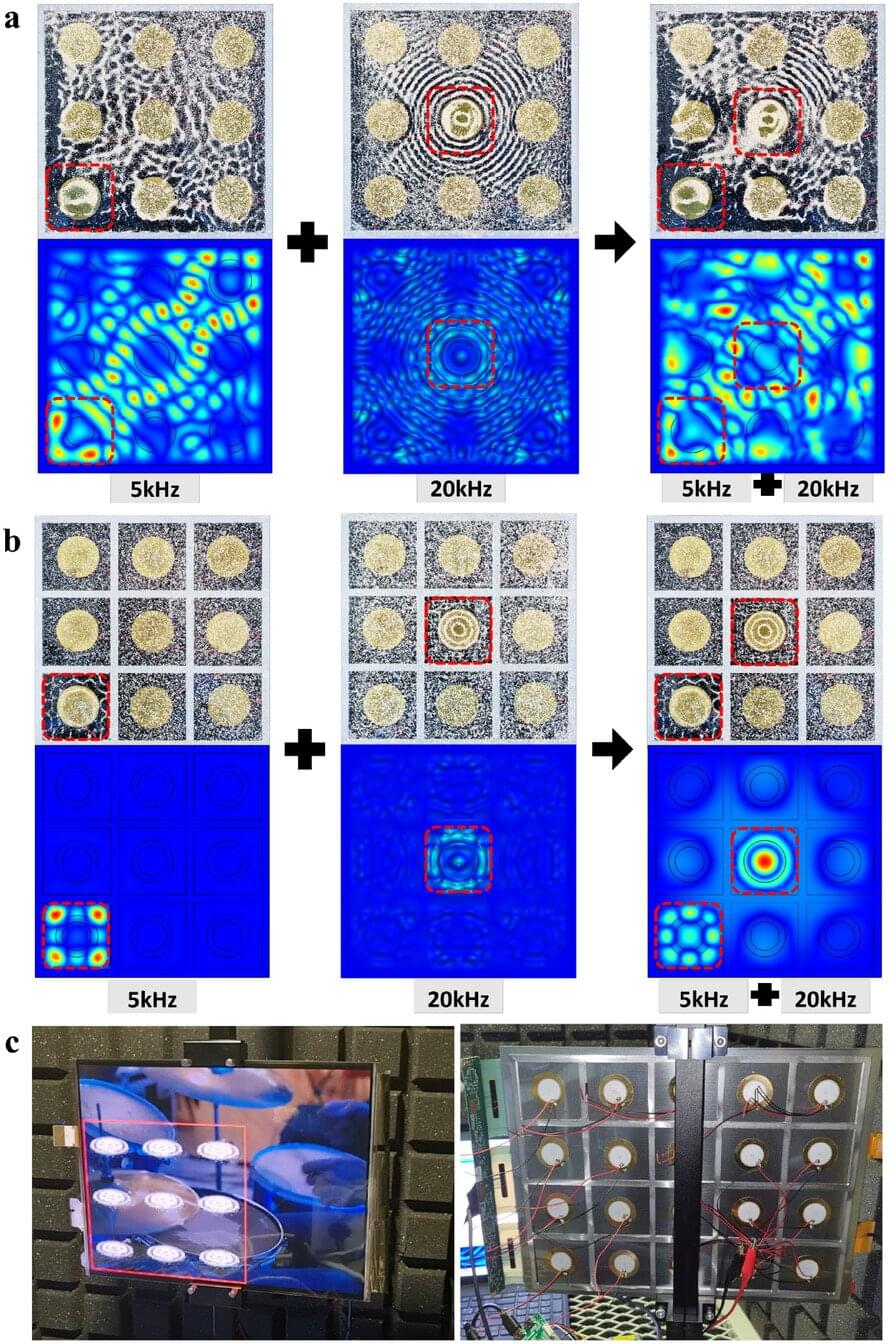
A research team has developed the world’s first Pixel-Based Local Sound OLED technology. This breakthrough enables each pixel of an OLED display to simultaneously emit different sounds, essentially allowing the display to function as a multichannel speaker array. The team successfully demonstrated the technology on a 13-inch OLED panel, equivalent to those used in laptops and tablets.
The research has been published in the journal Advanced Science. The team was led by Professor Su Seok Choi of the Department of Electrical Engineering at POSTECH (Pohang University of Science and Technology) and Ph.D. candidate Inpyo Hong of the Graduate Program in Semiconductor Materials and Devices.
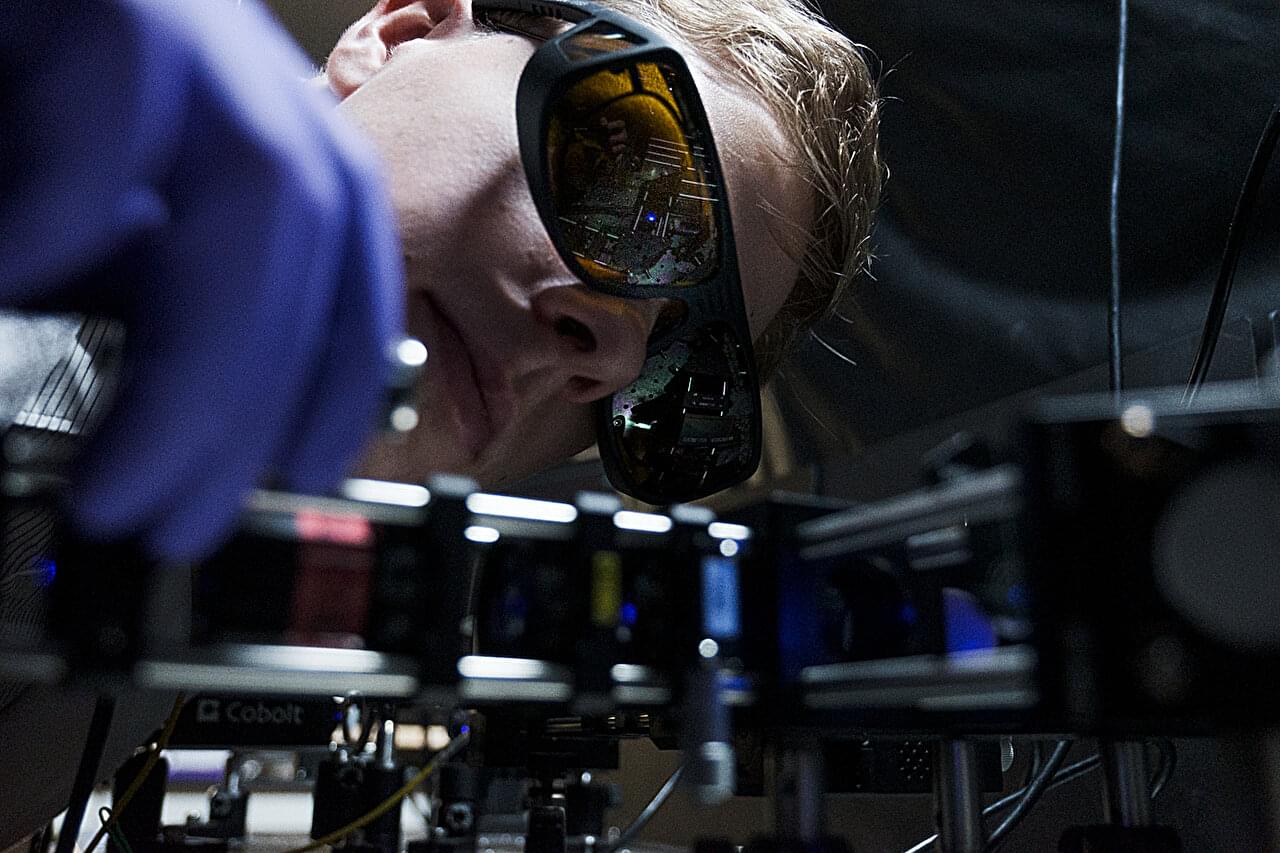
Researchers have made a discovery that could make quantum computing more compact, potentially shrinking essential components 1,000 times while also requiring less equipment. The research is published in Nature Photonics.
A class of quantum computers being developed now relies on light particles, or photons, created in pairs linked or “entangled” in quantum physics parlance. One way to produce these photons is to shine a laser on millimeter-thick crystals and use optical equipment to ensure the photons become linked. A drawback to this approach is that it is too big to integrate into a computer chip.
Now, Nanyang Technological University, Singapore (NTU Singapore) scientists have found a way to address this approach’s problem by producing linked pairs of photons using much thinner materials that are just 1.2 micrometers thick, or about 80 times thinner than a strand of hair. And they did so without needing additional optical gear to maintain the link between the photon pairs, making the overall set-up simpler.

Rutgers University–New Brunswick researchers have discovered a new class of materials—called intercrystals—with unique electronic properties that could power future technologies.
Intercrystals exhibit newly discovered forms of electronic properties that could pave the way for advancements in more efficient electronic components, quantum computing and environmentally friendly materials, the scientists said.
As described in a report in the science journal Nature Materials, the scientists stacked two ultrathin layers of graphene, each a one-atom-thick sheet of carbon atoms arranged in a hexagonal grid. They twisted them slightly atop a layer of hexagonal boron nitride, a hexagonal crystal made of boron and nitrogen. A subtle misalignment between the layers that formed moiré patterns—patterns similar to those seen when two fine mesh screens are overlaid—significantly altered how electrons moved through the material, they found.
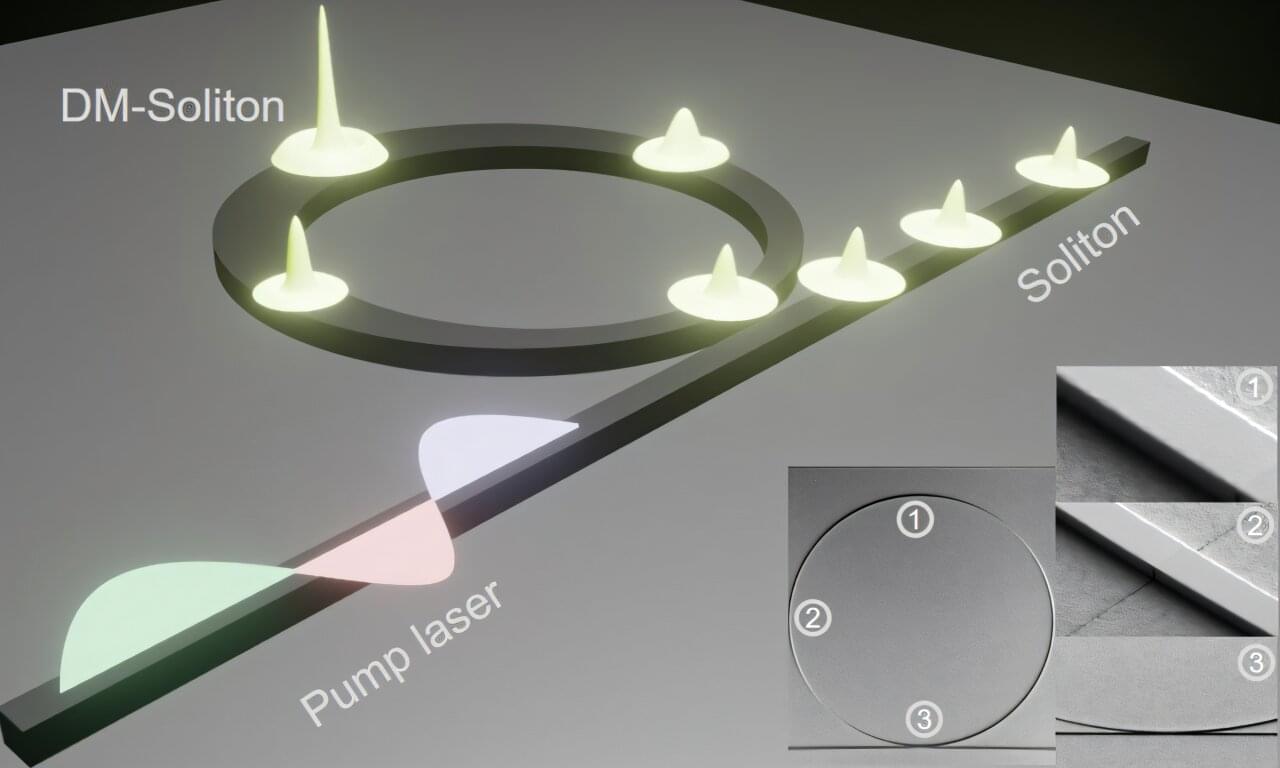
Laser frequency combs are light sources that produce evenly spaced, sharp lines across the spectrum, resembling the teeth of a comb. They serve as precise rulers for measuring time and frequency, and have become essential tools in applications such as lidar, high-speed optical communications, and space navigation. Traditional frequency combs rely on large, lab-based lasers. However, recent advancements have led to the development of chip-scale soliton microcombs, which generate ultrashort pulses of light within microresonators.
One of the key challenges for soliton microcombs is timing jitter, which refers to tiny fluctuations in the timing of their light pulses. These fluctuations, caused by environmental noise or internal instabilities, can degrade the precision and reliability of systems that rely on exact timing. For example, in lidar, jitter can cause uncertainty in distance measurements, and in high-speed data transmission, it can introduce signal distortion and reduce data integrity.
As reported in Advanced Photonics Nexus, an international research team has addressed this problem by developing a new platform based on dispersion-managed (DM) silicon nitride (Si3N4) microresonators operating at an 89 GHz repetition rate.