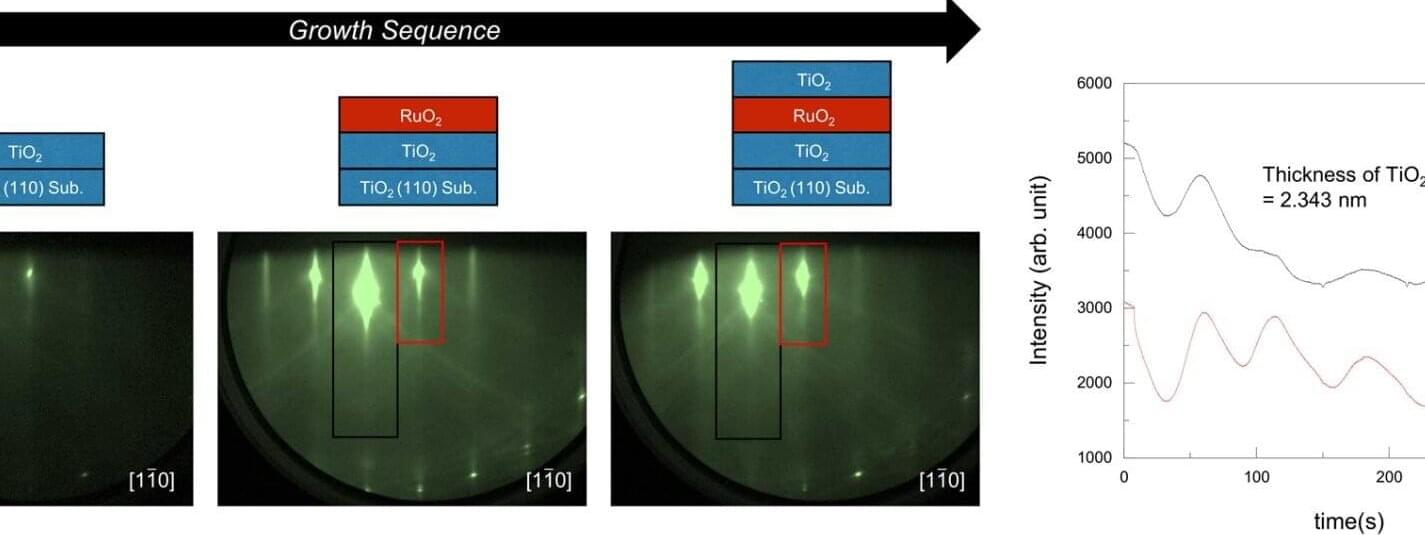
In a new study, researchers at the University of Minnesota Twin Cities discovered surprising magnetic behavior in one of the thinnest metallic oxide materials ever made. This could pave the way for the next generation of faster and smarter spintronic and quantum computing devices.
MIT researchers have designed a compact, low-power receiver for 5G-compatible smart devices that is about 30 times more resilient to a certain type of interference than some traditional wireless receivers.
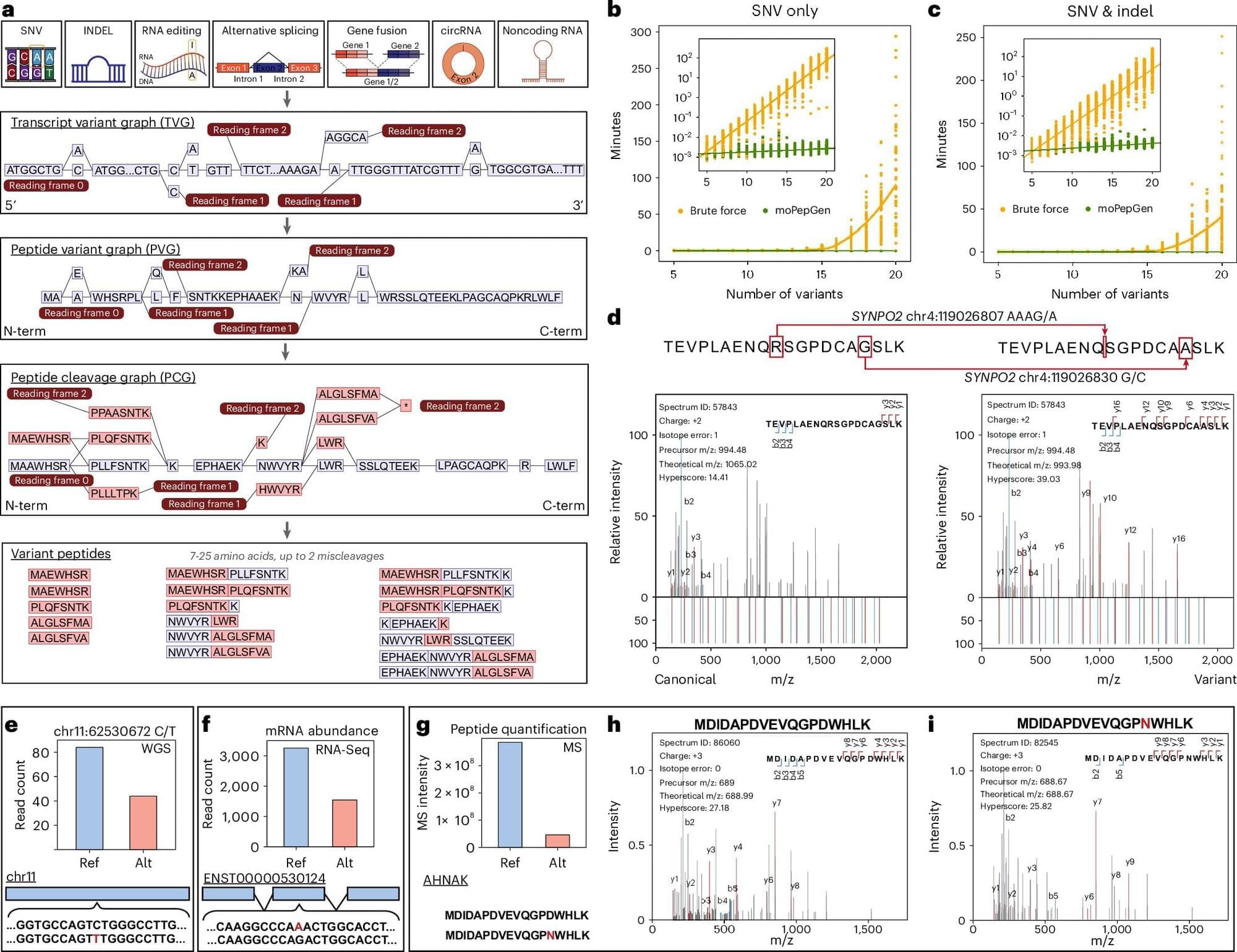
Scientists at UCLA and the University of Toronto have developed an advanced computational tool, called moPepGen, that helps identify previously invisible genetic mutations in proteins, unlocking new possibilities in cancer research and beyond.
The tool, described in Nature Biotechnology, will help understand how changes in our DNA affect proteins and ultimately contribute to cancer, neurodegenerative diseases, and other conditions. It provides a new way to create diagnostic tests and to find treatment targets previously invisible to researchers.
Proteogenomics combines the study of genomics and proteomics to provide a comprehensive molecular profile of diseases. However, a major challenge has been the inability to accurately detect variant peptides, limiting the ability to identify genetic mutations at the protein level. Existing proteomic tools often fail to capture the full diversity of protein variations.
You’re watching: 2025’s VOLONAUT AIRBIKE – The Jet-Powered Flying Bike That’s Actually Real!
Forget sci-fi… this is the future happening right now. The Volonaut Airbike isn’t just a concept or a CGI teaser — it’s a real, jet-powered flying bike that’s already tearing through the skies in 2025!
Unlike bulky drones with spinning blades, this beast lifts off with raw jet propulsion — no exposed rotors, no cockpit, and no nonsense. It’s built from carbon fiber and 3D-printed parts, making it ultra-light — 7x lighter than a motorcycle. The rider becomes part of the machine, steering it by body movement while a smart onboard flight computer keeps everything stable.
Created by Tomasz Patan, the genius behind Jetson ONE, the Volonaut Airbike is capable of reaching speeds up to 200 km/h (124 mph), soaring over forests, cliffs, and even deserts with mind-blowing agility.
You stayed up too late scrolling through your phone, answering emails or watching just one more episode. The next morning, you feel groggy and irritable. That sugary pastry or greasy breakfast sandwich suddenly looks more appealing than your usual yogurt and berries. By the afternoon, chips or candy from the break room call your name. This isn’t just about willpower. Your brain, short on rest, is nudging you toward quick, high-calorie fixes.
Whether we are simply characters in an advanced virtual world is a much-debated theory, challenging previous thinking about the universe and our existence.
The possibility that the entire universe is informational in nature and resembles a computational process is a popular theory among a number of well-known figures, including Elon Musk. The thinking comes from within a branch of science known as information physics, which suggests physical reality is actually made up of structured information.
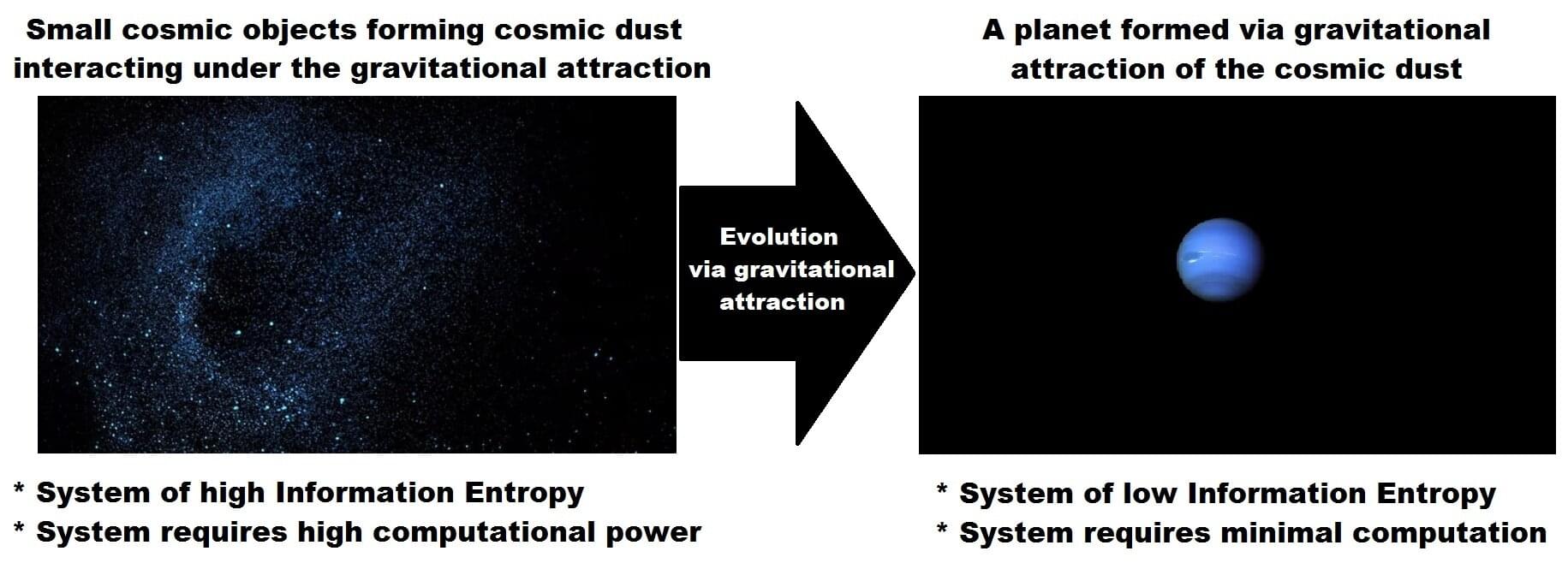
In an article published in AIP Advances and included in the journal’s “Editor’s Picks,” a physicist from the University of Portsmouth, Dr. Melvin Vopson, presents findings which indicate that gravity or gravitational force is the result of a computational process within the universe.
Binary neutron star mergers, cosmic collisions between two very dense stellar remnants made up predominantly of neutrons, have been the topic of numerous astrophysics studies due to their fascinating underlying physics and their possible cosmological outcomes. Most previous studies aimed at simulating and better understanding these events relied on computational methods designed to solve Einstein’s equations of general relativity under extreme conditions, such as those that would be present during neutron star mergers.
Researchers at the Max Planck Institute for Gravitational Physics (Albert Einstein Institute), Yukawa Institute for Theoretical Physics, Chiba University, and Toho University recently performed the longest simulation of binary neutron star mergers to date, utilizing a framework for modeling the interactions between magnetic fields, high-density matter and neutrinos, known as the neutrino-radiation magnetohydrodynamics (MHD) framework.
Their simulation, outlined in Physical Review Letters, reveals the emergence of a magnetically dominated jet from the merger, followed by the collapse of the binary neutron star system into a black hole.
Researchers at the Department of Energy’s Oak Ridge National Laboratory have tested a quantum computing approach to an old challenge: solving classical fluid dynamics problems.
The work is published in the journal Physics of Fluids. The results highlight avenues for further study of quantum computing’s potential to aid scientific discovery.
For the test problem, the research team used the Hele-Shaw flow problem—a scenario of two flat, parallel plates extremely close to each other and the flow of liquids and gases between them. The problem, although idealized, offers important applications in real-world problems such as microfluidics, groundwater flow, porous media flow, oil recovery and bioengineering.
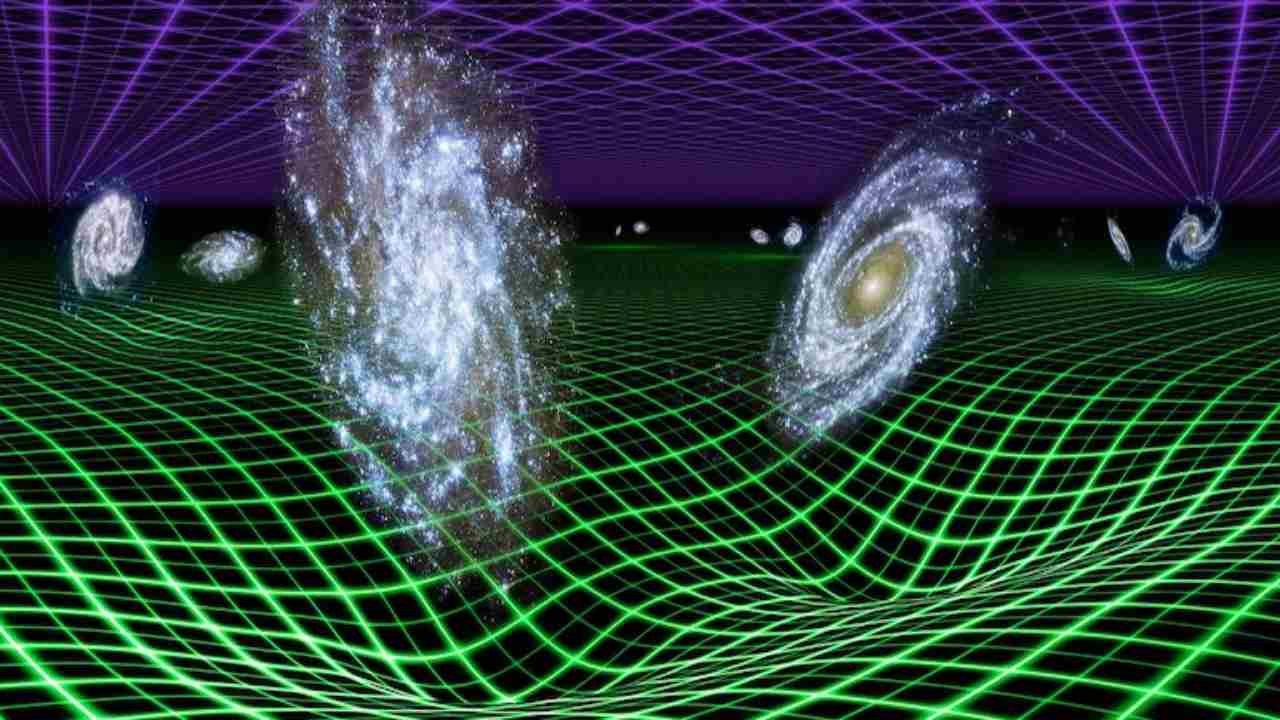
We have long taken it for granted that gravity is one of the basic forces of nature – one of the invisible threads that keeps the universe stitched together. But suppose that this is not true. Suppose the law of gravity is simply an echo of something more fundamental: a byproduct of the universe operating under a computer-like code.
That is the premise of my latest research, published in the journal AIP Advances. It suggests that gravity is not a mysterious force that attracts objects towards one another, but the product of an informational law of nature that I call the second law of infodynamics.
It is a notion that seems like science fiction – but one that is based in physics and evidence that the universe appears to be operating suspiciously like a computer simulation.
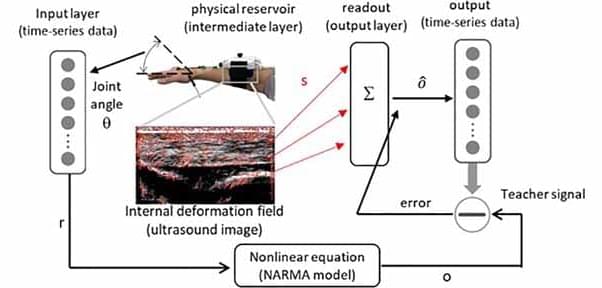
Physical reservoir computing refers to the concept of using nonlinear physical systems as computational resources to achieve complex information processing. This approach exploits the intrinsic properties of physical systems such as their nonlinearity and memory to perform computational tasks. Soft biological tissues possess characteristics such as stress-strain nonlinearity and viscoelasticity that satisfy the requirements of physical reservoir computing. This study evaluates the potential of human soft biological tissues as physical reservoirs for information processing. Particularly, it determines the feasibility of using the inherent dynamics of human soft tissues as a physical reservoir to emulate nonlinear dynamic systems. In this concept, the deformation field within the muscle, which is obtained from ultrasound images, represented the state of the reservoir. The findings indicate that the dynamics of human soft tissue have a positive impact on the computational task of emulating nonlinear dynamic systems. Specifically, our system outperformed the simple LR model for the task. Simple LR models based on raw inputs, which do not account for the dynamics of soft tissue, fail to emulate the target dynamical system (relative error on the order of <inline-formula xmlns:mml=“http://www.w3.org/1998/Math/MathML” xmlns:xlink=“http://www.w3.org/1999/xlink”> <tex-math notation=“LaTeX”>$10^{-2}$ </tex-math></inline-formula>). By contrast, the emulation results obtained using our system closely approximated the target dynamics (relative error on the order of <inline-formula xmlns:mml=“http://www.w3.org/1998/Math/MathML” xmlns:xlink=“http://www.w3.org/1999/xlink”> <tex-math notation=“LaTeX”>$10^{-3}$ </tex-math></inline-formula>). These results suggest that the soft tissue dynamics contribute to the successful emulation of the nonlinear equation. This study suggests that human soft tissues can be used as a potential computational resource. Soft tissues are found throughout the human body. Therefore, if computational processing is delegated to biological tissues, it could lead to a distributed computation system for human-assisted devices.