Researchers have radically reduced the amount of environmentally harmful fluorine required to stabilize lithium metal batteries, bringing the next generation of high-energy batteries one step closer.
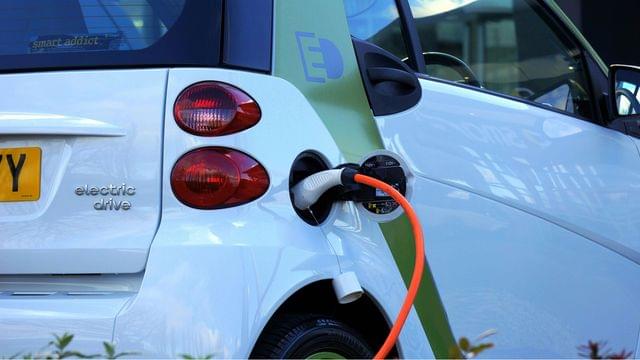
As the modern world faces various environmental challenges, city dwellers are increasingly looking for more sustainable and energy-efficient mobility solutions for their daily commutes.
With a partially-enclosed body, comfy seats, and a steering wheel, this electric three-wheeler is much comfier and more stable than a regular bike.

Just a year ago, Fervo Energy successfully demonstrated the effectiveness of its horizontally oriented geothermal system. Now the company has landed a massive contract for providing its clean, virtually endless power to the California grid.
It’s only been one year since Fervo Energy unveiled a novel concept in geothermal energy harvesting at its Project Red pilot plant in Nevada. Instead of drilling vertical bores that deliver water into the hot rocks lying beneath the Earth’s surface, it used techniques from the oil and gas industry to break up rocks, drive water through them horizontally, and collect the resultant steam to drive turbines at the surface.
The company said that its new method was set to change the geothermal landscape because it could work in many locales – not just those where hot rocks are close to the surface like in Iceland and New Zealand. And a new contract proves that it was right.
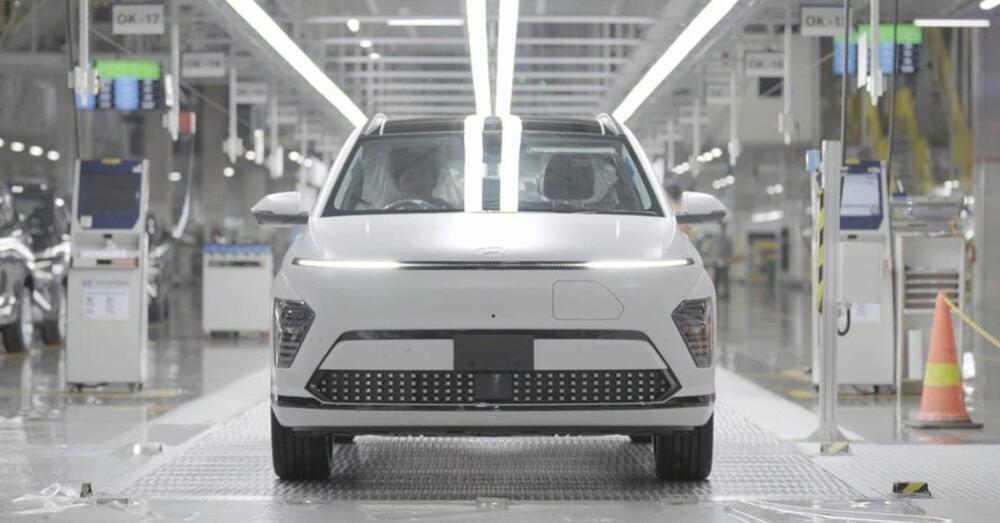
Hyundai opened the first EV battery cell plant in Indonesia with LG Energy Solution as it builds out its global supply chain. The plant will supply cells for over 150,000 competitively-priced Hyundai and Kia EVs, starting with the new Kona Electric.
In March 2021, Hyundai teamed up with LG to build a new EV battery cell plant near the capital of Indonesia.
Hyundai and LG invested $1.1 billion for a 50/50 stake in the factory. The partnership, “HLI Green Power,” will secure a “steady supply of EV batteries at a competitive price for upcoming BEVs,” according to Hyundai.
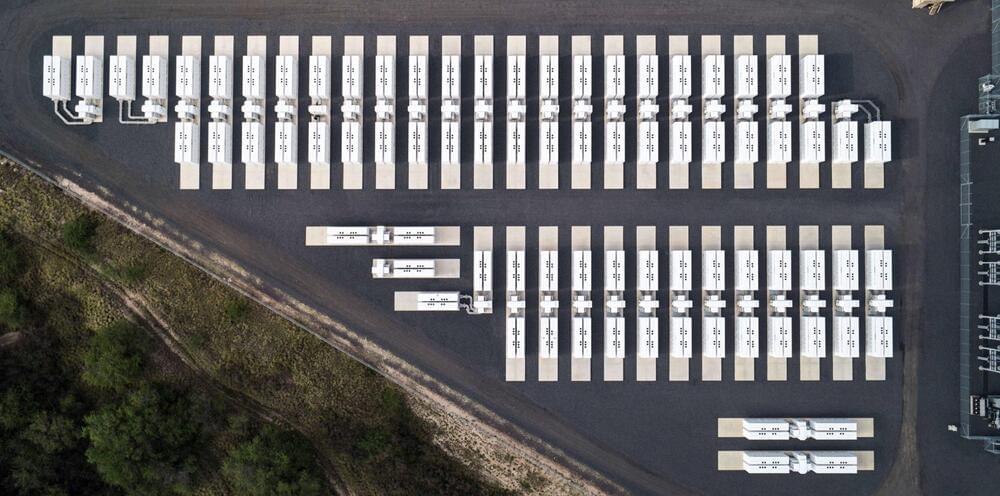
Tesla Energy is no longer a sleeping giant. During the second quarter of 2024, Tesla Energy was able to deploy 9.4 GWh of energy storage products. This represents the highest quarter deployment of energy storage products in Tesla’s history to date.
Tesla Energy was already a standout in the company’s Q1 2024 Update Letter. In the document, Tesla highlighted that Q1’s energy deployments were a new record at 4.1 GWh. As could be seen in Tesla’s Q2 2024 production and delivery report, Q1’s already impressive 4.1 GWh of energy storage deployments grew an astounding 132% quarter-over-quarter and 157% year-over-year.
$TSLA BREAKING: Tesla distributed 9.4 GWh of energy storage in the second quarter of 2024.
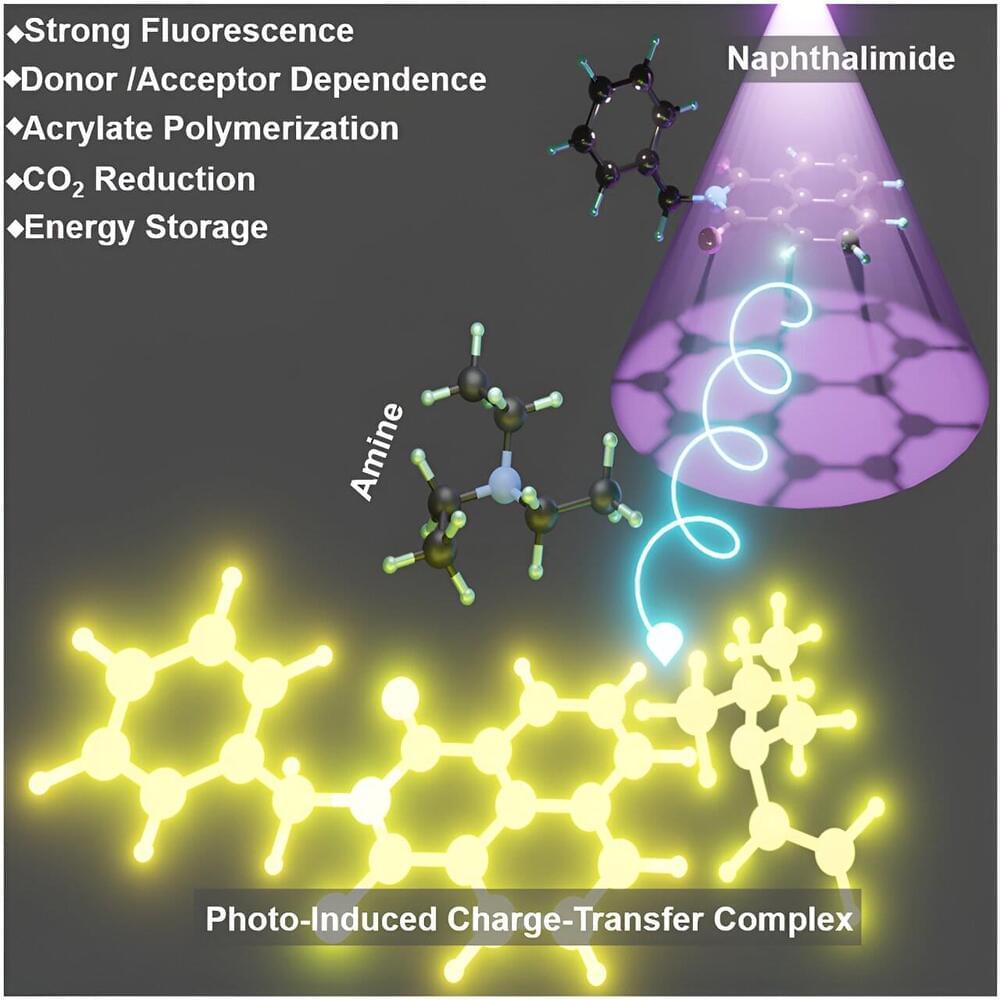
A research team led by Prof. Zhang Guoqing from the University of Science and Technology of China (USTC) of the Chinese Academy of Sciences (CAS) has discovered a highly reactive photo-induced charge-transfer complex (PCTC) between amine and imide. Their findings are published in the journal Chem.
Charge transfer between molecules, a critical process in both natural and synthetic systems, plays a fundamental role in photosynthesis, respiration, and various organic synthesis and energy conversion applications.
Despite extensive research, creating stable, light-responsive charge-transfer complexes in artificial systems remains challenging. The discovery of PCTCs addresses this challenge, offering new insights into complex photochemical processes.
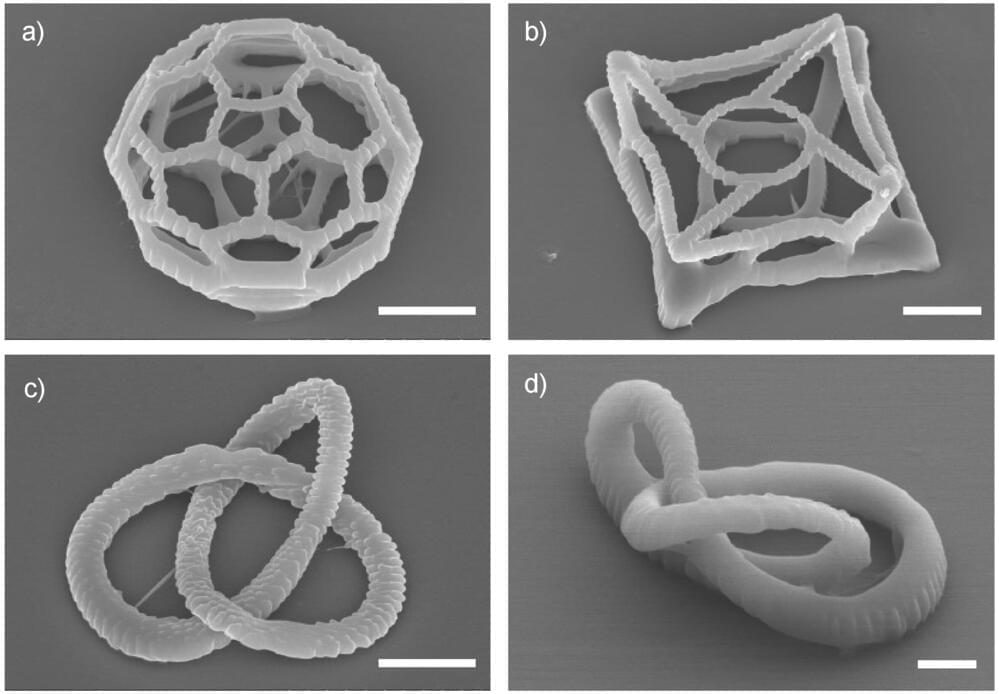
Researchers have developed a new two-photon polymerization technique that uses two lasers to 3D print complex high-resolution structures. The advance could make this 3D printing process less expensive, helping it find wider use in a variety of applications.
Two-photon polymerization is an advanced additive manufacturing technique that traditionally uses femtosecond lasers to polymerize materials in a precise, 3D manner. Although this process works well for making high-resolution microstructures, it isn’t widely used in manufacturing because femtosecond lasers are expensive and increase the cost of printing parts.
“We combined a relatively low-cost laser emitting visible light with a femtosecond laser emitting infrared pulses to reduce the power requirement of the femtosecond laser,” said research team leader Xianfan Xu from Purdue University. “In this way, with a given femtosecond laser power, the printing throughput can be increased, leading to a lower cost for printing individual parts.”

We study the possibility that the vacuum energydensity of scalar and internal-space gauge fieldsarising from the process of dimensional reduction ofhigher dimensional gravity theories plays the role of quintessence. We show that, for themultidimensional Einstein-Yang-Mills system compactifiedon a R × S3 × Sdtopology, there are classically stable solutions suchthat the observed accelerated expansion of the Universe atpresent can be accounted for without upsetting structureformation scenarios or violating observational bounds onthe vacuum energy density.
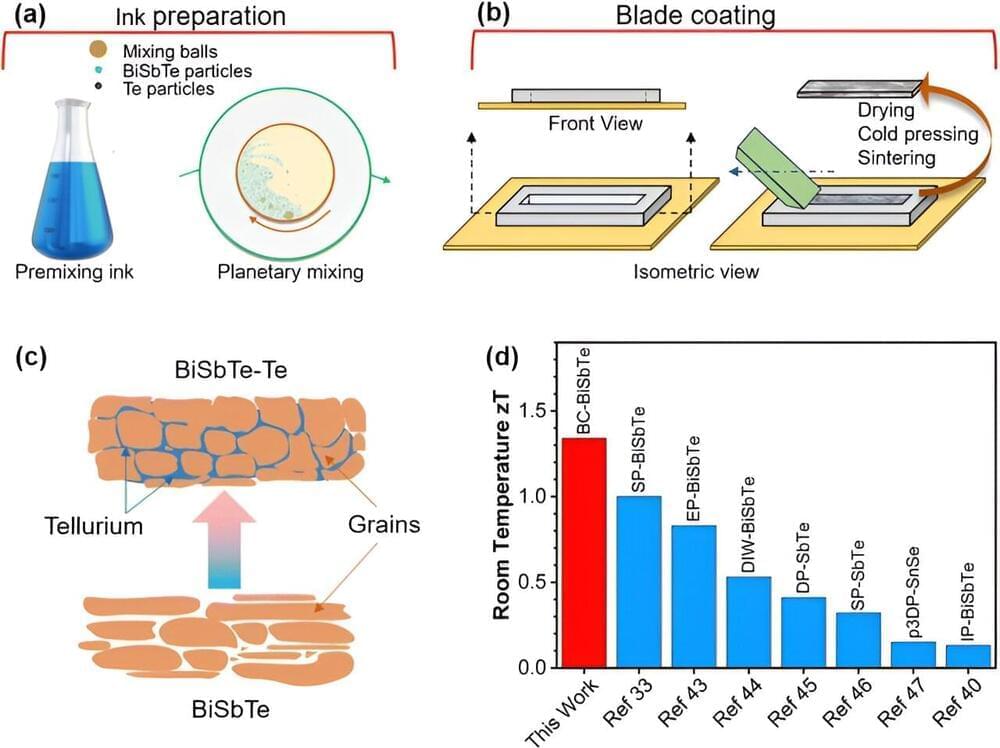
Power plants, factories, car engines—everything that consumes energy produces heat, much of which is wasted. Thermoelectric devices could capture this wasted heat and convert it into electricity, but their production has been prohibitively costly and complex.
Yanliang Zhang, the Advanced Materials and Manufacturing Collegiate Professor of Aerospace and Mechanical Engineering at the University of Notre Dame, and colleagues from a multi-institutional team have devised an ink-based manufacturing method making feasible the large-scale and cost-effective manufacturing of highly efficient thermoelectric devices.
Their finding were recently published in Energy & Environmental Science.