Researchers mimicked the air-trapping tricks of diving bell spiders to create aluminum that stays afloat—even when punctured

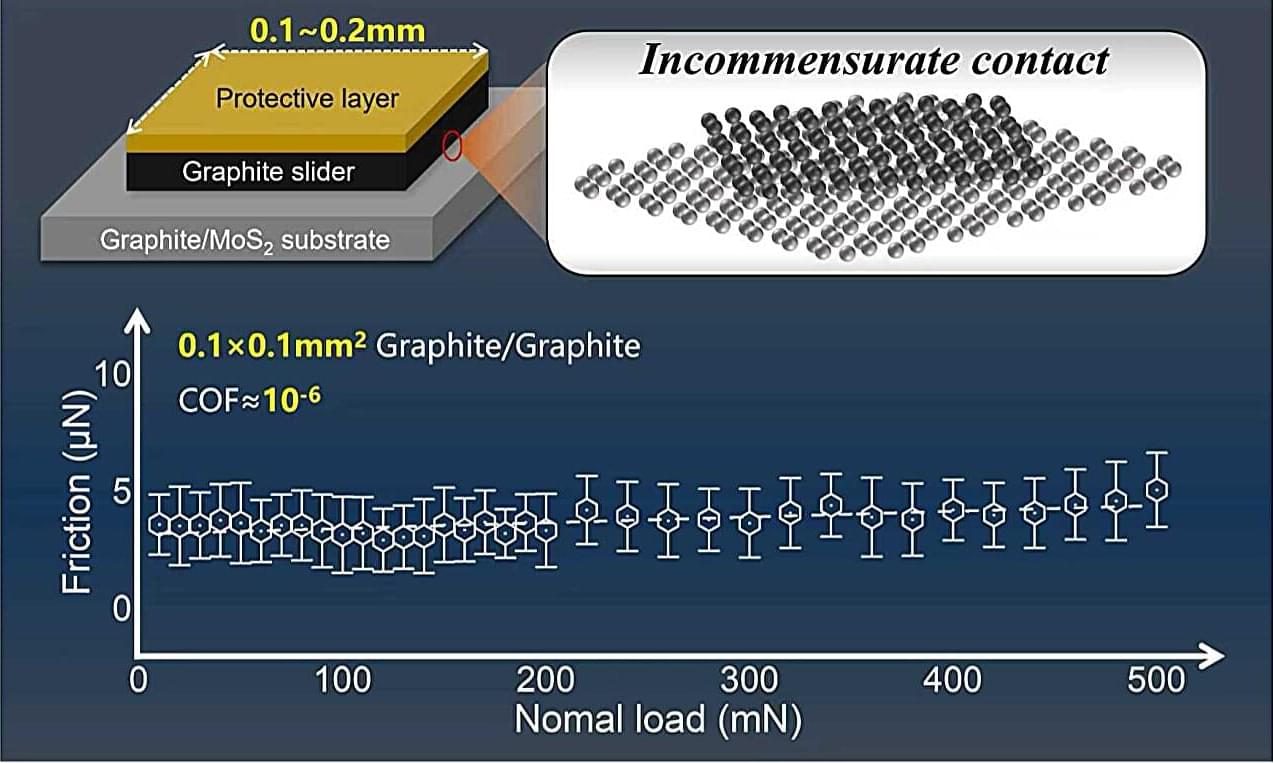
For the first time, physicists in China have virtually eliminated the friction felt between two surfaces at scales visible to the naked eye. In demonstrating “structural superlubricity,” the team, led by Quanshui Zheng at Tsinghua University, have resolved a long-standing debate surrounding the possibility of the effect. Published in Physical Review Letters, the result could potentially lead to promising new advances in engineering.
When two objects slide over each other, any roughness on their surfaces will almost inevitably resist the motion, creating the force of friction. Yet in 2004, physicists showed that friction can be virtually eliminated between two graphite surfaces, simply by rotating their respective molecular structures.
Named structural superlubricity (SSL), the effect is highly desired by engineers; in principle, allowing them to eliminate wear on both surfaces and minimize energy lost as waste heat.

Researchers at the Department of Energy’s Oak Ridge National Laboratory are breathing new life into the scientific understanding of neptunium, a unique, radioactive, metallic element—and a key precursor for production of the plutonium-238, or Pu-238, that fuels exploratory spacecraft.
The ORNL team’s research arrives during a period of increased national interest in the use of Pu-238 in radioisotope thermoelectric generators, or RTGs. Often used in space missions such as NASA’s Perseverance Rover for long-term power, RTGs convert heat from radioactive decay into electricity. Advancing RTG knowledge and application possibilities also requires the same high-level evaluation of both chemical reactions and structural characterization, two key aspects of the materials science for which ORNL is known.
“When people want to do scientific experiments in space, they need something to power their instruments, and plutonium is typically the power source because things like solar and lithium ion batteries don’t withstand deep space,” said Kathryn Lawson, radiochemist in ORNL’s Fuel Cycle Chemical Technology Group and lead author of the new study.
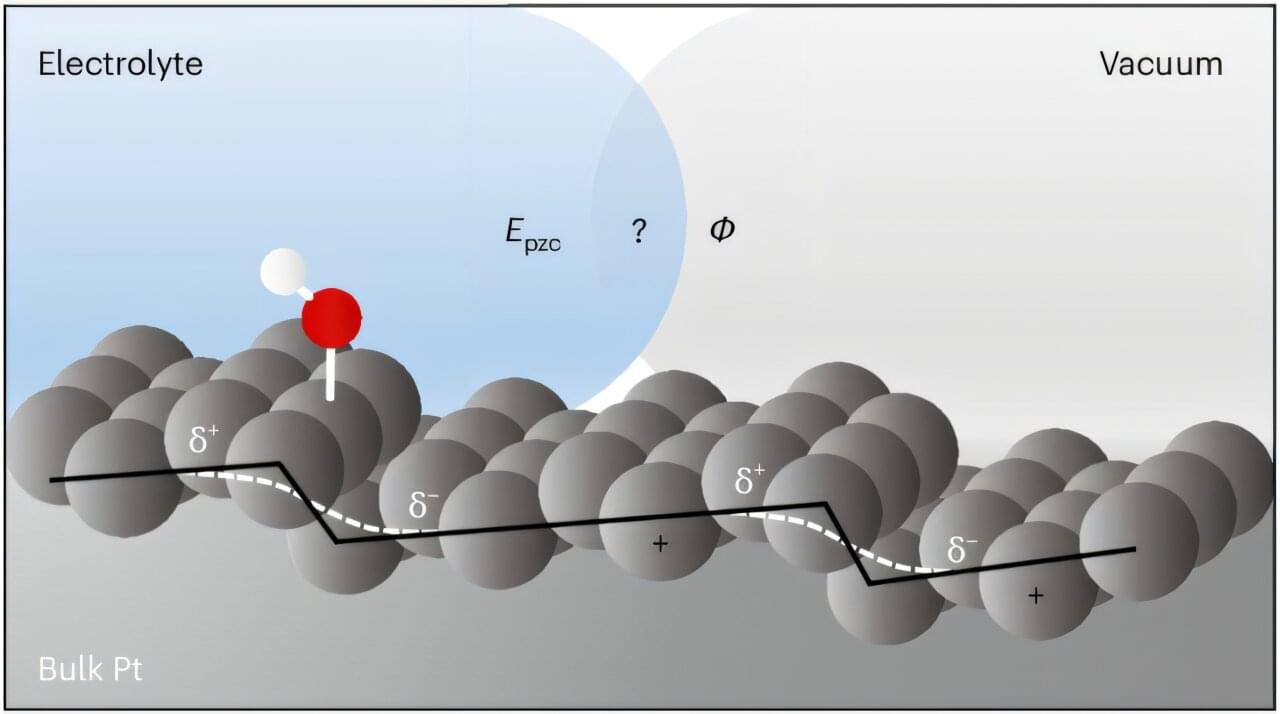
Current electrochemical theory does not adequately describe realistic platinum electrodes. Scientists at Leiden University have now, for the first time, mapped the influence of imperfect platinum surfaces. This provides a more accurate picture of these electrodes, with applications in hydrogen production and sensors.
Platinum electrodes play a crucial role in electrochemical applications. They are used in sensors, catalysis and fuel cells, for example in the production of green hydrogen. These developments call for a better and more realistic understanding of the underlying fundamental electrochemistry. Current theory falls short.
The surface of a platinum electrode appears smooth. But if you zoom in to the atomic level, you see an irregular landscape with so-called defects. These turn out to influence the electrochemical reactions that take place there. Ph.D. candidates Nicci Lauren Fröhlich and Jinwen Liu investigated this influence under the supervision of Professor Marc Koper and Assistant Professor Katharina Doblhoff-Dier at the Leiden Institute of Chemistry. Their results are published in Nature Chemistry.
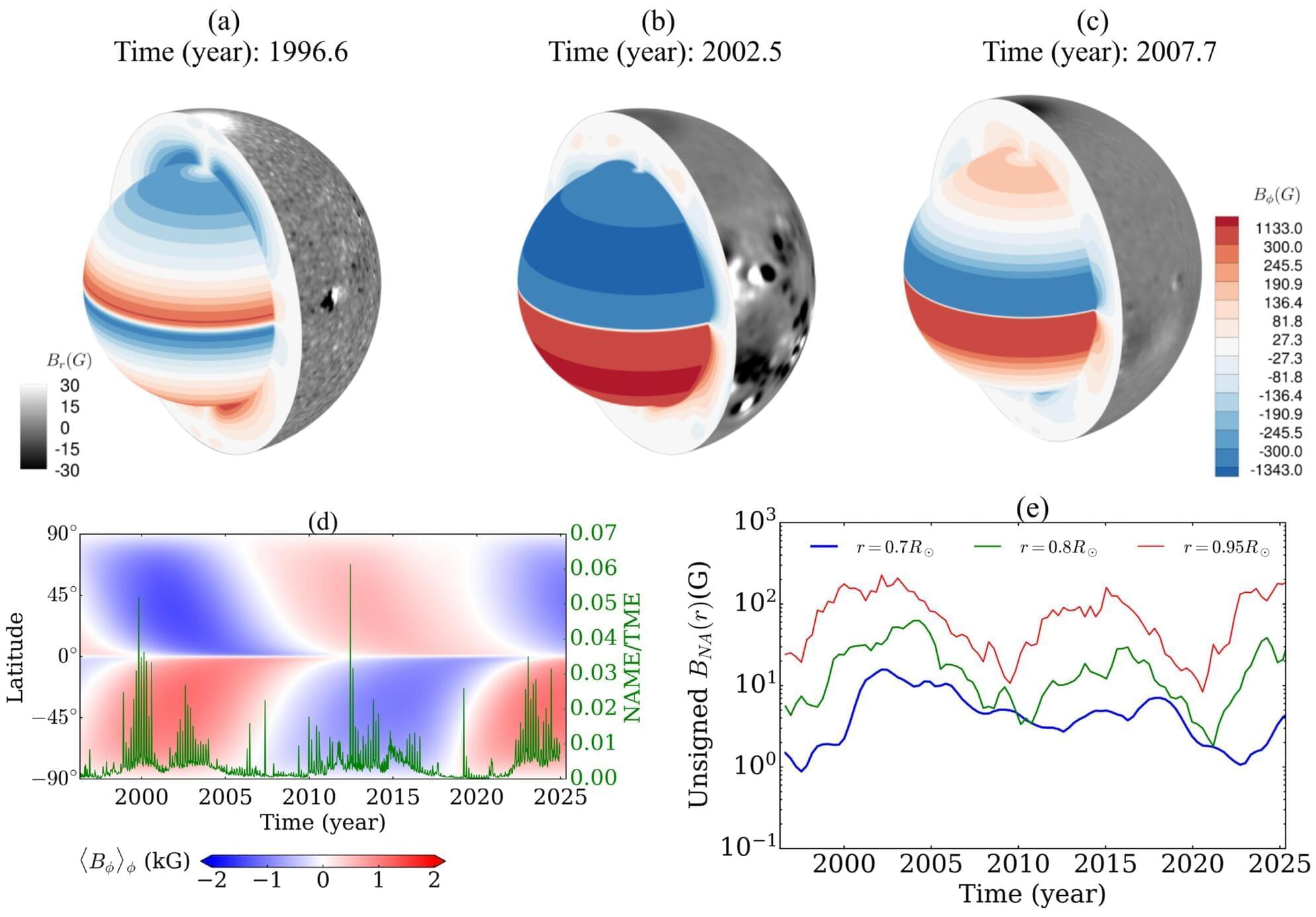
For the first time, scientists have used satellite data to create a 3D map of the sun’s interior magnetic field, the fundamental driver of solar activity. The research, published in The Astrophysical Journal Letters, should enable more accurate predictions of solar cycles and space weather that affects satellites and power grids.
The sun is more than just a fiery hot ball of hydrogen and helium gas. It is a giant magnetic star. Beneath the surface is a magnetic layer that is responsible for everything from the dark spots we see on its face to violent flares that erupt into space. Because of the disruption caused by solar storms, we need to know what is going on inside. We can’t directly observe the interior, so to date we have relied on models that depend on simplified assumptions. But these can be inaccurate.
To get a better idea of what is going on inside the sun, researchers from India fed 30 years of daily magnetic maps from satellites (from 1996 to 2025) into a sophisticated 3D model of the solar dynamo, the physical process that generates the sun’s magnetic field. By using this real-world data, they could track how magnetic fields move deep beneath the surface, where satellites cannot penetrate.
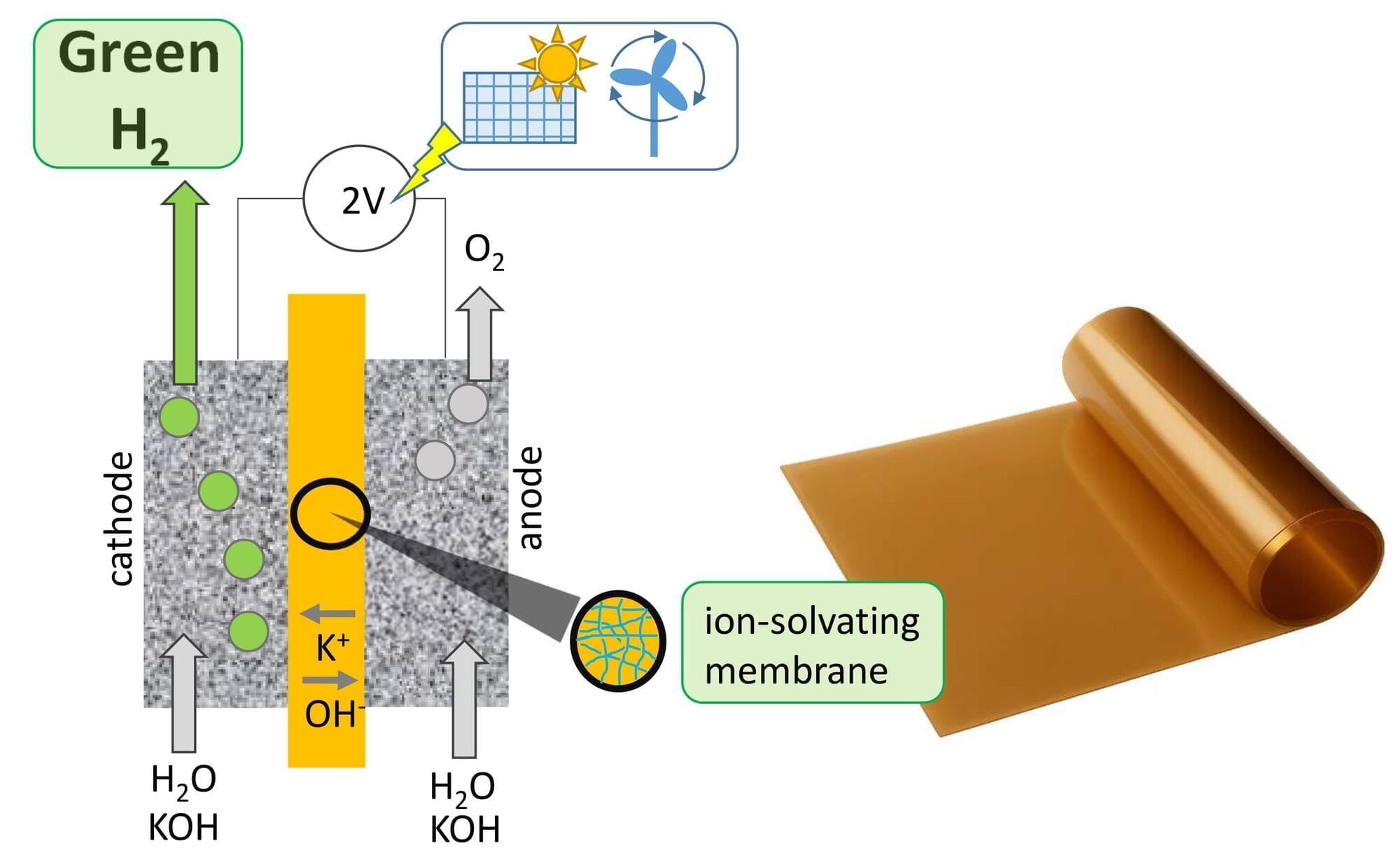
As green hydrogen emerges as a key next-generation clean energy source, securing technologies that enable its stable and cost-effective production has become a critical challenge. However, conventional water electrolysis technologies face limitations in large-scale deployment due to high system costs and operational burdens.
In particular, long-term operation often leads to performance degradation and increased maintenance costs, hindering commercialization. As a result, there is growing demand for new electrolysis technologies that can simultaneously improve efficiency, stability, and cost competitiveness.
A research team led by Dr. Dirk Henkensmeier at the Hydrogen and Fuel Cell Research Center of the Korea Institute of Science and Technology (KIST) has developed a novel membrane material for water electrolysis that operates stably and has significantly higher conductivity under low alkalinity conditions than existing systems.
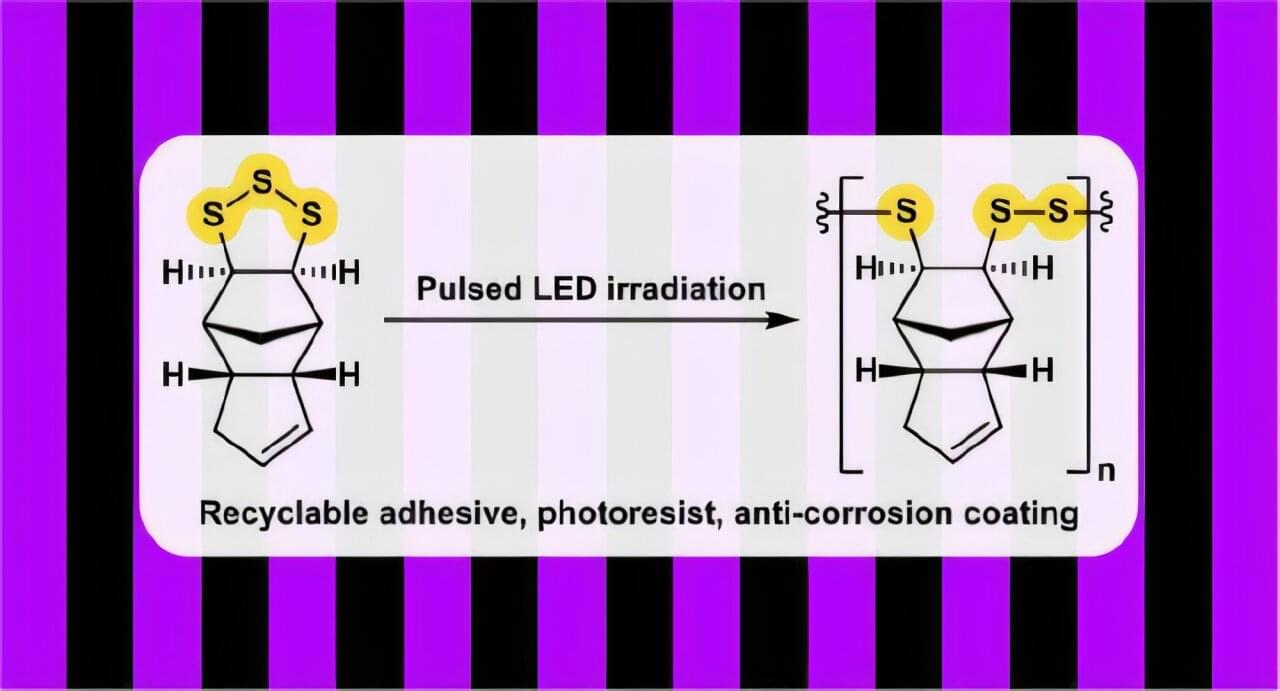
For the first time, scientists have used ultraviolet (UV) light, a low-cost and readily available energy source, to successfully synthesize more sustainable and recyclable polymer materials. Led by green chemistry experts at Flinders University, the development is a major step in making polymers high in sulfur content for more sustainable plastic alternatives using waste materials.
Their paper, “Making and Unmaking Poly(trisulfides) with Light: Precise Regulation of Radical Concentrations via Pulsed LED Irradiation” is published in the Journal of the American Chemical Society.
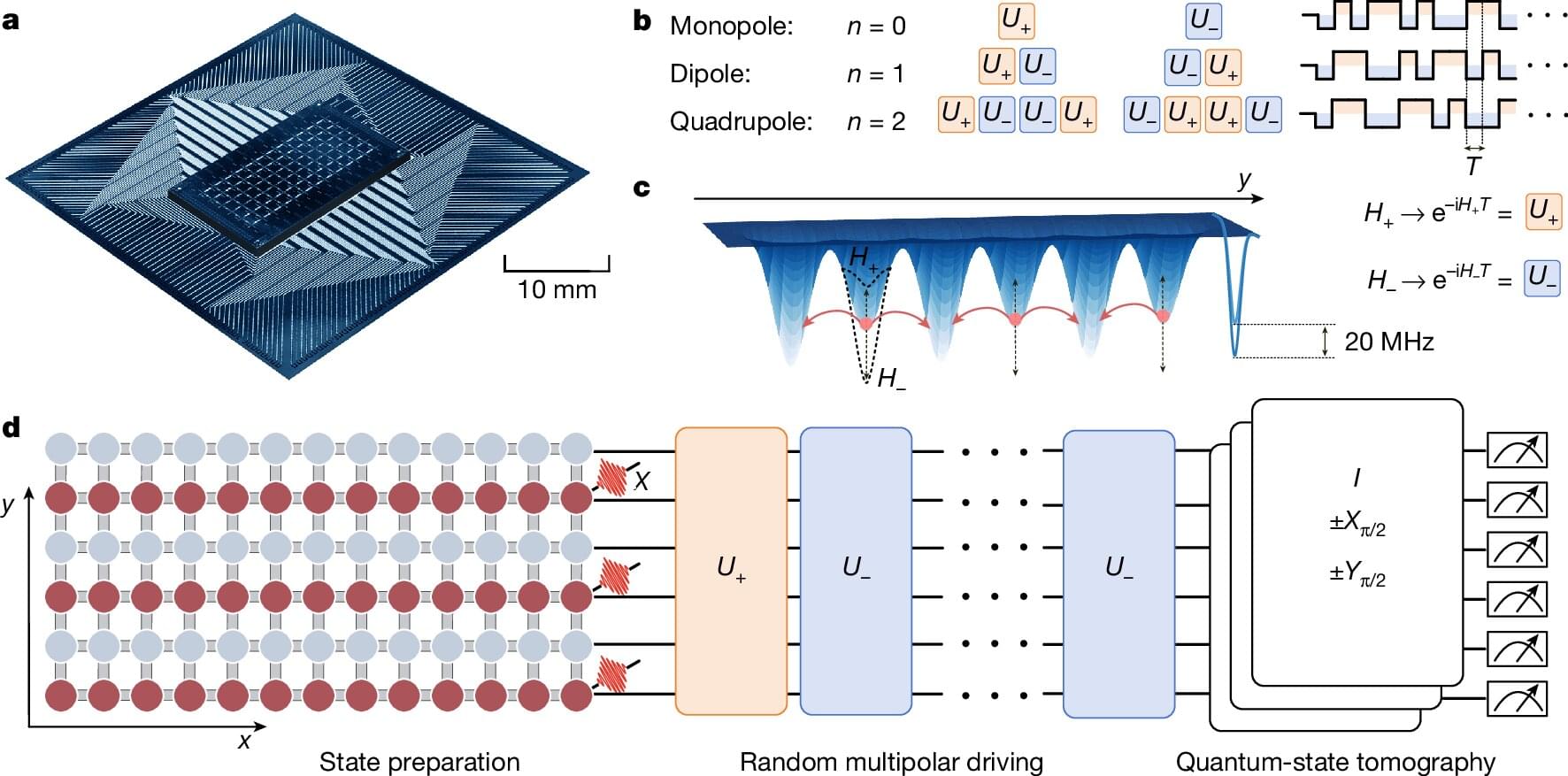
Time-dependent driving has become a powerful tool for creating novel nonequilibrium phases such as discrete time crystals and Floquet topological phases, which do not exist in static systems. Breaking continuous time-translation symmetry typically leads to the outcome that driven quantum systems absorb energy and eventually heat up toward a featureless infinite-temperature state, where coherent structure is lost.
Understanding how fast this heating process occurs and whether it can be controlled has become a challenge in nonequilibrium physics. High-frequency periodic driving is known to delay heating, but much less is known about heating dynamics under more general, non-periodic driving protocols.
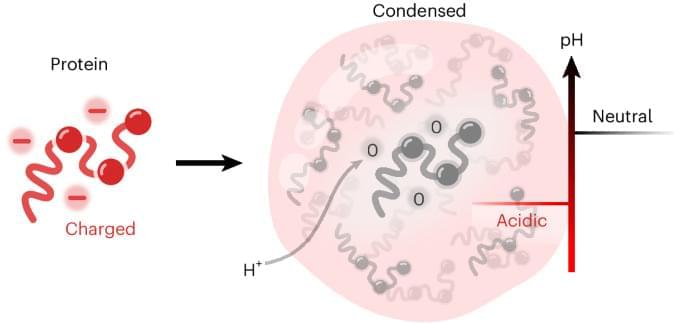
PH is a critical regulator of (bio)chemical processes and therefore tightly regulated in nature. Now, proteins have been shown to possess the functionality to drive pH gradients without requiring energy input or membrane enclosure but through condensation. Protein condensates can drive unique pH gradients that modulate biochemical activity in both living and artificial systems.

Now online! Structural steps along the assembly of proteasome storage granules—membraneless organelles that form in response to metabolic shifts in yeast—are visualized inside cells by cryo-electron tomography. Inactive 26S proteasomes oligomerize into trimers, which assemble into paracrystalline arrays that serve as reservoirs of fully assembled proteasomes under conditions of low energy, ready for reactivation when glucose is restored.