Toggle light / dark theme

Human genome rearrangement with programmable bridge recombinases

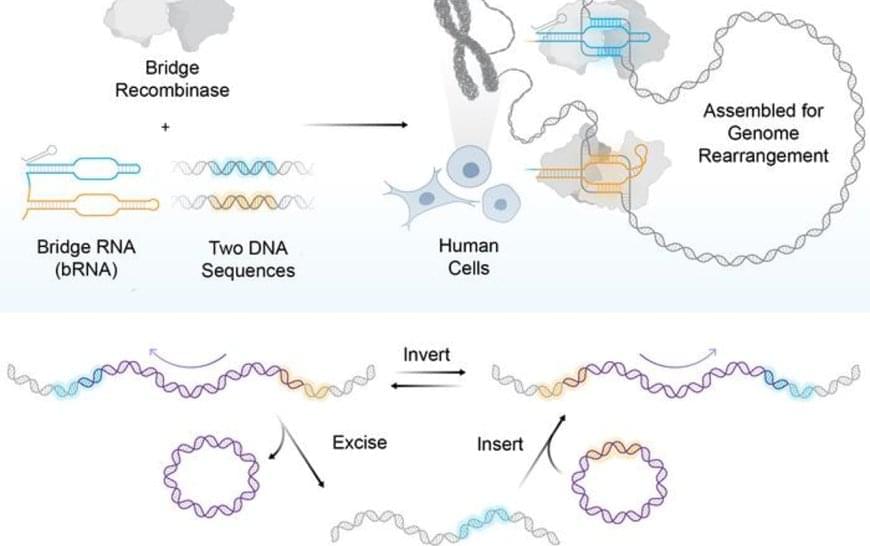
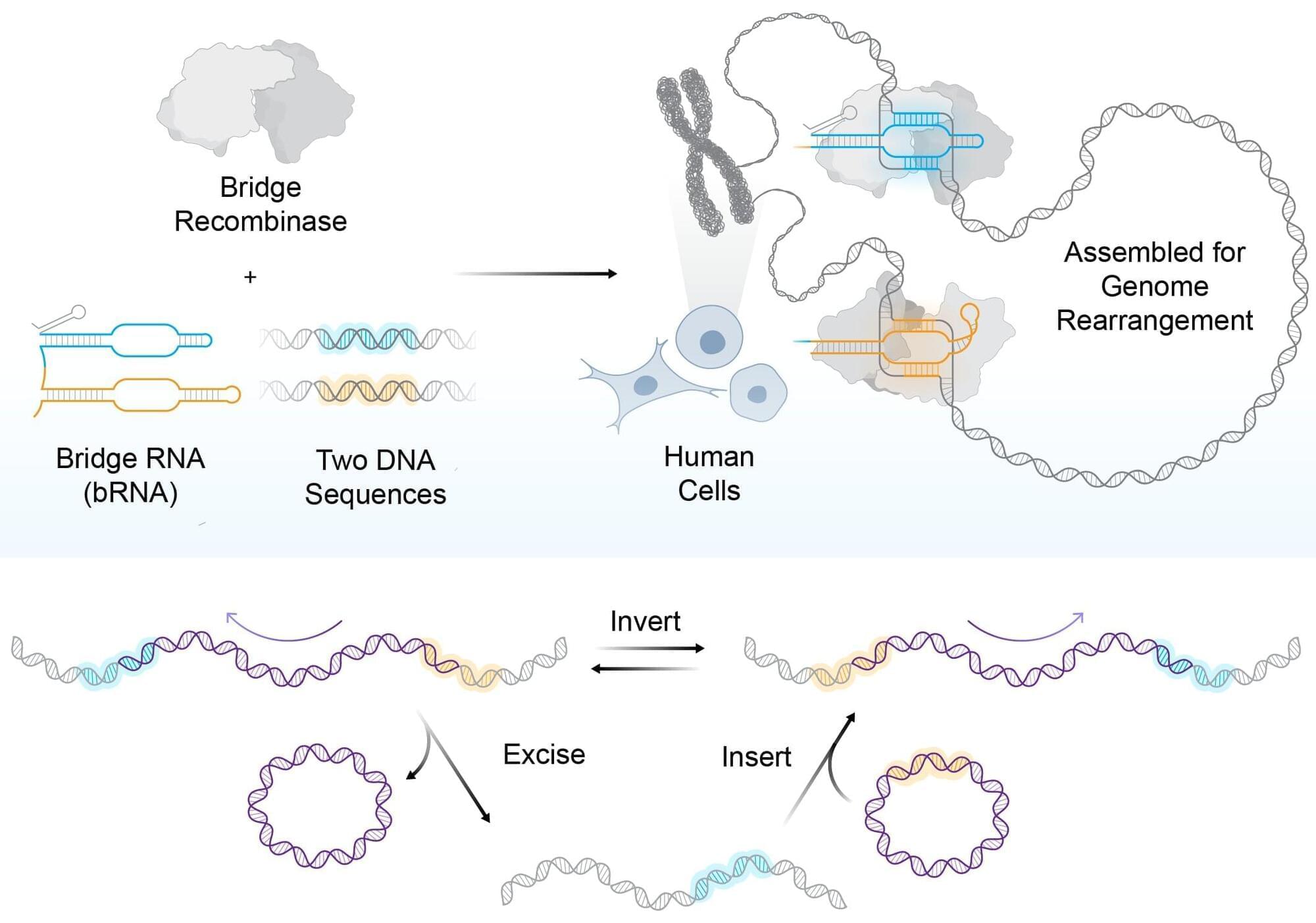
Bridge recombinases were discovered from parasitic mobile genetic elements that hijack bacterial genomes for their own survival. Presented last year in the journal Nature, the same team found these elements encode both a new class of structured guide RNA, which they named a “bridge RNA”, and a recombinase enzyme that rearranges DNA. The researchers repurposed this natural system by reprogramming the bridge RNA to target new DNA sequences, creating the foundation for a new type of precise gene editing tool they called bridge recombinases.

Starting with 72 different natural bridge recombinase systems isolated from bacteria, the team found that about 25% showed some activity in human cells, but most were barely detectable. Only one system, called ISCro4, showed enough measurable activity to enable further optimization. They then systematically improved both the protein and its RNA guide components, testing thousands of variations until they achieved 20% efficiency for DNA insertions and 82% specificity for hitting intended targets in the human genome.

While CRISPR uses a single guide RNA to target one DNA location, bridge RNAs are unique because they can simultaneously recognize two different DNA targets through distinct binding loops. This dual recognition enables the system to perform coordinated rearrangements such as bringing together distant chromosomal regions to excise genetic material or flipping existing sequences in reverse orientation. The system acts as molecular scaffolding that holds two DNA sites together while the recombinase enzyme performs the rearrangement reaction.

As a proof-of-concept, the researchers created artificial DNA constructs containing the same toxic repeat sequences that cause progressive neuromuscular decline in Friedreich’s ataxia patients. While healthy individuals carry fewer than 10 sequential copies of a three-letter DNA sequence, people with the disorder can harbor up to 1,700 copies, which interferes with normal gene function. The engineered ISCro4 successfully removed these repeats from the artificial constructs, in some cases eliminating over 80% of the expanded sequences.

The team also demonstrated that bridge recombinases could replicate existing therapeutic approaches by successfully removing the BCL11A enhancer, the same target disrupted in an FDA-approved sickle cell anemia treatment. And because bridge recombinases can move massive amounts of DNA, the technology could also help model the large-scale genomic rearrangements associated with cancers.


For decades, gene-editing science has been limited to making small, precise edits to human DNA, akin to correcting typos in the genetic code. The researchers are changing that paradigm with a universal gene editing system that allows for cutting and pasting of entire genomic paragraphs, rearranging whole chapters, and even restructuring entire passages of the genomic manuscript.

DNA Study of 117-Year-Old Woman Reveals Clues to a Long Life

There’s no escaping the unrelenting passage of time, but supercentenarians who live to see their 110th birthday have a peculiar ability to postpone the inevitable.

A thorough health evaluation of one of the world’s oldest people, Maria Branyas, suggests that one of the reasons she lived to 117 was that she possessed an exceptionally young genome.

Some of her rare genetic variants are linked to longevity, immune function, and a healthy heart and brain.

New Huntington’s Disease Therapy Slows Patients’ Disease by 75%

Huntington’s disease is a genetic disorder that is caused by an unusual number of repeats in the huntingtin gene; there make the gene too long, and lead to the production of a toxic protein in brain cells. Symptoms of the disease tend to arise when a person is in their 30s or 40s and it is typically fatal within 20 years. New work may change that, however.

Professor Dragan Primorac, MD, PhD — Shaping The Future Of Personalized Medicine

Shaping The Future Of Personalized Medicine — Professor Dragan[ ](https://www.facebook.com/PrimoracDragan?__cft__[0]=AZWpslTHjsy1a1kjedsti2RJw9yv6FhOXDFg2kyiufa2-D4Gk8TYoTy6HPaDPGARaq1EESF8mpBiV9Jjt2gpkh8Np3gpvzqTNu4cOTW-m31Hn4MVmEFyC6gnP5_-bMEdn1Gn81MUYh3llD5MqtPqF8dPWOZxq1Oo7MbC2g5664Of2FI4tc98YxJrFewUmig_tH0&__tn__=-]K-R)Primorac MD, PhD — Founder, St. Catherine Specialty Hospital


Professor Dragan Primorac, MD., PhD (https://www.draganprimorac.com/) is a globally recognized physician-scientist whose work spans personalized medicine, regenerative therapies, and forensic genetics.

From 2003 to 2009 Prof. Primorac served as the Minister of Science, Education and Sports of the Republic of Croatia. The Ministry of Science and Education of Croatia is the ministry in the Government of Croatia which is in charge of primary, secondary and tertiary education, research institutions and sports (https://mzom.gov.hr/en).

Prof. Primorac is the Founder of St. Catherine Specialty Hospital in Zagreb Croatia (https://www.stcatherine.com/), the official hospital of the Croatian Olympic Committee as well as the official hospital of the Croatian Football Federation. St. Catherine Hospital is affiliated with four medical schools and the Ministry of Science and Education recently announced that the St. Catherine Hospital became Scientific Center of Excellence for the Personalized Medicine\.

AI and optogenetics enable precise Parkinson’s diagnosis and treatment in mice

Globally recognized figures Muhammad Ali and Michael J. Fox have long suffered from Parkinson’s disease. The disease presents a complex set of motor symptoms, including tremors, rigidity, bradykinesia, and postural instability. However, traditional diagnostic methods have struggled to sensitively detect changes in the early stages, and drugs targeting brain signal regulation have had limited clinical effectiveness.

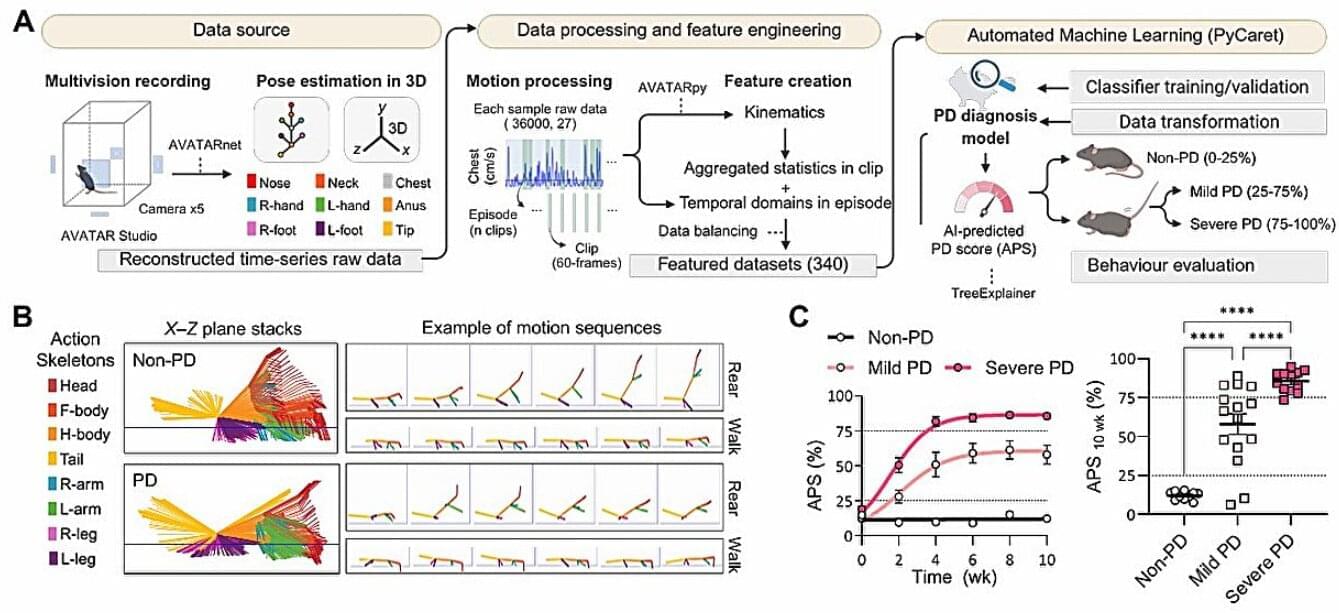
Recently, Korean researchers successfully demonstrated the potential of a technology that integrates AI and optogenetics as a tool for precise diagnosis and therapeutic evaluation of Parkinson’s disease in mice. They have also proposed a strategy for developing next-generation personalized treatments.

A collaborative research team, comprising Professor Won Do Heo’s team from the Department of Biological Sciences, Professor Daesoo Kim’s team from the Department of Brain and Cognitive Sciences, and Director Chang-Jun Lee’s team from the Institute for Basic Science (IBS) Center for Cognition and Sociality, achieved a preclinical research breakthrough by combining AI analysis with optogenetics.

Bridge recombinases, optimized for human cells, enable massive programmable DNA rearrangements

For decades, gene-editing science has been limited to making small, precise edits to human DNA, akin to correcting typos in the genetic code. Arc Institute researchers are changing that paradigm with a universal gene editing system that allows for cutting and pasting of entire genomic paragraphs, rearranging whole chapters, and even restructuring entire passages of the genomic manuscript.
Scientific breakthrough leads to ‘fluorescent biological qubit’ — it could mean turning your cells into quantum sensors

Fluorescent proteins, which can be found in a variety of marine organisms, absorb light at one wavelength and emit it at another, longer wavelength; this is, for instance, what gives some jellyfish the ability to glow. As such, they are used by biologists to tag cells through the genetic encoding and in the fusing of proteins.

The researchers found that the fluorophore in these proteins, which enables the immittance of light, can be used as qubits due to their ability to have a metastable triplet state. This is where a molecule absorbs light and transitions into an excited state with two of its highest-energy electrons in a parallel spin. This lasts for a brief period before decaying. In quantum mechanical terms, the molecule is in a superposition of multiple states at once until directly observed or disrupted by an external interference.

Enhanced CAR T cells emerge from genetic screening

CAR T cells are patient-derived, genetically engineered immune cells. They are “living drugs” and constitute a milestone in modern medicine. Equipping T cells, a key cell type of the immune system, with a “chimeric antigen receptor” (CAR) enables them to specifically recognize and attack cancer cells.

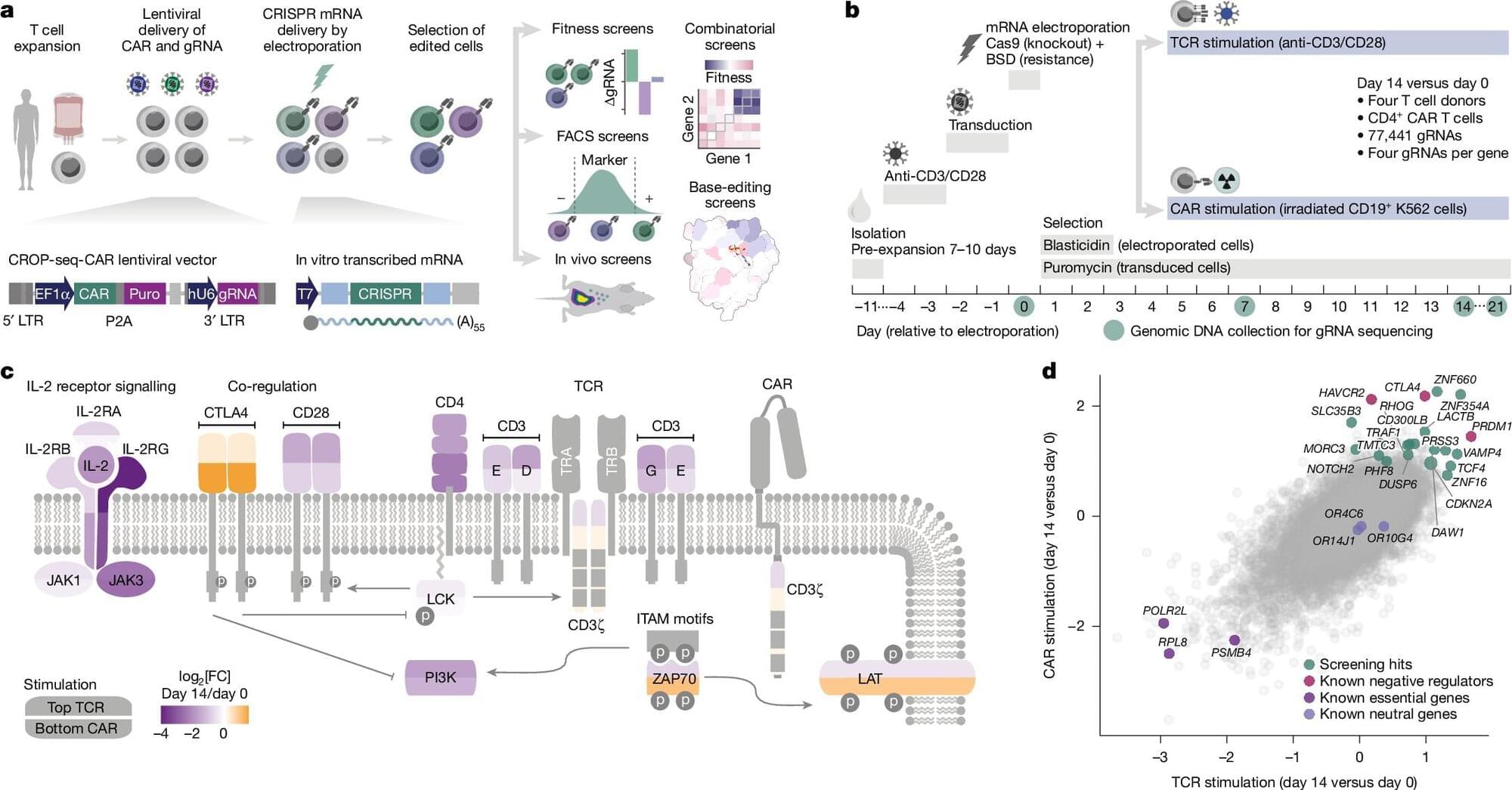
CAR T cell therapy has demonstrated its potential by curing patients with otherwise untreatable blood cancers. But it still fails for most patients, often due to T cell intrinsic dysfunction. To address their current limitations and to make CAR T cells intrinsically stronger, scientists at the CeMM Research Center for Molecular Medicine of the Austrian Academy of Sciences and the Medical University of Vienna have developed a new method for systematic discovery of genetic boosters of CAR T cell function.

The new study, published in Nature, introduces CELLFIE, a CAR T cell engineering and high-content CRISPR screening platform, enabling researchers to systematically modify CAR T cells and evaluate their therapeutic potential.

Nectandrin B (Found In Nutmeg) Extends Lifespan As Much As Rapamycin

Join us on Patreon! https://www.patreon.com/MichaelLustgartenPhD

Discount Links/Affiliates:
Blood testing (where I get the majority of my labs): https://www.ultalabtests.com/partners/michaellustgarten.

At-Home Metabolomics: https://www.iollo.com?ref=michael-lustgarten.
Use Code: CONQUERAGING At Checkout.

Clearly Filtered Water Filter: https://get.aspr.app/SHoPY

Epigenetic, Telomere Testing: https://trudiagnostic.com/?irclickid=U-s3Ii2r7xyIU-LSYLyQdQ6…M0&irgwc=1
Use Code: CONQUERAGING

NAD+ Quantification: https://www.jinfiniti.com/intracellular-nad-test/

Novel gene therapy for hereditary hearing loss developed at Tel Aviv University

Scientists from the Gray Faculty of Medical & Health Sciences at Tel Aviv University introduced an innovative gene therapy method to treat impairments in hearing and balance caused by inner ear dysfunction. According to the researchers, “This treatment constitutes an improvement over existing strategies, demonstrating enhanced efficiency and holds promise for treating a wide range of mutations that cause hearing loss.”

The study was led by Prof. Karen Avraham, Dean of the Gray Faculty of Medical & Health Sciences, and Roni Hahn, a PhD student from the Department of Human Molecular Genetics and Biochemistry. The study was conducted in collaboration with Prof. Jeffrey Holt and Dr. Gwenaëlle Géléoc from Boston Children’s Hospital and Harvard Medical School and was supported by the US-Israel Binational Science Foundation (BSF), the National Institutes of Health/NIDCD and the Israel Science Foundation Breakthrough Research Program. The study was featured on the cover of the journal EMBO Molecular Medicine.

Prof. Avraham explains: “The inner ear consists of two highly coordinated systems: the auditory system, which detects, processes, and transmits sound signals to the brain, and the vestibular system, which enables spatial orientation and balance. A wide range of genetic variants in DNA can affect the function of these systems, leading to sensorineural hearing loss and balance problems. Indeed, hearing loss is the most common sensory impairment worldwide, with over half of congenital cases caused by genetic factors. In this study, we aimed to investigate an effective gene therapy for these cases using an approach that has not been applied in this context before.”

/* */