Toggle light / dark theme

HALO & HARC Balloon Launched Hybrid Rockets with Bill Brown

See how we developed Hybrid rockets and launched them from high altitude balloon initially with the Huntsville Alabama L5 Society (HAL5)‘s High Altitude Lift-Off (HALO) Program and later with our High Altitude Research Corporation (HARC). See our Balloon Launch Return Vehicle (BLRV) and our HARC Cheap Access to Space (CATS) Prize rocket. Hear some of our war stories from these adventures. A balloon launched rocket is known as a rockoon.

Watch next week for a related interview, The Inside Scoop on Virgin Galactic with Tim Pickens.

You can support Galactic Gregs by supporting the sister channel Green Gregs by clicking the links below:
For your space habitat garden buy worms at greengregs.com!
See the Special Deals at My Patriot Supply (great space mission food): www.PrepWithGreg.com.
For gardening in your space habitat (or on Earth) Galactic Gregs has teamed up with True Leaf Market to bring you a great selection of seed for your planting. Check it out: http://www.pntrac.com/t/TUJGRklGSkJGTU1IS0hCRkpIRk1K

Run out of milk? Robots on call for Singapore home deliveries

Got milk?


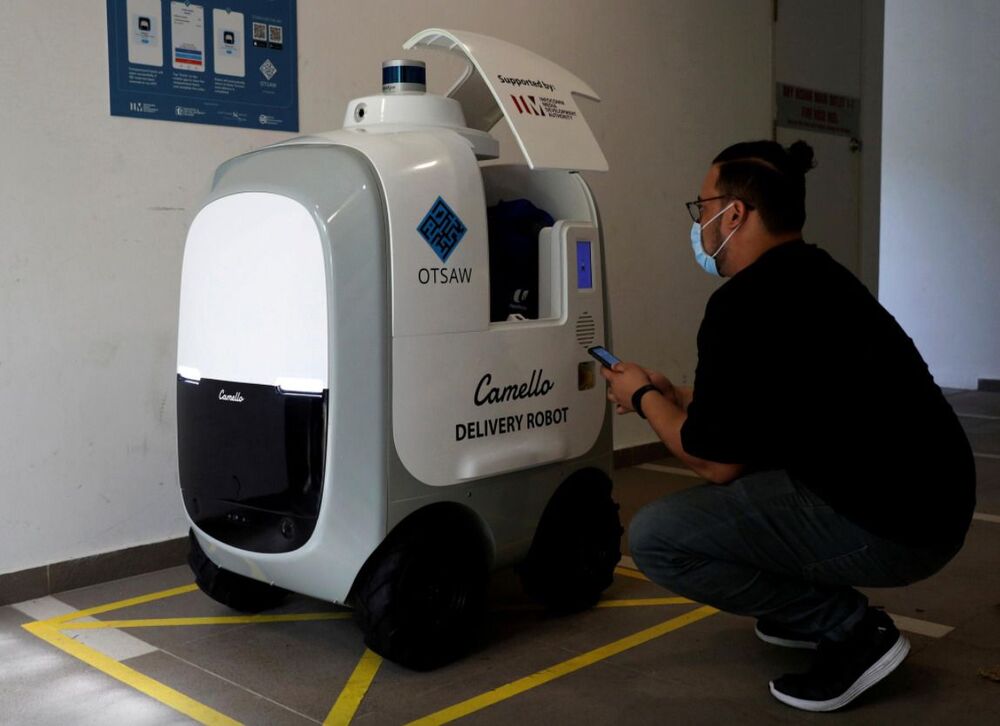
Hoping to capitalise on a surge in demand for home deliveries, a Singapore technology company has deployed a pair of robots to bring residents their groceries in one part of the city state.

Developed by OTSAW Digital and both named “Camello”, the robots’ services have been offered to 700 households in a one-year trial.

Users can book delivery slots for their milk and eggs, and an app notifies them when the robot is about to reach a pick-up point — usually the lobby of an apartment building.

Space Flight Revolution and Mars Colonization with Dr. Robert ‘Bob’ Zubrin

The current revolution in space flight and other developments for Mars Colonization. See what visionary and lead space activist Dr. Robert ‘Bob’ Zubrin has to say about these and many other driving topics!

You can support Galactic Gregs by supporting the sister channel Green Gregs by clicking the links below:
For your space habitat garden buy worms at greengregs.com!
See the Special Deals at My Patriot Supply (great space mission food): www.PrepWithGreg.com.
For gardening in your space habitat (or on Earth) Galactic Gregs has teamed up with True Leaf Market to bring you a great selection of seed for your planting. Check it out: http://www.pntrac.com/t/TUJGRklGSkJGTU1IS0hCRkpIRk1K
U.S. approves massive solar project in California desert

The Biden administration on Monday said it has approved a major solar energy project in the California desert that will be capable of powering nearly 90000 homes.

The $550 million Crimson Solar Project will be sited on 2000 acres of federal land west of Blythe, California, the Interior Department said in a statement. It is being developed by Canadian Solar (CSIQ.O) unit Recurrent Energy and will deliver power to California utility Southern California Edison.

The announcement comes as President Joe Biden has vowed to expand development of renewable energy projects on public lands as part of a broader agenda to fight climate change, create jobs and reverse former President Donald Trump’s emphasis on maximizing fossil fuel extraction.

A boulder-shaped house made from 3D-printed concrete is ready for its first tenants

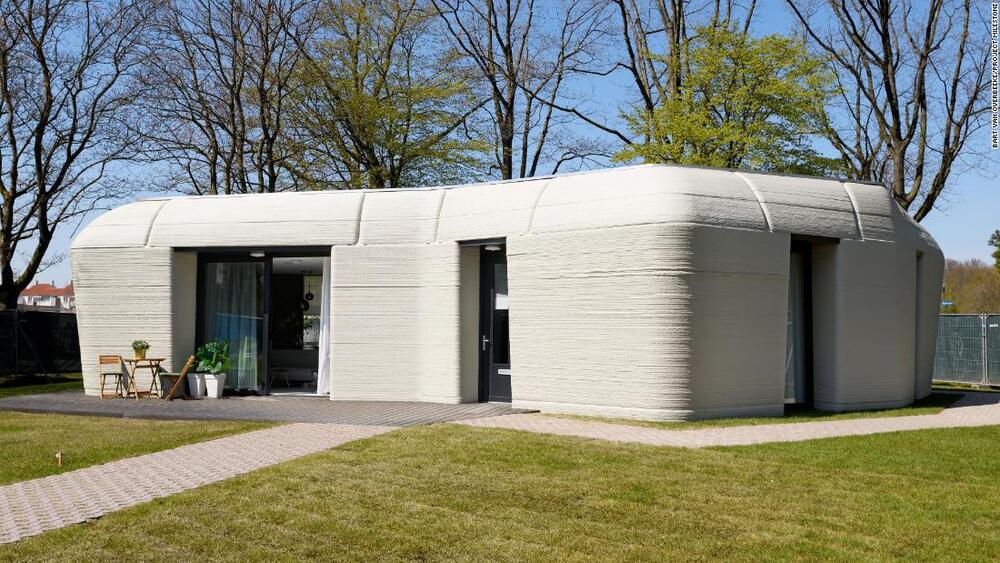
A Dutch couple have become the proud new tenants of the country’s first ever 3D-printed house.

Elize Lutz and Harrie Dekkers have been given the digital key to the gray, boulder-shaped building in the Bosrijk neighborhood of Eindhoven, in the southern Netherlands.

The single-story home has more than 1000 square feet of floor area, with a spacious living room and two bedrooms.

Probing Deep Space With a New Interstellar Spacecraft

When the four-decades-old Voyager 1 and Voyager 2 spacecraft entered interstellar space in 2012 and 2018, respectively, scientists celebrated. These plucky spacecraft had already traveled 120 times the distance from the Earth to the sun to reach the boundary of the heliosphere, the bubble encompassing our solar system that’s affected by the solar wind. The Voyagers discovered the edge of the bubble but left scientists with many questions about how our Sun interacts with the local interstellar medium. The twin Voyagers’ instruments provide limited data, leaving critical gaps in our understanding of this region.

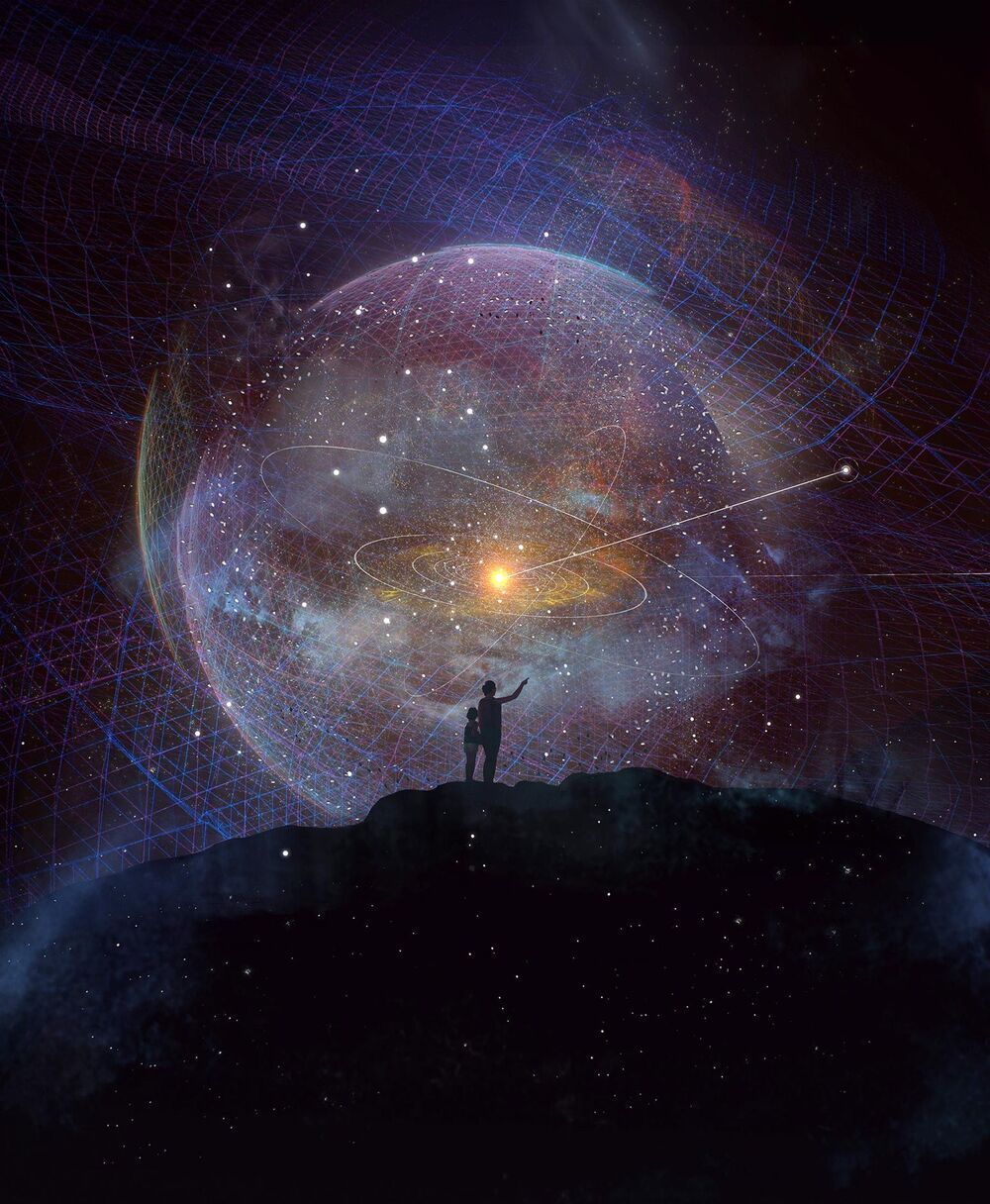
NASA and its partners are now planning for the next spacecraft, currently called the Interstellar Probe, to travel much deeper into interstellar space, 1000 astronomical units (AU) from the sun, with the hope of learning more about how our home heliosphere formed and how it evolves.

“The Interstellar Probe will go to the unknown local interstellar space, where humanity has never reached before,” says Elena Provornikova, the Interstellar Probe heliophysics lead from the Johns Hopkins Applied Physics Lab (APL) in Maryland. “For the first time, we will take a picture of our vast heliosphere from the outside to see what our solar system home looks like.”

/* */