Toggle light / dark theme

Intel Invested $117 Million into AI Startups Including Untether AI

More details on Intel Capital’s new investments in 14 disruptive startups:

Disrupting Artificial Intelligence

Untether AI (Toronto, Ontario, Canada) is developing ultra-efficient, high-performance AI chips that will be the foundation for the next wave of innovation in AI. Untether AI has invented an entirely new type of chip architecture that is specifically designed for neural net inference by eliminating bottlenecks in data movement. This unique architecture moves data 1,000 times faster than traditional architectures, resulting in extreme performance and efficiency. The company was founded by a team of scientists, engineers and experienced entrepreneurs who have successfully brought to market more than 1 billion chips.

AI’s New Challenge: To Be as Smart as an Animal

While the goal may be the same, the various obstacles the AIs will need to overcome to achieve success will vary — they might need to move an object, for example, or demonstrate an understanding of object permanence.

“We expect this to be a hard challenge,” Matthew Crosby, one of the researchers behind the Animal-AI Olympics, told New Scientist. “A perfect score will require a breakthrough in AI, well beyond current capabilities.”

“However,” he continued, “even small successes will show that it is possible, not just to find useful patterns in data, but to extrapolate from these to an understanding of how the world works.”

Who invented the dishwasher, windshield wiper, caller ID? Women created these 50 inventions

On May 5, 1809, Mary Kies became the first woman to receive a patent in the United States. (It was for her technique of weaving straw with silk.)

Of course, women inventors existed before this time, but the property laws in many states made it illegal for women to own property on their own. This led some women to apply for patents in their husbands’ names if they decided to apply at all.

As of last year, only 10 percent of U.S. patent holders were women, although women account for half of doctoral degrees in science and engineering. This disparity is due in part to the U.S. Patent and Trademark Office being more likely to reject patents with women as sole applicants.

Don’t adjust your sets – new research could revolutionise fiber-optic communications

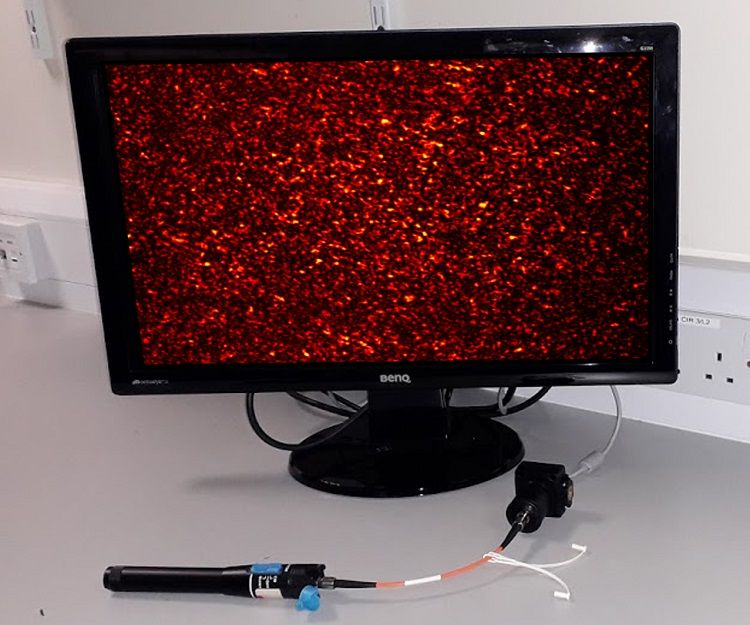
A team of researchers from the University of St Andrews (St Andrews, Scotland) has achieved a breakthrough in the measurement of lasers that they say could revolutionize the future of fiber-optic communications. They also say the wavelength meter (or wavemeter) will boost optical and quantum sensing technology, enhance the performance of next-generation sensors, and expand the information-carrying capacity of fiber-optic networks.


A team of researchers from the University of St Andrews has achieved a breakthrough in the measurement of lasers which could revolutionise the future of fiber-optic communications.

The new research, published in Optics Letters (Wednesday 6 March), reveals the team of scientists has developed a low-cost and highly-sensitive device capable of measuring the wavelength of light with unprecedented accuracy.

The wavemeter development will boost optical and quantum sensing technology, enhancing the performance of next generation sensors and the information-carrying capacity of fiber-optic communications networks.

116 Of The Oldest Color Photos Showing What The World Looked Like 100 Years Ago

When you think of old photographs, you naturally think in terms of black and white, but as you can see from these stunning photographs from the turn of the 20th century, color photography has been around for a lot longer than you think.

Before 1907, if you wanted a color photograph then you (well, a professional colorist) basically had to color it in using different dyes and pigments, but two French brothers called Auguste and Louis Lumière changed all that with a game-changing process that they called the Autochrome Lumière. Using dyed grains of potato starch and light-sensitive emulsion, they were able to produce vibrant photographs without the need for additional colorization. Despite being difficult to manufacture and also somewhat expensive, the process was very popular among amateur photographers and one of the world’s first books of color photography was published using the Autochrome Lumière technique.

The brothers revolutionized the world of color photography until Kodak took things to a whole new level with the invention of Kodachrome film in 1935, a lighter and more convenient alternative that quickly made the Autochrome Lumière obsolete (although its popularity continued in France up until the 1950s). Kodachrome was also eventually overtaken by the rise of digital photography (Kodak stopped manufacturing Kodachrome in 2009), which is now by far the world’s most popular way to take pictures, but modern advances in photographic technology wouldn’t have been possible without the hard work of early pioneers like Auguste and Louis Lumière. Scroll down for a collection of stunning century-old color photographs using their groundbreaking technique.

/* */