Toggle light / dark theme

Aging and chronic inflammation: impacts on olfactory dysfunction-a comprehensive review

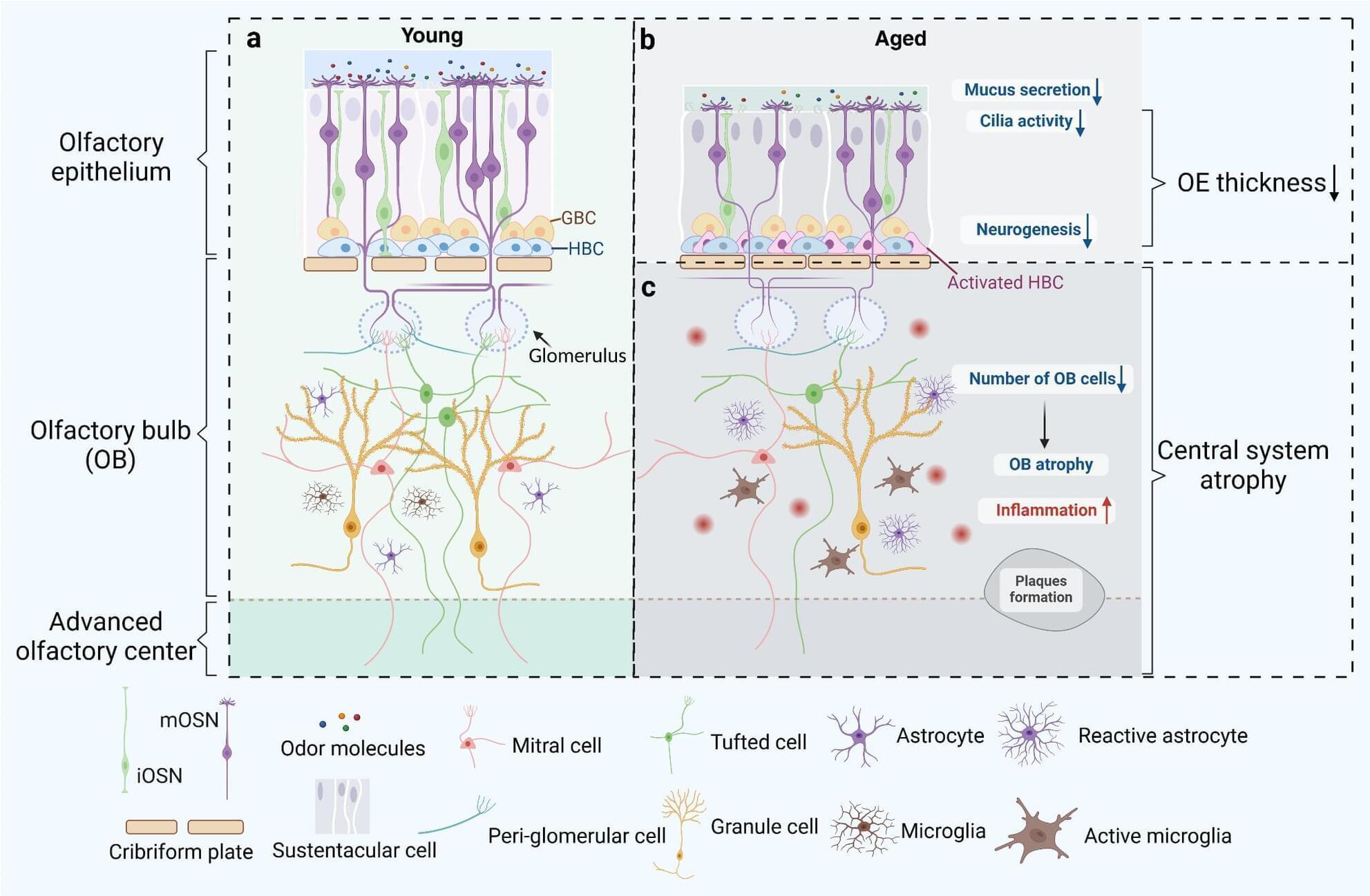
Olfactory dysfunction (OD) is a common nasal disease, particularly prevalent among the elderly population, significantly impacting the affected individuals’ quality of life. This review focuses on the influence of aging and chronic inflammation on olfactory dysfunction, presenting insights from both the peripheral and central olfactory systems. By exploring the molecular mechanisms and pathological changes underlying the occurrence of olfactory dysfunction in relation to age-related diseases and chronic inflammation conditions, we aim to provide a comprehensive theoretical foundation for further research and offer valuable insights for more effective treatment of olfactory dysfunction.
Biomarkers For Slowing Eye Aging, Featuring @DoctorEyeHealth

Join us on Patreon! https://www.patreon.com/MichaelLustgartenPhD

Discount Links/Affiliates:
Blood testing (where I get the majority of my labs): https://www.ultalabtests.com/partners/michaellustgarten.

At-Home Metabolomics: https://www.iollo.com?ref=michael-lustgarten.
Use Code: CONQUERAGING At Checkout.

Clearly Filtered Water Filter: https://get.aspr.app/SHoPY

Epigenetic, Telomere Testing: https://trudiagnostic.com/?irclickid=U-s3Ii2r7xyIU-LSYLyQdQ6…M0&irgwc=1
Use Code: CONQUERAGING

NAD+ Quantification: https://www.jinfiniti.com/intracellular-nad-test/

Nanoparticle-cell interface enables electromagnetic wireless programming of mammalian transgene expression

Recent technological advances are fueling the development of cutting-edge technologies that can monitor and control physiological processes with high precision. These include devices that could control the expression of genes within living organisms, without requiring invasive surgeries or procedures.

Researchers at ETH Zurich recently introduced a new method that enables the electromagnetic programming of the wireless expression regulation (EMPOWER) of transgenes in mammals, via the interfacing of and cells.

Their proposed approach, outlined in a paper published in Nature Nanotechnology, could help to treat , including diabetes, while also opening new possibilities for research in synthetic biology and regenerative medicine.

You might live to be 100. Are you ready?

This leads us to perhaps the hardest change of all: seeing a longer life as an opportunity and overcoming deeply engrained ageist assumptions. Currently, we underestimate the capacity of older people and the promise of our own later years.

David Bowie, a man who knew a thing or two about transitions, described ageing as “an extraordinary process whereby you become the person you always should have been”. If we can make life not just longer, but healthier, productive and engaged for longer, what’s not to like?

For most of human history, only a minority of the young and middle-aged became old. The result is that we underinvest in our later years and fail to provide the required support that a long healthy, productive and engaged life requires. Given how many of us alive can expect to become 80, have a shot at 90, and might even make it to 100, that is a problem which demands change.

Which Epigenetic Clock Is Best For Evaluating Death Risk?

Join us on Patreon! https://www.patreon.com/MichaelLustgartenPhD

Discount Links/Affiliates:
Blood testing (where I get the majority of my labs): https://www.ultalabtests.com/partners/michaellustgarten.

At-Home Metabolomics: https://www.iollo.com?ref=michael-lustgarten.
Use Code: CONQUERAGING At Checkout.

Clearly Filtered Water Filter: https://get.aspr.app/SHoPY

Epigenetic, Telomere Testing: https://trudiagnostic.com/?irclickid=U-s3Ii2r7xyIU-LSYLyQdQ6…M0&irgwc=1
Use Code: CONQUERAGING

NAD+ Quantification: https://www.jinfiniti.com/intracellular-nad-test/

NF-κB-mediated developmental delay extends lifespan in Drosophila

Developmental time (or time to maturity) strongly correlates with an animal’s maximum lifespan, with late-maturing individuals often living longer. However, the genetic mechanisms underlying this phenomenon remain largely unknown. This may be because most previously identified longevity genes regulate growth rate rather than developmental time. To address this gap, we genetically manipulated prothoracicotropic hormone (PTTH), the primary regulator of developmental timing in Drosophila, to explore the genetic link between developmental time and longevity. Loss of PTTH delays developmental timing without altering the growth rate. Intriguingly, PTTH mutants exhibit extended lifespan despite their larger body size. This lifespan extension depends on ecdysone signaling, as feeding 20-hydroxyecdysone to PTTH mutants reverses the effect. Mechanistically, loss of PTTH blunts age-dependent chronic inflammation, specifically in fly hepatocytes (oenocytes). Developmental transcriptomics reveal that NF-κB signaling activates during larva-to-adult transition, with PTTH inducing this signaling via ecdysone. Notably, time-restricted and oenocyte-specific silencing of Relish (an NF-κB homolog) at early 3rd instar larval stages significantly prolongs adult lifespan while delaying pupariation. Our study establishes an aging model that uncouples developmental time from growth rate, highlighting NF-κB signaling as a key developmental program in linking developmental time to adult lifespan.

How bacteria in our aging guts can elevate risk of leukemia and perhaps more

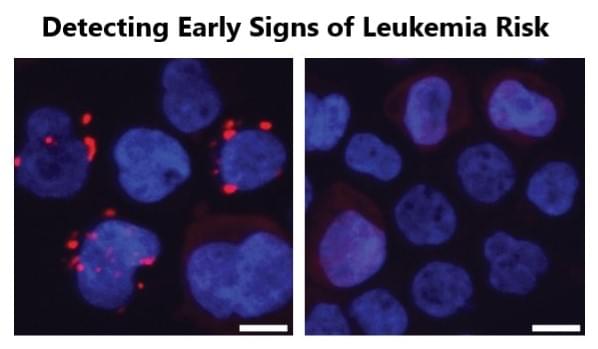
New findings in Nature reveal how age-related gut changes fuel the growth of pre-leukemic blood cells. Scientists at Cincinnati Children’s along with an international team of researchers have discovered a surprising new connection between gut health and blood cancer risk — one that could transform how we think about aging, inflammation, and the early stages of leukemia.

As we grow older — or in some cases, when gut health is compromised by disease — changes in the intestinal lining allow certain bacteria to leak their byproducts into the bloodstream. One such molecule, produced by specific bacteria, acts as a signal that accelerates the expansion of dormant, pre-leukemic blood cells, a critical step to developing full-blown leukemia.

The team’s findings — published April 23, 2025, in the journal Nature — lay out for the first time how this process works. The study also suggests that this mechanism may reach beyond leukemia to influence risk for other diseases and among older people who share a little-known condition called clonal hematopoiesis of indeterminate potential (CHIP).

/* */