Toggle light / dark theme

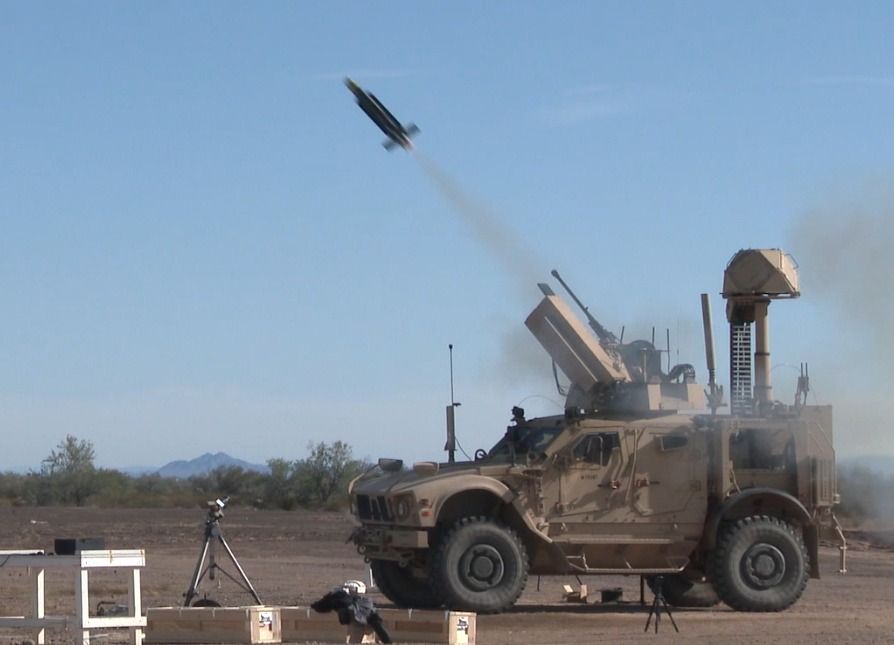
See Raytheon’s Jet-Powered Interceptor Drone In Action

“You want to engage as many targets as you can at longer range so what you get at short range is a few leakers, not the whole swarm,” says McGovern.

Coyote 2 has entered service with the U.S. military and Raytheon are now offering it to international customers. The attack on Abqaiq, and mass drone assaults on the Russian airbase at Khmeimim in Syria, show how easily swarms of drones can be deployed even by non-state actors. Such attacks can rapidly deplete stocks of expensive missiles, or overwhelm them. Any drones that get through can attack with lethal effects.

In future conflicts, drone swarm versus interceptors is likely to become an increasingly key battle. Whoever has the fastest, most agile, and most numerous drones is likely to come out the winner. Coyote 2 may help defenders stay ahead of the threat.


Second skin protects against chemical, biological agents

Recent events such as the COVID-19 pandemic and the use of chemical weapons in the Syria conflict have provided a stark reminder of the plethora of chemical and biological threats that soldiers, medical personnel and first responders face during routine and emergency operations.

Personnel safety relies on which, unfortunately, still leaves much to be desired. For example, high breathability (i.e., the transfer of water vapor from the wearer’s body to the outside world) is critical in protective military uniforms to prevent heat-stress and exhaustion when soldiers are engaged in missions in contaminated environments. The same materials (adsorbents or barrier layers) that provide protection in current garments also detrimentally inhibit breathability.

To tackle these challenges, a multi-institutional team of researchers led by Lawrence Livermore National Laboratory (LLNL) scientist Francesco Fornasiero has developed a smart, breathable fabric designed to protect the wearer against biological and chemical warfare agents. Material of this type could be used in clinical and medical settings as well. The work was recently published online in Advanced Functional Materials and represents the successful completion of Phase I of the project, which is funded by the Defense Threat Reduction Agency through the Dynamic Multifunctional Materials for a Second Skin “D[MS]2” program.

How Rich Is the Catholic Church? It’s Impossible to Tell

“In the 1960s, Italian media uncovered evidence that the Vatican had invested in entities that conflict directly with the church’s holy mission, including Istituto Farmacologico Serono, a pharmaceutical company that made birth control pills, and Udine, a military weapons manufacturer. There have also been unconfirmed rumor of church money in firearms manufacturer Beretta and companies with activities in gambling and pornography. It has been linked to dealings with Nazi gold during World War II as well.”


How much real estate does the Catholic Church own? What are its equity holdings? These questions, and more, not answered.

Author: Emily StewartPublish date:

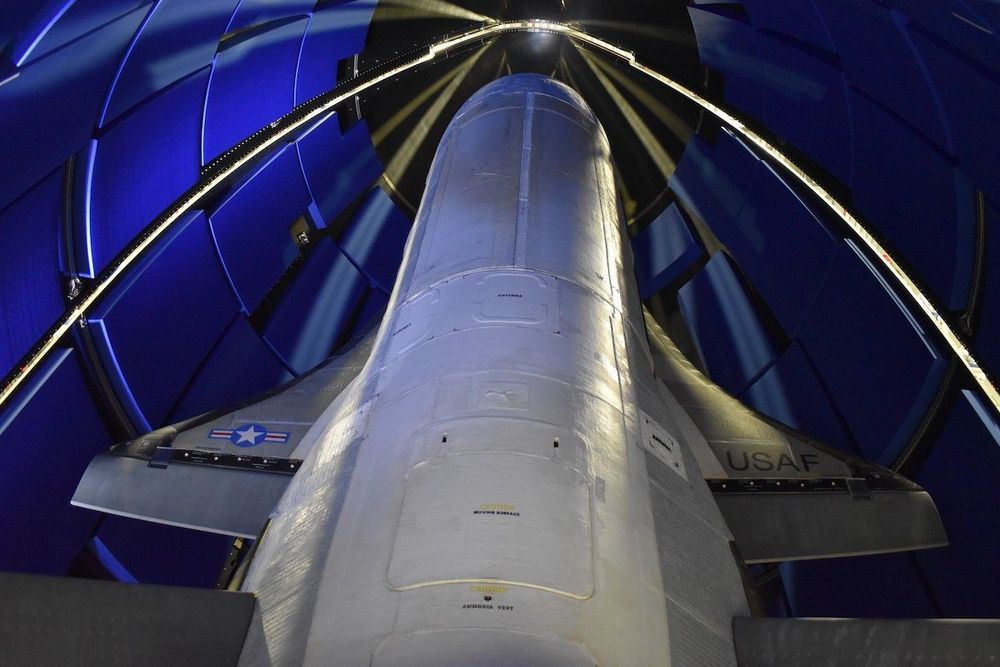
Payloads revealed for next flight of X-37B military spaceplane

The next flight of the U.S. military’s reusable X-37B spaceplane — scheduled for liftoff May 16 from Cape Canaveral — will carry more experiments into orbit than any of the winged ship’s previous missions, including two payloads for NASA and a small deployable satellite built by Air Force Academy cadets.

Military officials announced new details about the upcoming X-37B mission Wednesday, and confirmed its target launch date of May 16. The Boeing-built spaceplane was mounted on top of a United Launch Alliance Atlas 5 rocket Tuesday inside the Vertical Integration Facility at Cape Canaveral’s Complex 41 launch pad.

The unpiloted spacecraft launches inside a payload shroud on top of a conventional rocket, unfurls a power-generating solar array in orbit to generate electricity, and returns to Earth for a runway landing like NASA’s retired space shuttle.

The US Space Force is recruiting (and has a snazzy promo video just for you)

“Some people look to the stars and ask, ‘What if?’” the video says. “Our job is to have an answer.” Space Force officials shared the video on social media with a link to a recruitment website here.


It’s official: The U.S. Space Force wants you to join the ranks of the newest branch of the American Armed Forces.

In a new recruitment video unveiled today (May 6), the Space Force makes its case for a military life among the stars.

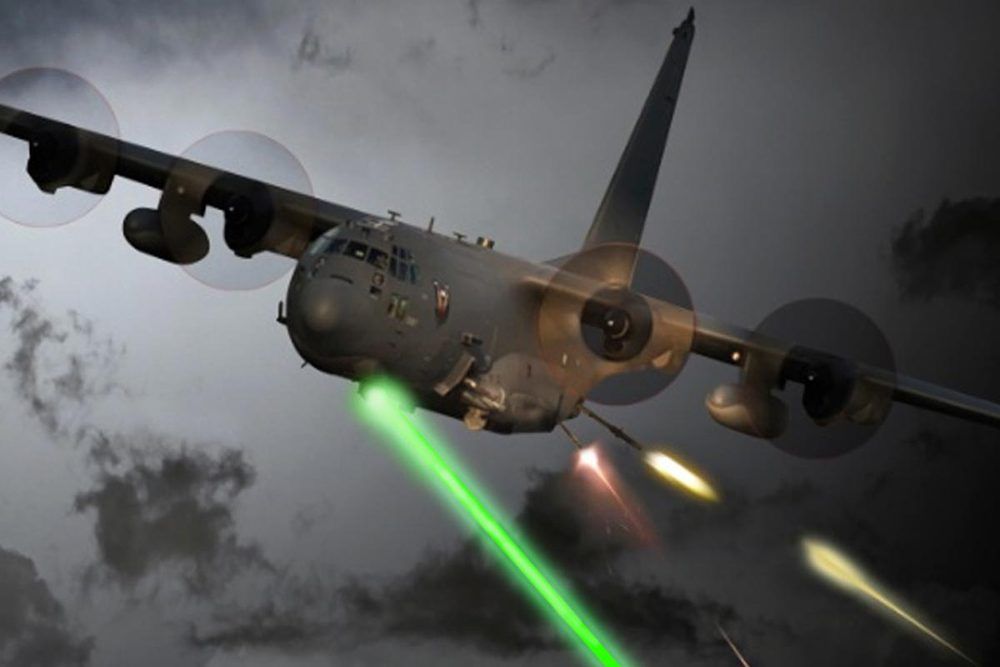
Air Force Special Ops Short on Funding for AC-130 Gunship Laser

The Air Force is short of funding to speed development of a laser weapon for what is already one of the most lethal platforms in the U.S. arsenal — the Special Operations AC-130J Ghostrider gunship, Air Force Lt. Gen. Marshall Webb testified Wednesday.

“We’re $58 million short of having a full program that would get us a 60-kilowatt laser flying on an AC-130 by 2022,” Webb, commander of Air Force Special Operations Command, said at a hearing of the Senate Armed Services Subcommittee on Emerging threats.

Webb was responding to questions from Sen. Martin Heinrich, D-New Mexico, who said at the current pace of testing and funding, a laser weapon for the AC-130 would not be operational until 2030.

Gatling Laser can Down Drones at 500m

Circa 2013 o.o


Rheinmetall Defense Electronics unveiled their new “Gatling Laser” which can be mounted on ships as part of a new sea-based anti-drone laser system. The four 20 kilowatt lasers fire simultaneously as a single powerful 80 kilowatt beam. The firm boasts units can even be combined for ‘unlimited’ power. The Gatling laser can reportedly shoot down a drone at 500 meters.

/* */