Should hikers have a backup map plan in case their phone map malfunctions or their phone gets lost? This is what a recent study published in the Journal of | Technology


Apple CEO Tim Cook is signaling that Visual Intelligence will be the defining feature of the company’s push into wearable AI devices. Also: What to expect from Apple’s first product launches of the year during the week of March 2; the iPhone 18 Pro’s color options; and the latest on iOS 26.4.
Last week in Power On: Tesla CarPlay support was held back by the need for wider adoption of iOS 26.
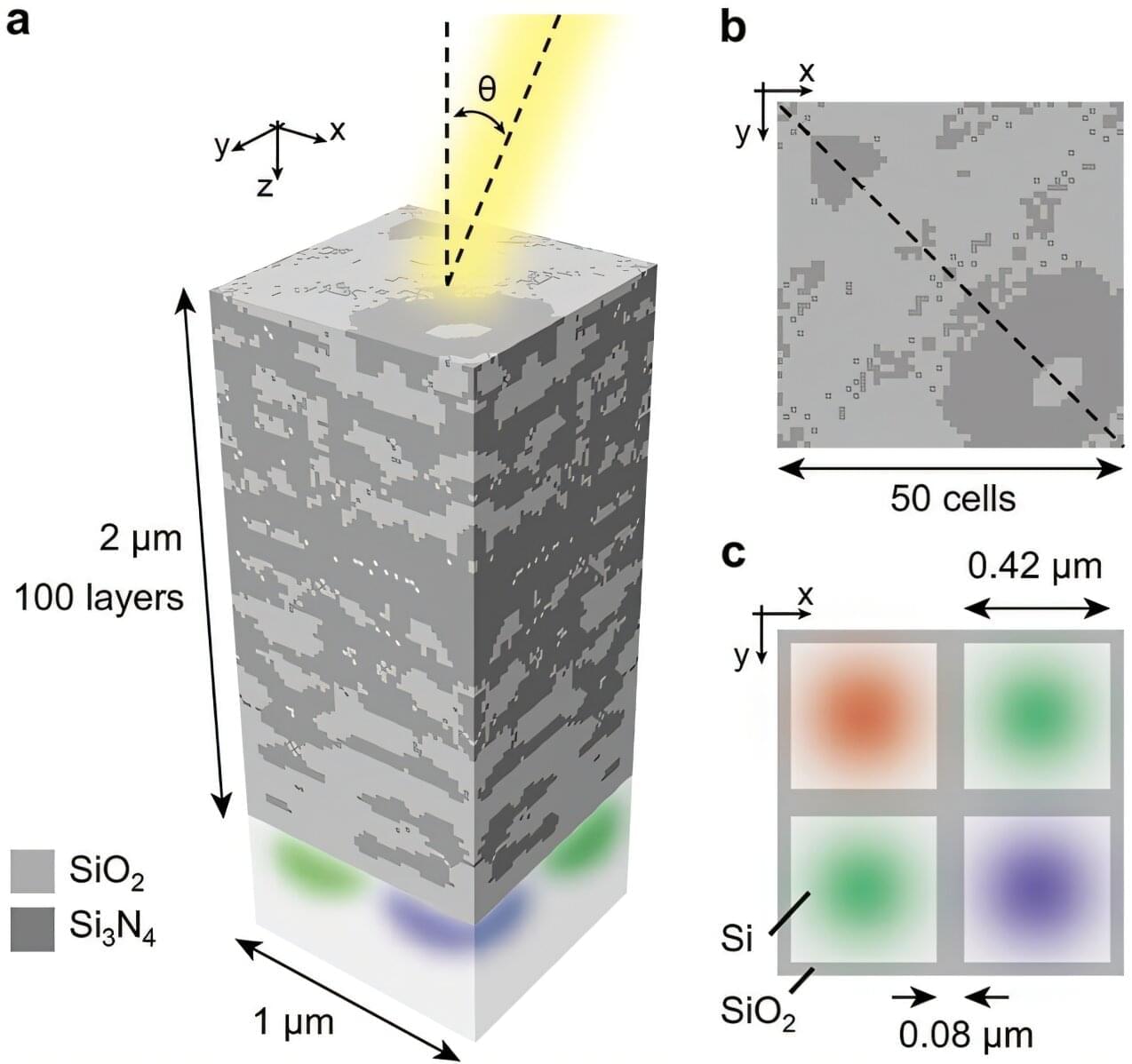
Smartphone cameras are becoming smaller, yet photos are becoming sharper. Korean researchers have elevated the limits of next-generation smartphone cameras by developing a new image sensor technology that can accurately represent colors regardless of the angle at which light enters. The team achieved this by utilizing a “metamaterial” that designs the movement of light through structures too small to be seen with the naked eye.
A research team led by Professor Min Seok Jang of the School of Electrical Engineering, in collaboration with Professor Haejun Chung’s team at Hanyang, has developed a metamaterial-based technology for image sensors that can stably separate colors even when the angle of light incidence varies.
The findings were published in Advanced Optical Materials.
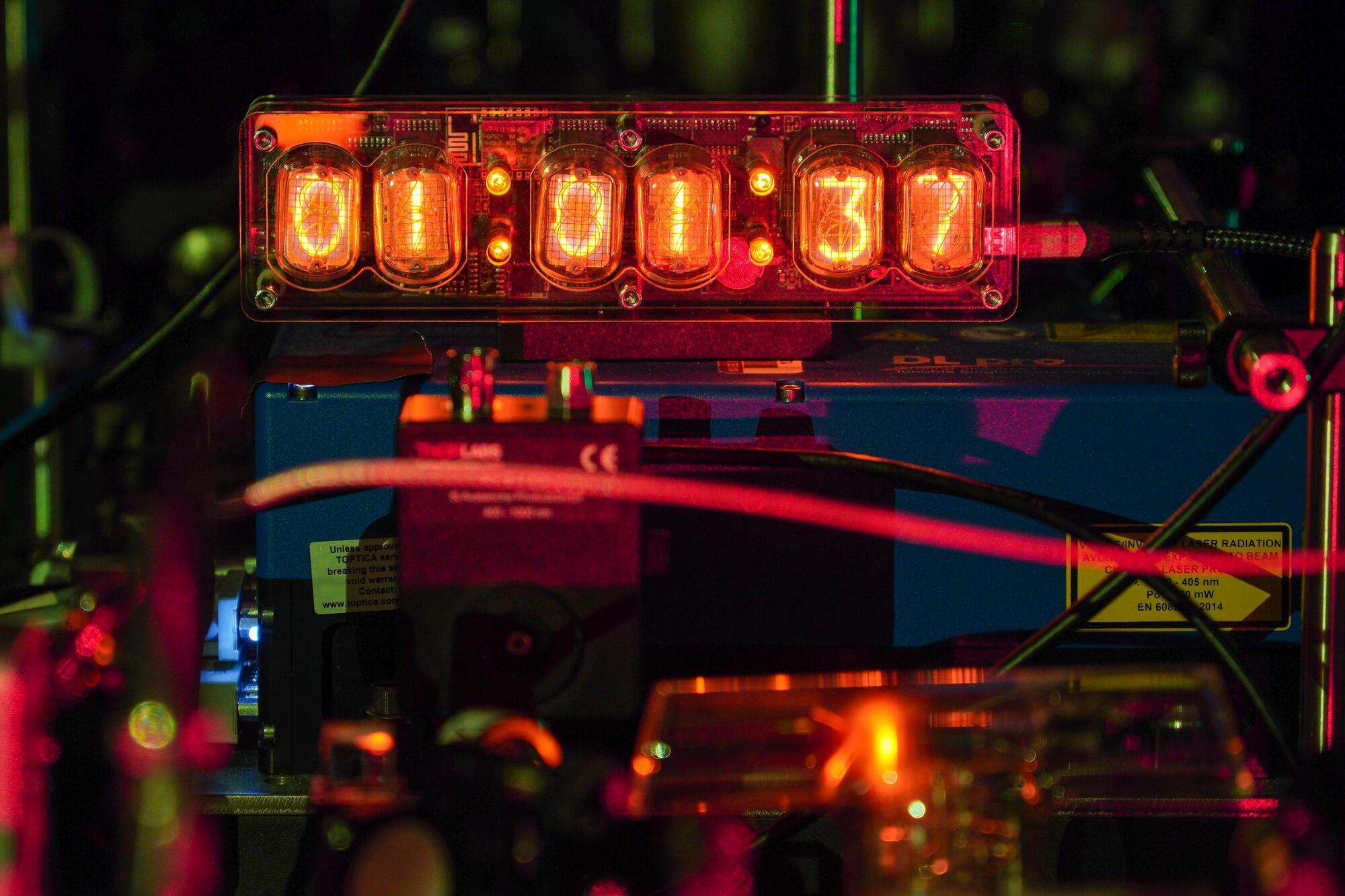
Every time you check the time on your phone, make an online transaction, or use a navigation app, you are depending on the precision of atomic clocks.
An atomic clock keeps time by relying on the “ticks” of atoms as they naturally oscillate at rock-steady frequencies. Today’s atomic clocks operate by tracking cesium atoms, which tick over 10 billion times per second. Each of those ticks is precisely tracked using lasers that oscillate in sync, at microwave frequencies.
Scientists are developing next-generation atomic clocks that rely on even faster-ticking atoms such as ytterbium, which can be tracked with lasers at higher, optical frequencies. If they can be kept stable, optical atomic clocks could track even finer intervals of time, up to 100 trillion times per second.
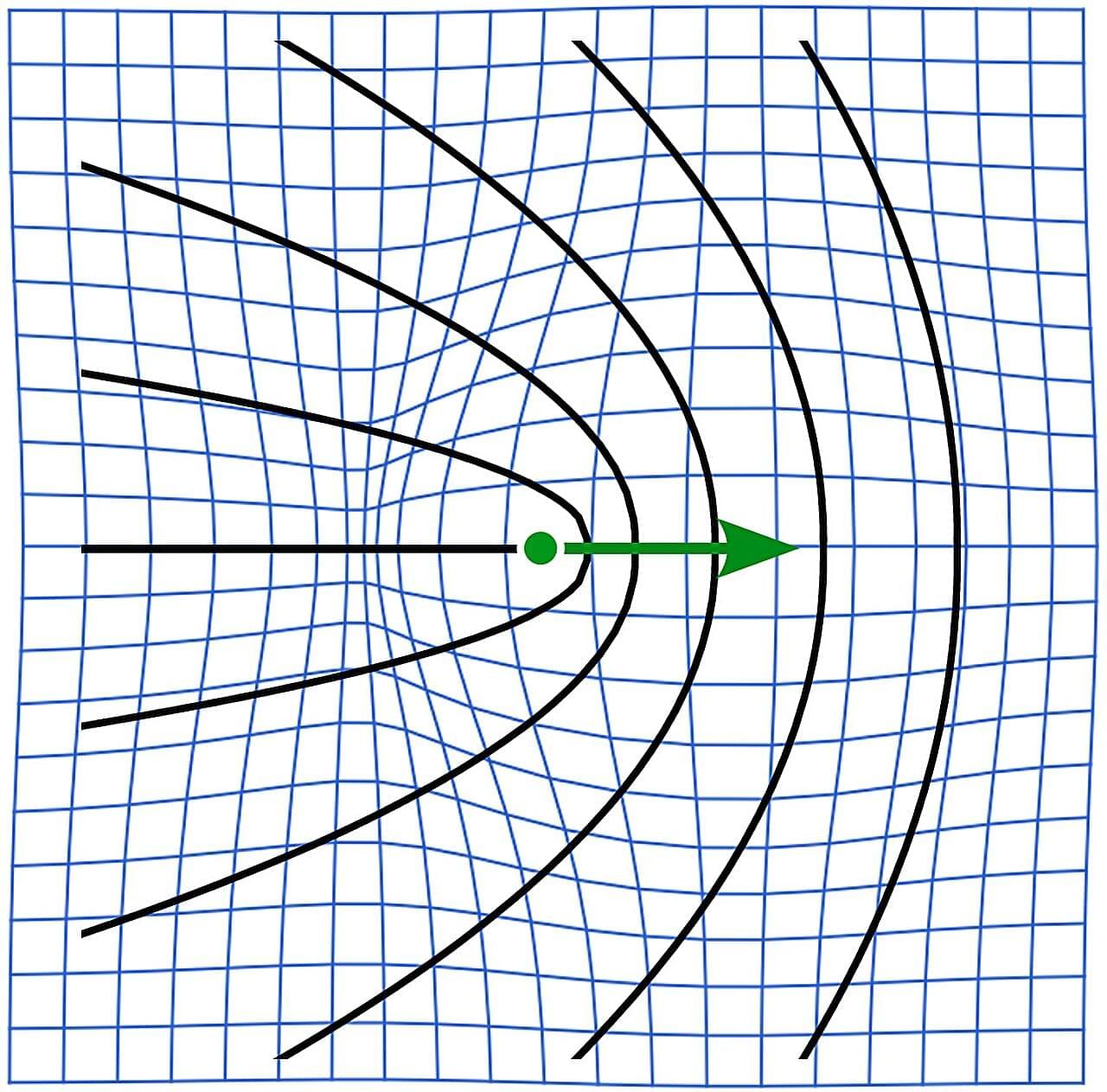
With a new mathematical model, a team of biophysicists has revealed fresh insights into how biological tissues are shaped by the active motion of structural imperfections known as “topological defects.” Published in Physical Review Letters, the results build on our latest understanding of tissue formation and could even help resolve long-standing experimental mysteries surrounding our own organs.
Topological defects are structural imperfections that emerge in systems hosting multiple, incompatible configurations of particles. They can be found in many different kinds of systems—both natural and manmade—but are especially important for describing “active fluids,” which are composed of particles that constantly harvest energy from their surroundings and convert it into motion, generating their own propulsion.
This behavior also underpins the physics of liquid crystal displays, where topological defects emerge in 2D systems of rod-shaped molecules and help determine how light is modulated to produce the images and colors we see every day on our phones, laptops, and TV screens.


Researchers have discovered the first known Android malware to use generative AI in its execution flow, using Google’s Gemini model to adapt its persistence across different devices.
In a report today, ESET researcher Lukas Stefanko explains how a new Android malware family named “PromptSpy” is abusing the Google Gemini AI model to help it achieve persistence on infected devices.
“In February 2026, we uncovered two versions of a previously unknown Android malware family,” explains ESET.

Google says that through 2025, it blocked more than 255,000 Android apps from obtaining excessive access to sensitive user data and rejected over 1.75 million apps from being published on Google Play due to policy violations.
The tech giant’s annual review of Android and Google Play security reveals how effective the implemented protection measures were in maintaining an ecosystem with honest developers and compliant apps.
“We’re constantly improving our policies and protections to encourage safe, high-quality apps on Google Play and stop bad actors before they cause harm,” Google says.
Reading this on your phone in the dark?
A new study suggests that focusing up close in low-light settings may contribute to rising myopia rates.
Here’s what the researchers found.
Half of the world’s population will be nearsighted by 2050. Scientists propose that the amount of light reaching the retina in dark environments could be why.
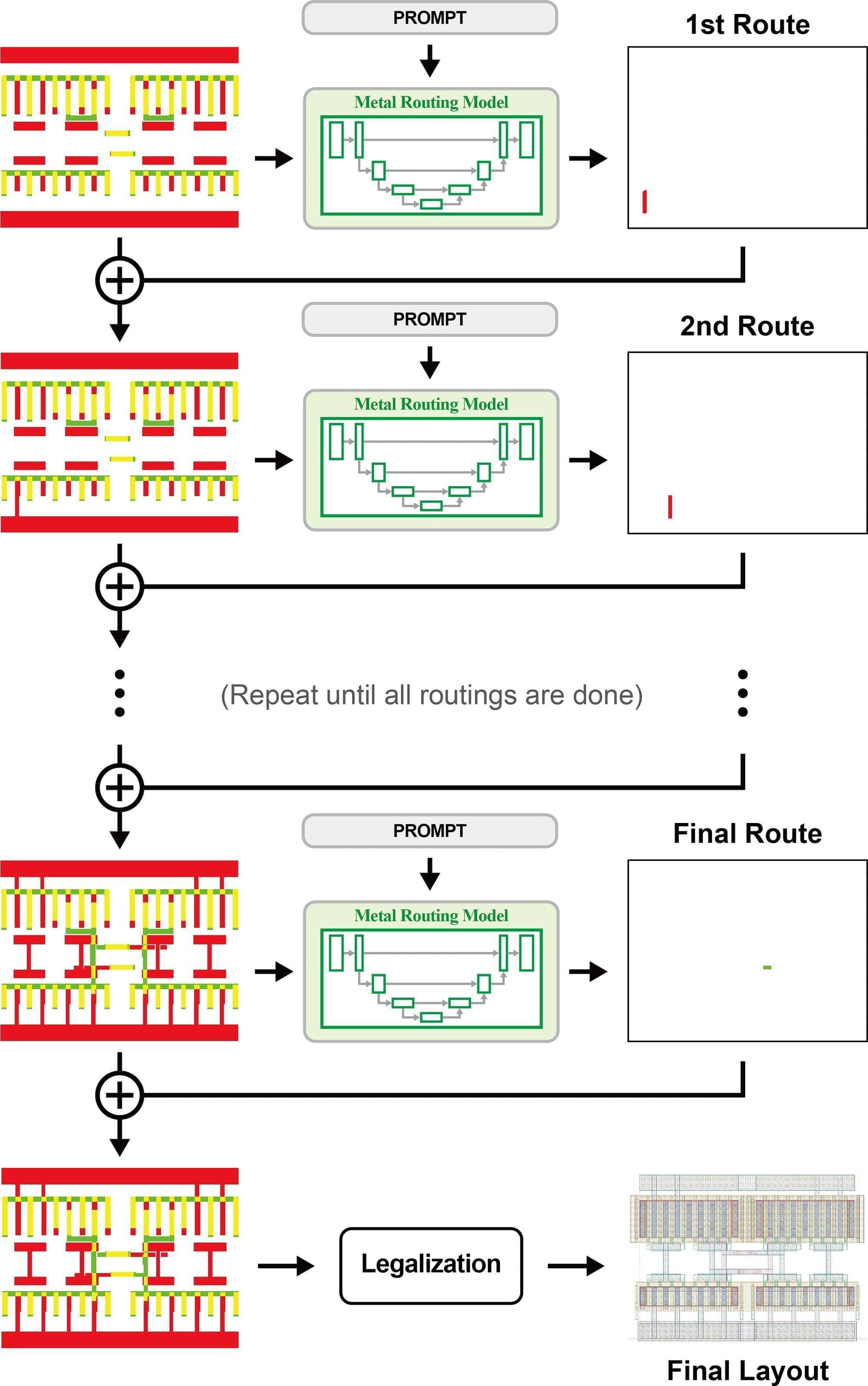
Researchers at Pohang University of Science and Technology (POSTECH) have developed an artificial intelligence approach that addresses a key bottleneck in analog semiconductor layout design, a process that has traditionally depended heavily on engineers’ experience. The work was recently published in the journal IEEE Transactions on Circuits and Systems I: Regular Papers.
Semiconductors are used in a wide range of technologies, including smartphones, vehicles, and AI servers. However, analog layout design remains difficult to automate because designers must manually arrange structures that determine performance and reliability while meeting a large number of design rules.
Automation has been especially challenging in analog design because layouts are too complex and design strategies differ significantly by circuit. In addition, training data is scarce, since layout data is typically treated as proprietary and is rarely shared outside companies.