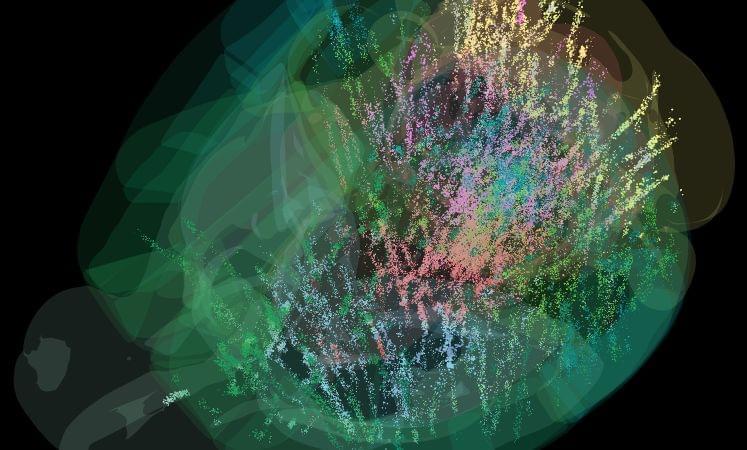
Neuroscientists from 22 labs joined forces in an unprecedented international partnership to produce a landmark achievement: a neural map that shows activity across the entire brain during decision-making.
The data, gathered from 139 mice, encompass activity from more than 600,000 neurons in 279 areas of the brain — about 95% of the brain in a mouse. This map is the first to provide a complete picture of what happens across the brain as a decision is made.
“They have created the largest dataset anyone has ever imagined at this scale,” said Dr. Paul W. Glimcher, chair of the department of neuroscience and physiology and director of the Neuroscience Institute at New York University’s Grossman School of Medicine, of the researchers.
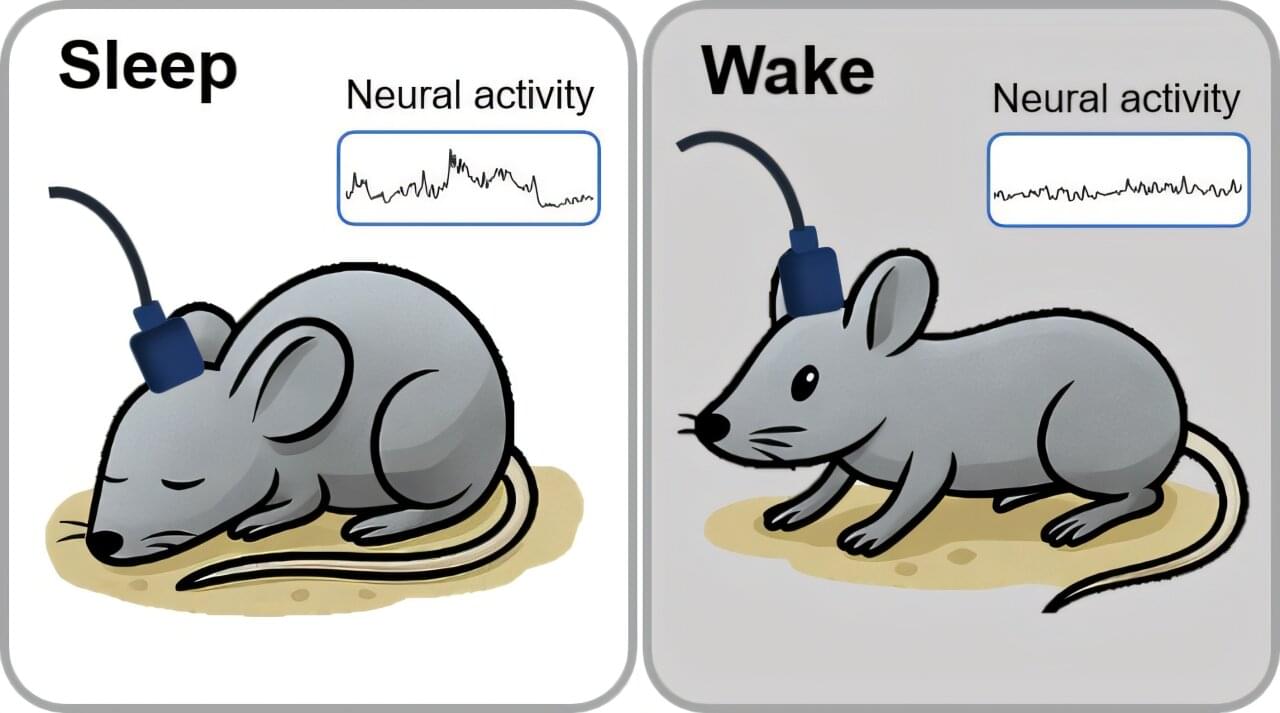
UC Berkeley researchers mapped the brain circuits that control growth hormone during sleep, uncovering a feedback system where sleep fuels hormone release, and the hormone regulates wakefulness. The discovery helps explain links between poor sleep, obesity, diabetes, and cognitive decline, while opening new paths for treating sleep and metabolic disorders.
In fact, they age “ten times faster in space than on the ground,” said Dr. Catriona Jamieson, the director of the Sanford Stem Cell Institute at the University of California, San Diego, a lead author of the study.
Stem cells are special cells that can develop into various kinds of tissue. Stem cell aging is potentially worrisome because it diminishes the body’s natural ability to repair its tissues and organs, potentially leading to chronic, age-related conditions like cancer, neurodegenerative diseases and heart problems.
A paper in Molecular Biology and Evolution finds that the relatively high rate of autism-spectrum disorders in humans is likely due to how humans evolved in the past. The paper is titled “A general principle of neuronal evolution reveals a human accelerated neuron type potentially underlying the high prevalence of autism in humans.”
As every bodybuilder knows, a deep, restful sleep boosts levels of growth hormone to build strong muscle and bone and burn fat. And as every teenager should know, they won’t reach their full height potential without adequate growth hormone from a full night’s sleep.
But why lack of sleep —in particular the early, deep phase called non-REM sleep—lowers levels of growth hormone has been a mystery.
In a study published in Cell, researchers from University of California, Berkeley, dissect the brain circuits that control growth hormone release during sleep and report a novel feedback mechanism in the brain that keeps growth hormone levels finely balanced.
Edward Chang is a neurosurgeon, scientist, and a pioneering leader in functional neurosurgery and brain-computer interface technology, whose work spans the operating room, the research lab, and the engineering bench to restore speech and movement for patients who have lost these capabilities. In this episode, Edward explains the evolution of modern neurosurgery and its dramatic reduction in collateral damage, the experience of awake brain surgery, real-time mapping to protect critical functions, and the split-second decisions surgeons make. He also discusses breakthroughs in brain-computer interfaces and functional electrical stimulation systems, strategies for improving outcomes in glioblastoma, and his vision for slimmer, safer implants that could turn devastating conditions like ALS, spinal cord injury, and aggressive brain tumors into more manageable chronic illnesses.
We discuss: 0:00:00 — Intro. 0:01:17 — The evolution of neurosurgery and the shift toward minimally invasive techniques. 0:10:58 — Glioblastomas: biology, current treatments, and emerging strategies to overcome its challenges. 0:17:39 — How brain mapping has advanced from preserving function during surgery to revealing how neurons encode language and cognition. 0:24:22 — How awake brain surgery is performed. 0:29:02 — How brain redundancy and plasticity allow some regions to be safely resected, the role of the corpus callosum in epilepsy surgery, and the clinical and philosophical implications of disconnecting the hemispheres. 0:43:46 — How neural engineering may restore lost functions in neurodegenerative disease, how thought mapping varies across individuals, and how sensory decline contributes to cognitive aging. 0:54:40 — Brain–computer interfaces explained: EEG vs. ECoG vs. single-cell electrodes and their trade-offs. 1:09:02 — Edward’s clinical trial using ECoG to restore speech to a stroke patient. 1:20:41 — How a stroke patient regained speech through brain–computer interfaces: training, AI decoding, and the path to scalable technology. 1:41:10 — Using brain-computer interfaces to restore breathing, movement, and broader function in ALS patients. 1:47:56 — The 2030 outlook for brain–computer interfaces. 1:52:35 — The potential of stem cell and cell-based therapies for regenerating lost brain function. 1:57:54 — Edward’s vision for how neurosurgery and treatments for glioblastoma, Parkinson’s disease, and Alzheimer’s disease may evolve by 2040 2:00:43 — The rare but dangerous risk of vertebral artery dissections from chiropractic neck adjustments and high-velocity movements. 2:02:31 — How Harvey Cushing might view modern neurosurgery, and how the field has shifted from damage avoidance to unlocking the brain’s functions.
——- About:
The Peter Attia Drive is a deep-dive podcast focusing on maximizing longevity, and all that goes into that from physical to cognitive to emotional health. With over 90 million episodes downloaded, it features topics including exercise, nutritional biochemistry, cardiovascular disease, Alzheimer’s disease, cancer, mental health, and much more.
Peter Attia is the founder of Early Medical, a medical practice that applies the principles of Medicine 3.0 to patients with the goal of lengthening their lifespan and simultaneously improving their healthspan.