Toggle light / dark theme

Exploring Social Neuroscience — Serious Science

Is our brain responsible for how we react to people who are different from us? Why can’t people with autism tell lies? How does the brain produce empathy? Why is imitation a fundamental trait of any social interaction? What are the secret advantages of teamwork? How does the social environment influence the brain? Why is laughter different from any other emotion?

This course is aimed at deepening our understanding of how the brain shapes and is shaped by social behavior, exploring a variety of topics such as the neural mechanisms behind social interactions, social cognition, theory of mind, empathy, imitation, mirror neurons, interacting minds, and the science of laughter.

Serious Science experts from leading universities worldwide answer these and other questions. This course offers a range of scientific perspectives on classical philosophical problems in ethics. It is comprised of 10 lectures filmed from 2014 to 2020. If you have any questions or comments on the content of this course, please write to us at [email protected].

HomePage

Follow us:
We are on Patreon: / seriousscience.
Facebook — / serious.science.org.
Twitter — / scienceserious.
YouTube — / seriousscience.
Instagram — / serious.science

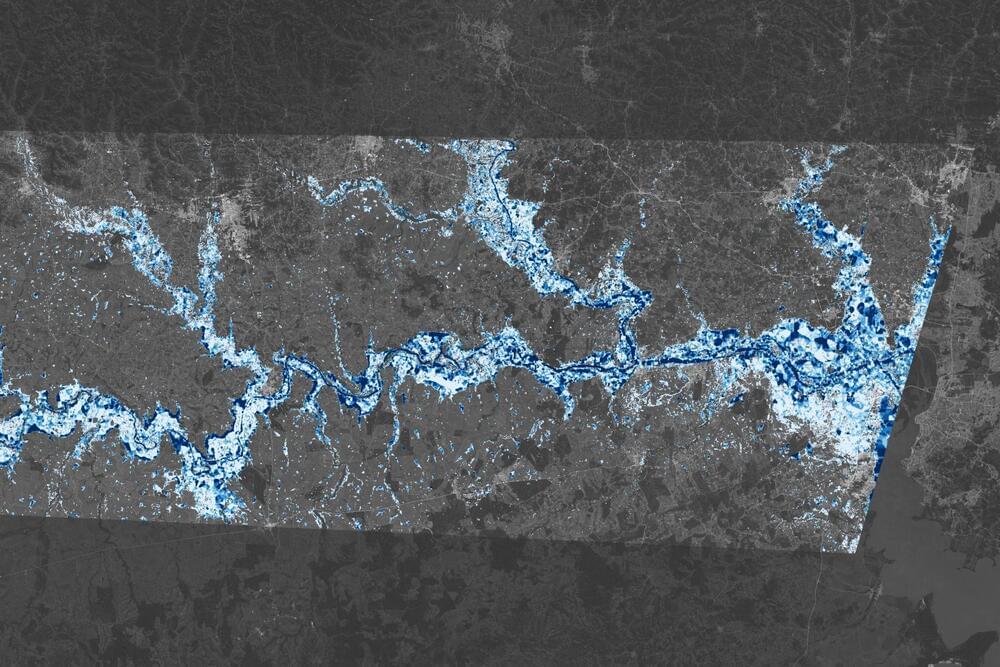
Southern Brazil Submerged: Mapping the Depths of Disaster With Advanced Science Tools

In 2024, extensive flooding in southern Brazil caused significant damage, particularly in Rio Grande do Sul. Maps showing floodwater depths were vital for disaster response and economic damage assessments, supported by data from NASA and other scientific sources.

Storms and torrential rain battered southern Brazil beginning in late April 2024, causing deadly, destructive flooding that persisted through much of May. Toward the end of the month, parts of Rio Grande do Sul state remained underwater, and the scope of the damage became increasingly evident.

Maps of floodwater extent are one way to assess a flooding event. But information about the depth of that water is also useful, potentially aiding rescue and relief operations, informing decisions about road closures and accessibility, and contributing to analyses of damage and flood risk.

Voyager 1 Returning Science Data From All Four Instruments

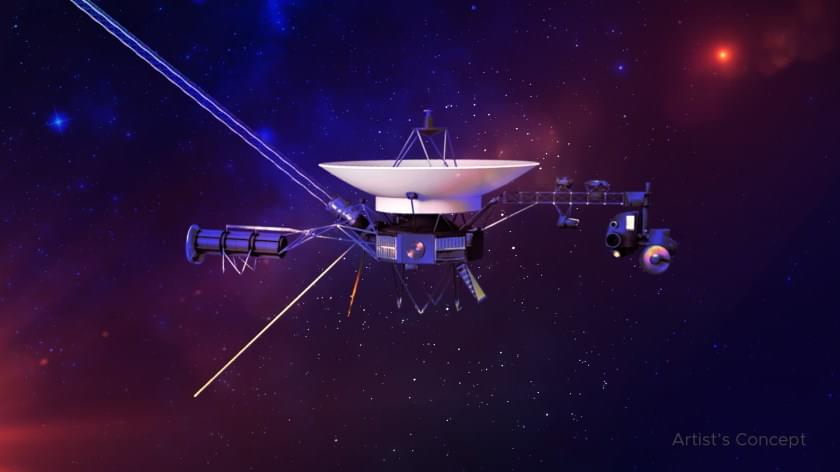
Most distant spacecraft, #Voyager1, is now returning data from all four science instruments for the first time following a technical issue last November.


NASA’s Voyager 1 spacecraft is conducting normal science operations for the first time following a technical issue that arose in November 2023.

The team partially resolved the issue in April when they prompted the spacecraft to begin returning engineering data, which includes information about the health and status of the spacecraft. On May 19, the mission team executed the second step of that repair process and beamed a command to the spacecraft to begin returning science data. Two of the four science instruments returned to their normal operating modes immediately. Two other instruments required some additional work, but now, all four are returning usable science data.

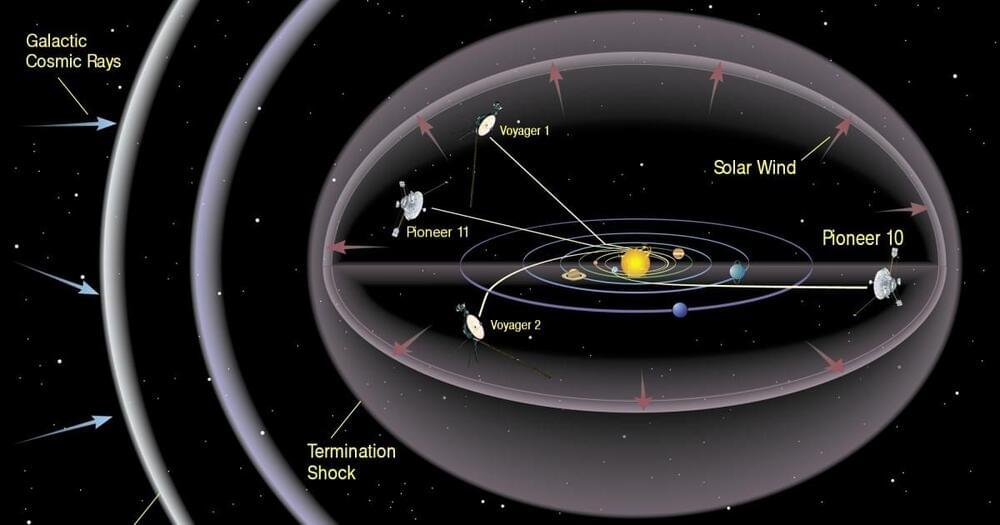
The four instruments study plasma waves, magnetic fields, and particles. Voyager 1 and Voyager 2 are the only spacecraft to directly sample interstellar space, which is the region outside the heliosphere — the protective bubble of magnetic fields and solar wind created by the Sun.

NASA’s Webb Opens New Window on Supernova Science

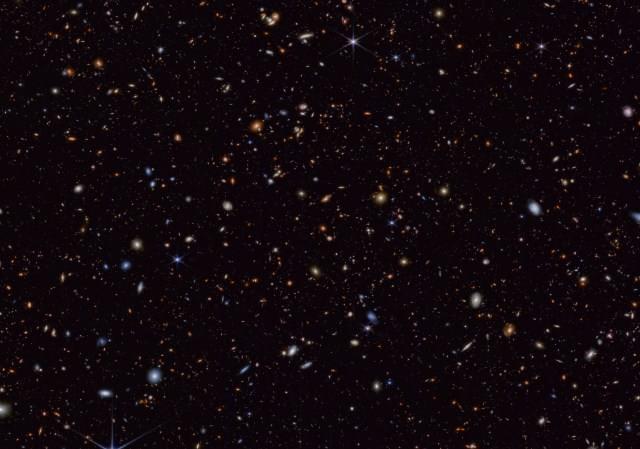
Peering deeply into the cosmos, NASA’s James Webb Space Telescope is giving scientists their first detailed glimpse of supernovae from a time when our universe was just a small fraction of its current age. A team using Webb data has identified 10 times more supernovae in the early universe than were previously known. A few of the newfound exploding stars are the most distant examples of their type, including those used to measure the universe’s expansion rate.

Science Experiments That Will Change The World — Rupert Sheldrake, PhD

I love the first line.


In this video I spoke with Rupert Sheldrake about the science experiments that will change the world, taking us from morphic resonance, telepathy to aging research.

Find out about Rupert here:
www.sheldrake.org.
/ rupertsheldrakephd.
Proc Royal Soc B aging paper discussed: https://www.sheldrake.org/files/pdfs/.

Find me on Twitter — / eleanorsheekey.

Support the channel.

Fresh Data From the Cosmos: NASA’s Voyager 1 Resumes Sending Science Data From 15 Billion Miles Away

Voyager 1, after overcoming a computer issue, has resumed sending scientific data from two of its instruments, with plans to recalibrate the remaining two soon. This marks significant progress in restoring the spacecraft, which is over 15 billion miles from Earth and requires over 22 hours for communications to travel one way.

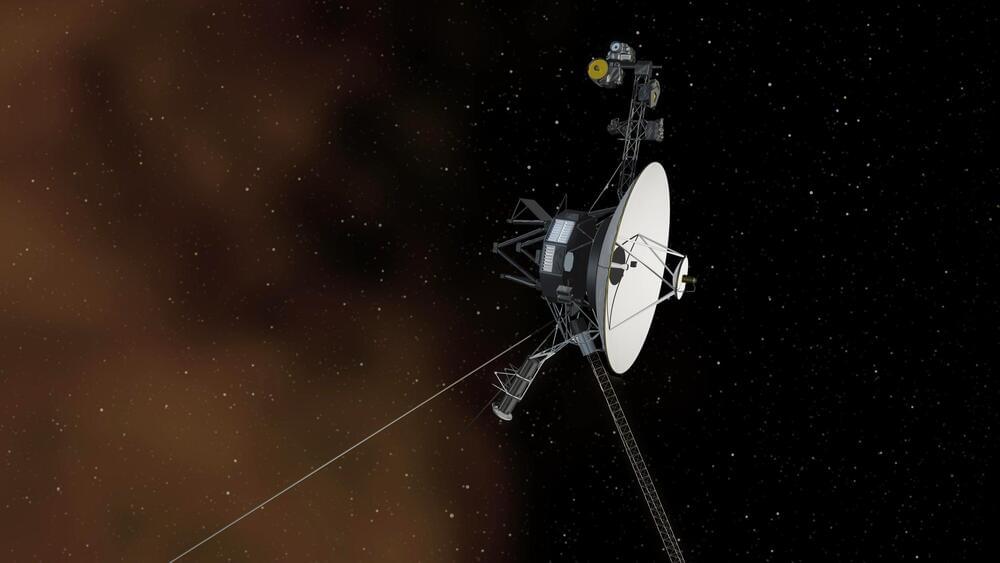
NASA ’s Voyager 1 has resumed returning science data from two of its four instruments for the first time since November 2023, when a computer issue arose with the spacecraft. The mission’s science instrument teams are now determining steps to recalibrate the remaining two instruments, which will likely occur in the coming weeks. The achievement marks significant progress toward restoring the spacecraft to normal operations.

Progress in Troubleshooting.

/* */