Upcoming moon missions will need to plan for how to respond to emergencies on the lunar surface.

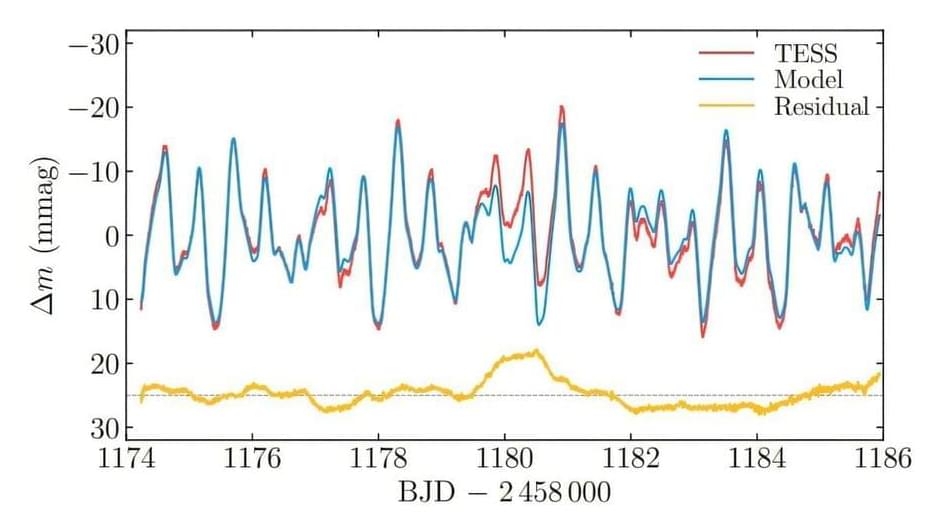
Using various telescopes, an international team of astronomers has conducted a comprehensive study of a double-lined spectroscopic binary known as HD 34736. The study, published November 6 in the Monthly Notices of the Royal Astronomical Society, delivers important insights into the properties of this system.
So far, the majority of binaries have been detected by Doppler shifts in their spectral lines, hence these systems are called spectroscopic binaries. Observations show that in some spectroscopic binaries, spectral lines from both stars are visible, and these lines are alternately double and single. These systems are known as double-lined spectroscopic binaries (SB2).
HD 34,736 is an SB2 system consisting of two chemically peculiar late B-type stars, located some 1,215 light years away. Previous observations of HD 34,736 have found that the system has an extraordinarily strong magnetic field exceeding 4.5 kG. The effective temperatures of the primary and secondary star were found to be 13,700 and 11,500 K, respectively.
Normally found only in heavy metal bands or certain post-apocalyptic films, a “flame-throwing guitar” has now been spotted moving through space. Astronomers have captured movies of this extreme cosmic object using NASA’s Chandra X-ray Observatory and Hubble Space Telescope.
The new movie of Chandra (red) and Palomar (blue) data helps break down what is playing out in the Guitar Nebula. X-rays from Chandra show a filament of energetic matter and antimatter particles, about two light-years or 12 trillion miles long, blasting away from the pulsar (seen as the bright white dot connected to the filament).
Astronomers have nicknamed the structure connected to the pulsar PSR B2224+65 as the “Guitar Nebula” because of its distinct resemblance to the instrument in glowing hydrogen light. The guitar shape comes from bubbles blown by particles ejected from the pulsar through a steady wind. Because the pulsar is moving from the lower right to the upper left, most of the bubbles were created in the past as the pulsar moved through a medium with variations in density.
Join me on facebook http://www.facebook.com/pages/TheScienceFoundation/277697568961708Cosmos: A Personal Voyage is a thirteen-part television series written…
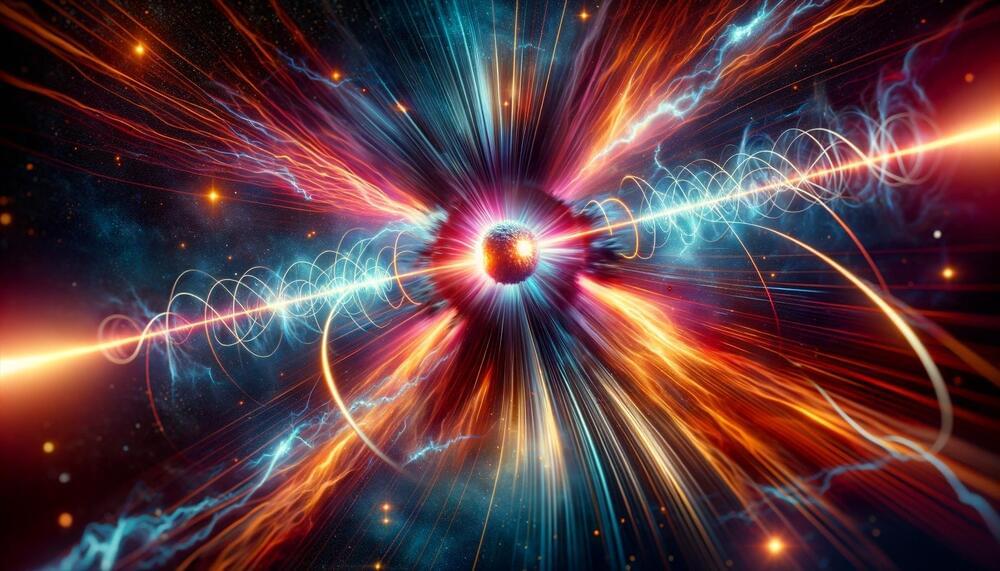
Researchers have linked the origins of fast radio bursts to magnetars, highly magnetized neutron stars, which often arise from the mergers of massive stars in star-forming galaxies.
By utilizing the Deep Synoptic Array-110, they’ve localized 70 FRBs, discovering that these bursts are more frequent in massive, metal-rich galaxies. This suggests that the environmental conditions conducive to FRB occurrence are also ideal for magnetar formation.
Unveiling the mystery of fast radio bursts.
Join us at ploutos.dev.
#AI #topology #language #computation #neuroscience
Researchers have long observed that neurons in the brain tend to be organized in clusters, with neighboring neurons often sharing similar functions. This phenomenon is also seen in the brain’s language system, where certain areas respond to different aspects of language, such as syntax (sentence structure) or semantics (meaning). However, the exact mechanisms behind this organization remain a mystery.
In an attempt to better understand how the brain organizes language processing, the researchers developed TopoLM, a new type of AI language model inspired by the brain’s spatial layout. Unlike traditional language models, TopoLM arranges its processing units in a two-dimensional space, mimicking how neurons are arranged in the brain. It combines a standard language task (predicting the next word in a sentence) with an additional goal: encouraging units that are close together in space to also have similar functions, creating clusters of units that process similar linguistic information.
The result is a model whose internal organization closely mirrors the way the human brain organizes language. TopoLM successfully predicts the emergence of clusters in the brain’s language system, reflecting the same fine distinctions between different linguistic features observed in humans. This suggests that the brain’s language processing might be driven by a unified spatial principle, and TopoLM provides a new way to model how our brains process language both functionally and spatially.
Speakers: Cecile Tamura, Johannes Mehrer, Riju Pahwa

Do you have a telescope? Would you like to see some of the same night sky objects from the ground that Hubble has from space? We invite you to commemorate Hubble’s 35th anniversary by accepting our year-long stargazing challenge. On a clear night, find a safe location with a dark sky away from bright lights, point your telescope skyward, and with the help of star and finder charts, gaze upon some of the same iconic nebulae and galaxies Hubble has observed. How many of them can you find?
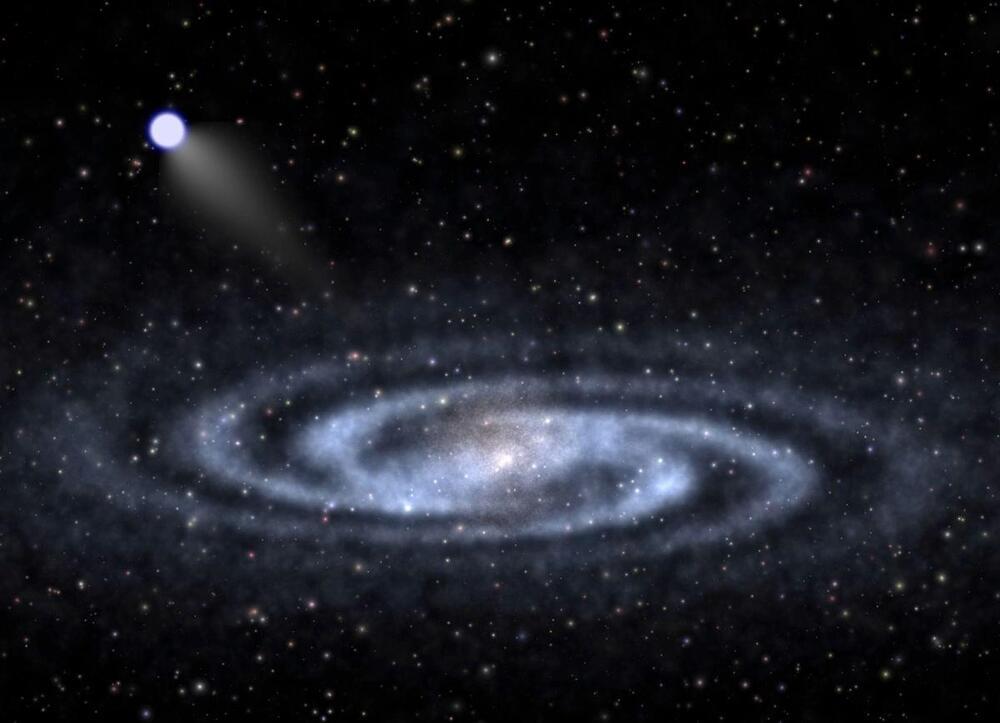
CWISE J1249 is the first known brown dwarf-like object to leave the Milky Way.
While stars typically follow predictable paths around the Milky Way, a groundbreaking discovery revealed a hypervelocity object, CWISE J124909.08+362116.0, speeding out of the galaxy at nearly 1 million miles per hour. This remarkable find, credited to NASA’s Backyard Worlds: Planet 9 citizen science project, marks the first time an object of such low mass, possibly a brown dwarf or small star, has been observed breaking free from the galaxy’s gravitational pull.
Using data from NASA’s WISE (Wide-field Infrared Survey Explorer) mission, citizen scientists identified the faint, fast-moving object. Initial observations from 2009–2011, followed by confirmations using ground-based telescopes, led to this discovery. The study, now published in the Astrophysical Journal Letters, underscores the power of citizen science in advancing astronomical research.
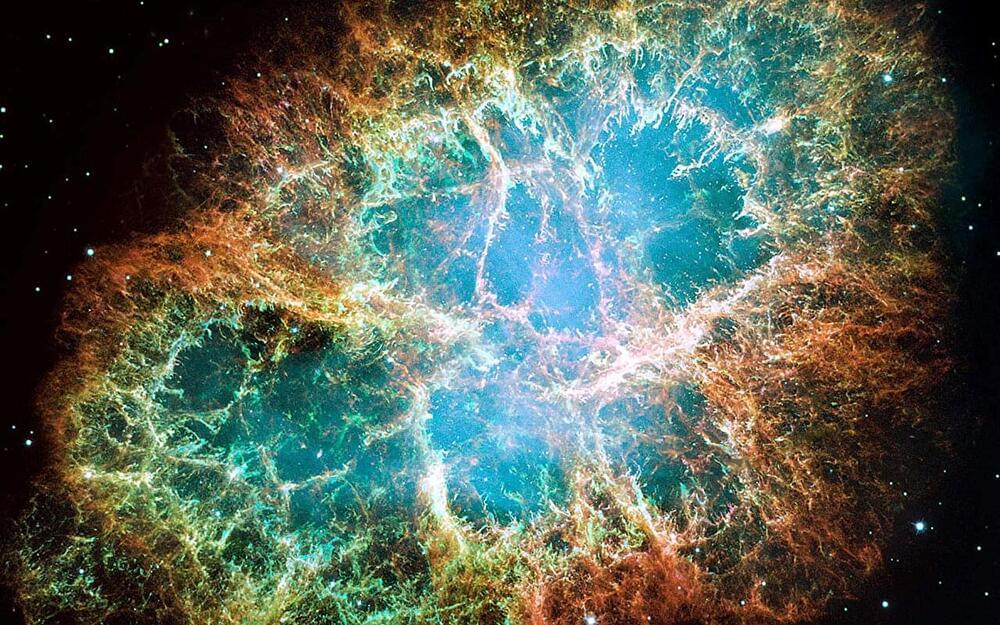
A theoretical astrophysicist from the University of Kansas may have solved a nearly two-decade-old mystery over the origins of an unusual “zebra” pattern seen in high-frequency radio pulses from the Crab Nebula.
His findings have just been published in Physical Review Letters.
The Crab Nebula features a neutron star at its center that has formed into a 12-mile-wide pulsar pinwheeling electromagnetic radiation across the cosmos.
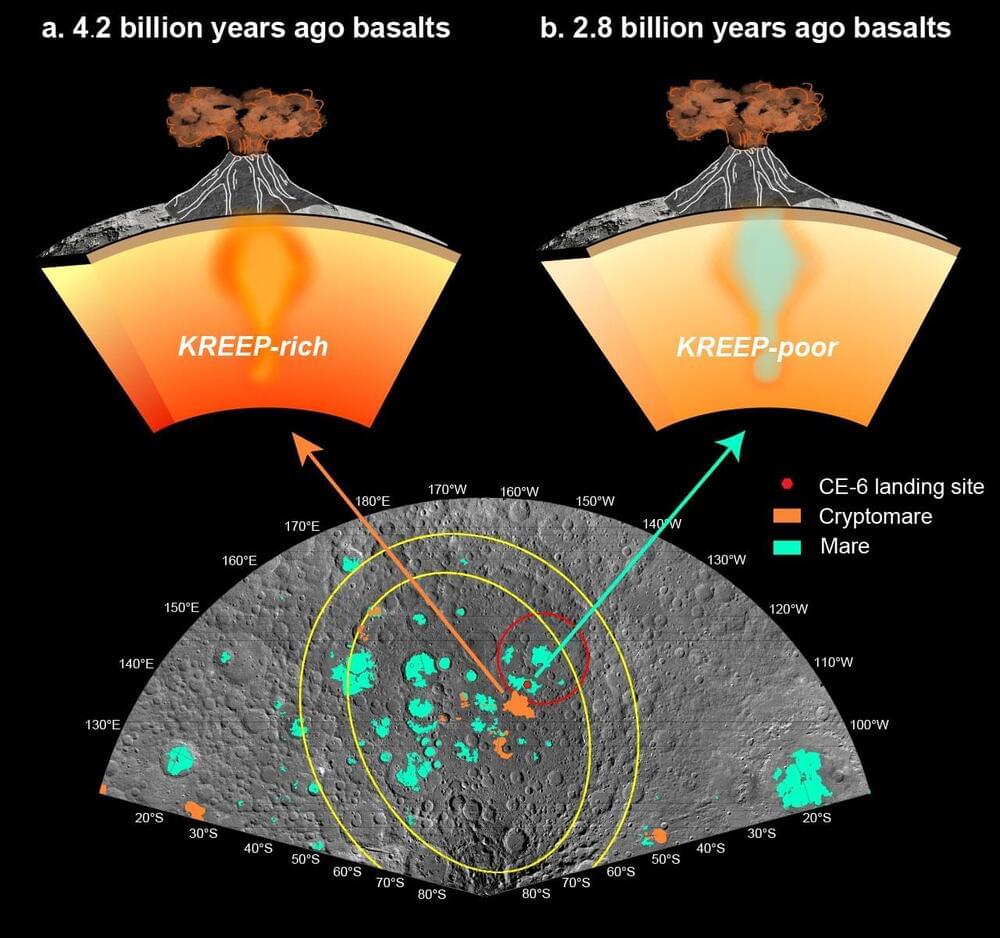
New findings from basalt samples retrieved by China’s Chang’e-6 mission reveal that volcanic activity on the Moon’s farside dates back between 4.2 and 2.8 billion years.
This research provides key insights into the lunar geological dichotomy and aids in the precision of lunar dating methods.
Lunar Farside’s Volcanic History Revealed.