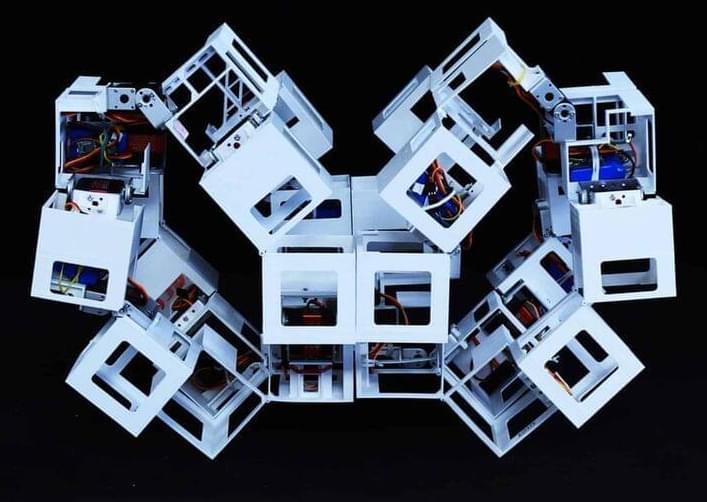
These configurable bots could launch flat and then be assembled in space.
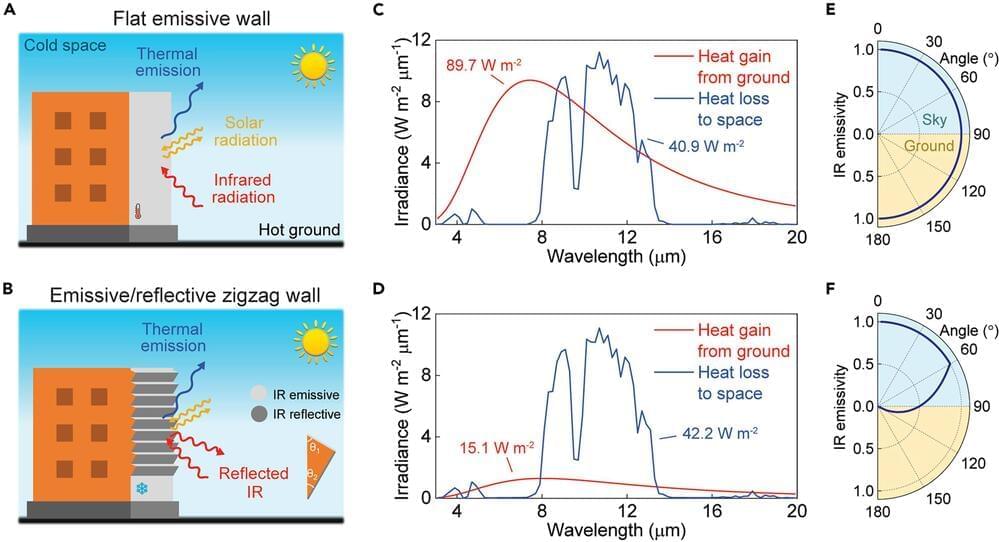
A team of applied physicists at Columbia University, working with a colleague from Henry M. Gunn High School, and another from the University of California, Los Angeles, has found that using corrugated siding on outdoor building walls can passively reduce wall temperatures.
In their paper published in the journal Nexus, the group describes how they added corrugated siding to a small test building and found that doing so lowered the wall temperatures.
Prior research has shown that covering the tops of buildings with radiative cooling materials can reduce the amount of heat that makes its way inside by up to 20%. This is because they are made in such a way as to reflect sunlight and radiate heat into outer space.
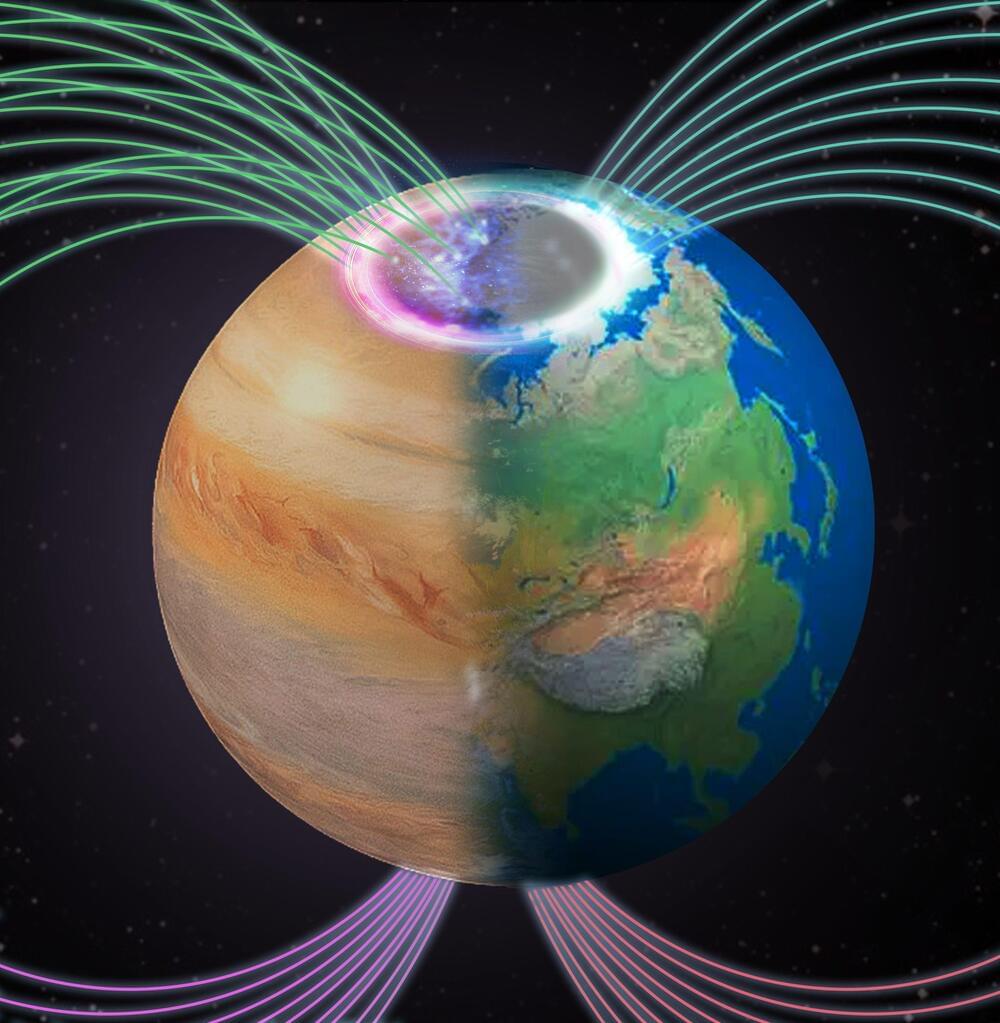
A recent study reveals new insights into aurorae across Earth, Jupiter, and Saturn, highlighting the role of magnetic fields and solar winds in shaping these phenomena, with significant implications for space weather forecasting and planetary exploration.
The breathtaking aurorae, commonly known as the Northern and Southern Lights, have captivated human imagination for centuries. From May 10th to 12th, 2024, the most powerful aurora event in 21 years showcased the extraordinary beauty of these celestial light displays.
Recently, space physicists from the Department of Earth Sciences at The University of Hong Kong (HKU), including Professor Binzheng Zhang, Professor Zhonghua Yao, and Dr Junjie Chen, along with their international collaborators, have published a paper in Nature Astronomy that explores the fundamental laws governing the diverse aurorae observed across planets, such as Earth, Jupiter and Saturn. This work provides new insights into the interactions between planetary magnetic fields and solar wind, updating the textbook picture of giant planetary magnetospheres. Their findings can improve space weather forecasting, guide future planetary exploration, and inspire further comparative studies of magnetospheric environments.
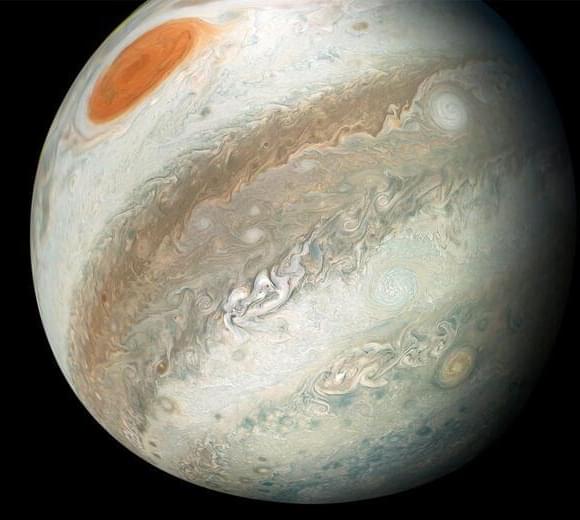
Jupiter and Mars are about to get up close and personal to one another.
Look up to the sky early Wednesday morning and you’ll see what astronomers call a planetary conjunction. This is what is projected to happen when the bright giant gas planet gets a visit from the rocky red planet and the two celestial bodies appear to be close to one another, according to NASA.
“They’ll appear just a third of a degree apart, which is less than the width of the full Moon,” the U.S. space agency said in a skywatching roundup published July 31.
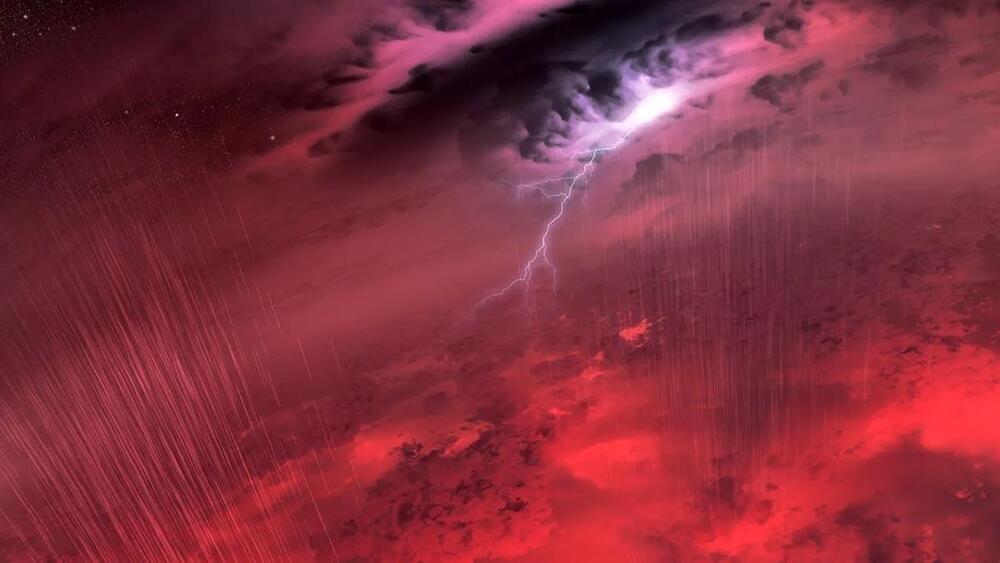
Astronomers used the James Webb Space Telescope to create a comprehensive weather report for two brown dwarfs located about six light years from Earth.
Researchers have created the most detailed weather report ever for two distant worlds beyond our own solar system.
The international study – the first of its kind – reveals the extreme atmospheric conditions on the celestial objects, which are swathed in swirling clouds of hot sand amid temperatures of 950°C (1750°F).
Many believe humanity’s climb upward may have been assisted by outsiders. Is this possible, and if so, what does that tell us about our own past… and future?
Watch my exclusive video Jupiter Brains \& Mega Minds: https://nebula.tv/videos/isaacarthur–…
Get Nebula using my link for 40% off an annual subscription: https://go.nebula.tv/isaacarthur.
Get a Lifetime Membership to Nebula for only $300: https://go.nebula.tv/lifetime?ref=isa…
Use the link gift.nebula.tv/isaacarthur to give a year of Nebula to a friend for just $30.
Join this channel to get access to perks:
/ @isaacarthursfia.
Visit our Website: http://www.isaacarthur.net.
Join Nebula: https://go.nebula.tv/isaacarthur.
Support us on Patreon: / isaacarthur.
Support us on Subscribestar: https://www.subscribestar.com/isaac-a…
Facebook Group: / 1583992725237264
Reddit: / isaacarthur.
Twitter: / isaac_a_arthur on Twitter and RT our future content.
SFIA Discord Server: / discord.
Credits:
Were Primitive Humans Uplifted?
Episode 459a; August 11, 2024
Produced, Narrated \& Written: Isaac Arthur.
Editor: Evan Schultheis.
Graphics: Jeremy Jozwik \& Ken York YD Visual.
Select imagery/video supplied by Getty Images.
Music Courtesy of Epidemic Sound http://epidemicsound.com/creator.
Sergey Cheremisinov, \
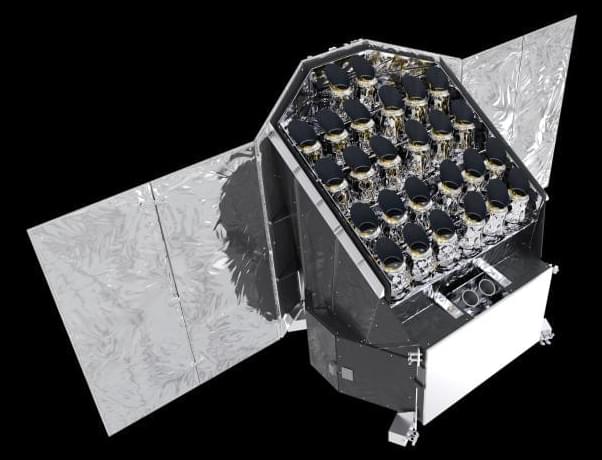
PLATO, or PLAnetary Transits and Oscillations of stars, is being built to find nearby potentially habitable worlds around Sun-like stars that we can examine in detail.
The space telescope will blast into orbit on Europe’s new rocket, Ariane-6, which made its maiden flight last week after being developed at a cost of €4billion (£3.4billion).
Dr David Brown, of the University of Warwick, is giving an update on the mission at the Royal Astronomical Society’s National Astronomy Meeting at the University of Hull this week.
Get a Wonderful Person Tee: https://teespring.com/stores/whatdamathMore cool designs are on Amazon: https://amzn.to/3QFIrFXAlternatively, PayPal donations ca…
Data centers are facilities that house the computing hardware used to process and store data. While some businesses maintain their own data centers on site, many others rely on ones owned and operated by someone else.
As our digital world continues to grow, demand for data centers — and clean electricity to operate them — is also increasing. To find out how we’ll be able to keep up, let’s look at the history of data centers, the challenges facing them, and ideas for overcoming those issues — on land, at sea, and in space.