Toggle light / dark theme

US research interests closely tied to microelectronics industrial base

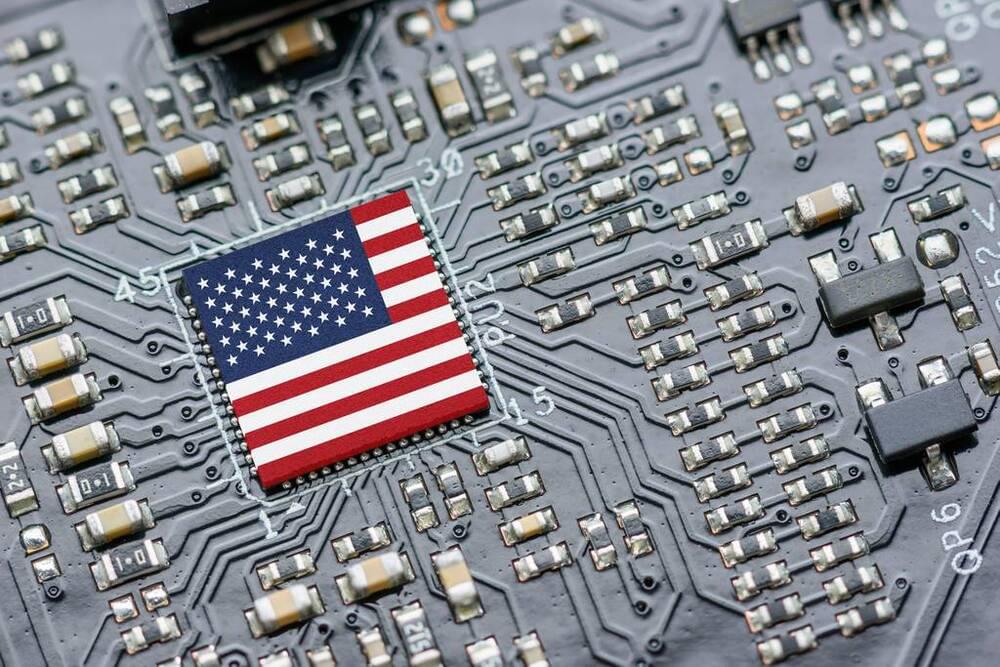
SEATTLE — Undergirding recent budget guidance from the Biden administration to federal research and development organizations is a recognition of a steady and growing demand for microelectronics as a key enabler for advancement in nearly every technology sector, according to a senior White House technology advisor.

The White House on Aug. 17 issued its research and development priorities for the fiscal 2025 budget, offering direction to federal offices as they plan to submit their spending requests to the Office of Management and Budget in early September. The high-level focus areas include strengthening the nation’s critical infrastructure amid climate change, advancing trustworthy AI, improving healthcare and fostering industrial innovation alongside basic and applied research.

According to Steven Welby, deputy director for national security within the White House’s Office of Science and Technology Policy, most of those priorities have some sort of connection to the nation’s goals for boosting the microelectronics industrial base.
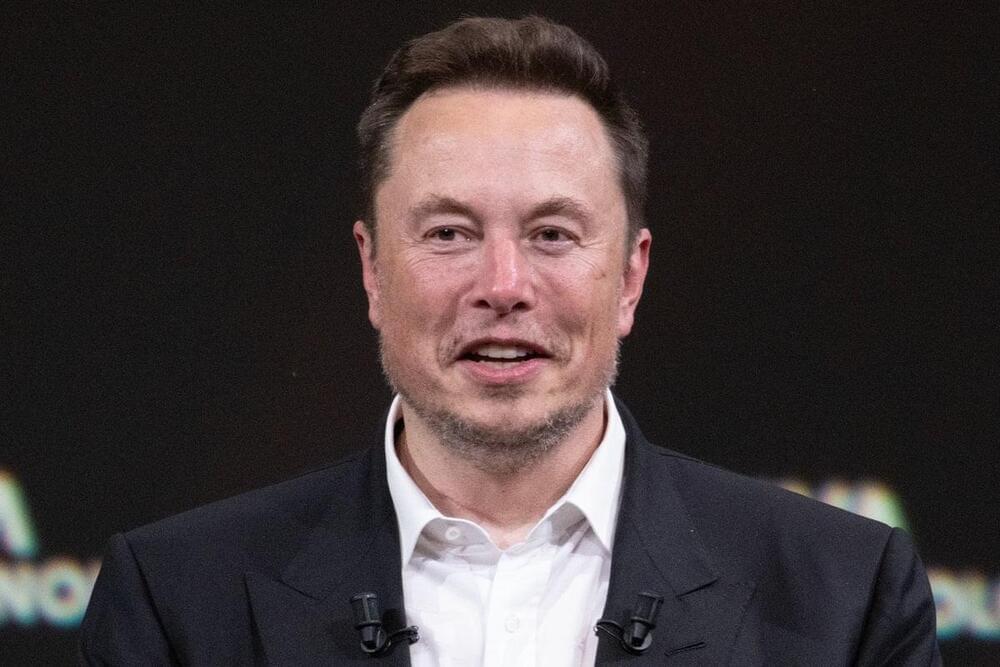
Elon Musk Gives A Tour Of His Desk At Tesla HQ, Reveals Where He Sits At Work

Tesla Inc TSLA CEO Elon Musk on Wednesday spoke about his desk, or lack of it, at the company headquarters in Texas.

What Happened: Previously, Musk said, he would move his desk around the factory to wherever the biggest problem was. However, now, he doesn’t have a desk, the CEO said.

“These days, I don’t have a desk, but the room I use for meetings at HQ overlooks the Model Y end of line,” Musk wrote. He was responding to a fan on X.com who shared an old video of Musk showing his desk in the middle of the factory.

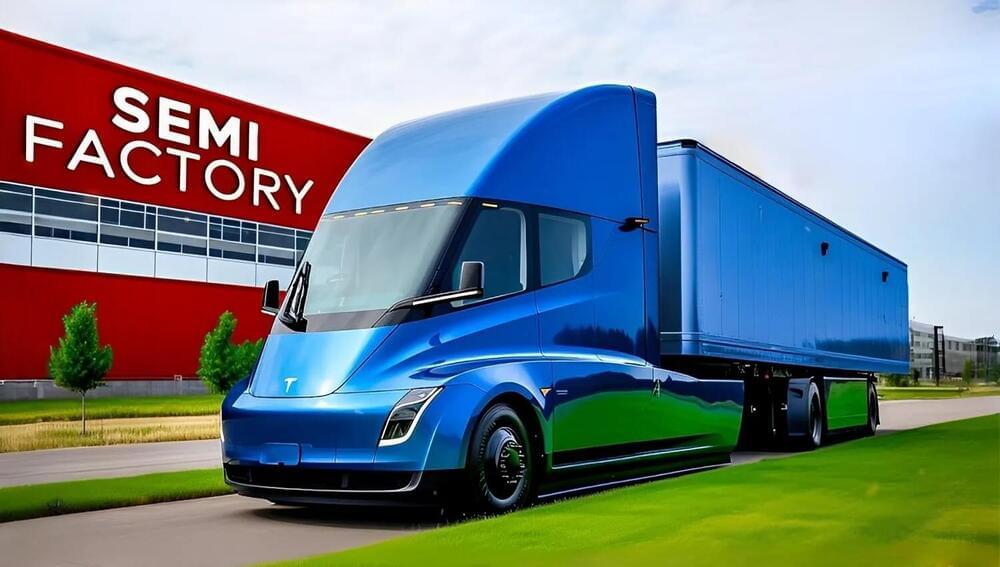
Is the Tesla Semi Worth It? Here’s Why It Will Replace 87% of Diesel Trucks

The Tesla Semi has been a groundbreaking innovation in the transportation industry. With a promised range of 500 miles on a full charge, it represents a significant step towards sustainable freight transportation. This range is not just a theoretical figure, it’s based on real-world testing with the truck fully loaded at 82,000 pounds gross combination weight. The 500-mile range has been a focal point of discussion, sparking interest and curiosity among both enthusiasts and skeptics.

While the Tesla Semi’s range has been applauded by many, it has also been met with skepticism and criticism. The debate centers around the truck’s practicality, particularly in winter conditions where electric vehicles are known to suffer range loss. Critics argue that the range might not be sufficient for long-haul trucking, especially in regions with harsh winters. They point to potential issues like battery efficiency loss in cold temperatures, raising questions about the Semi’s ability to replace traditional diesel trucks.

According to recent studies and real-world testing, the Tesla Semi can be a suitable replacement for approximately 87% of semi-truck loads, even considering winter range loss. This introduction sets the stage for a comprehensive exploration of the Tesla Semi’s 500-mile range, its performance in winter conditions, and its potential to revolutionize the freight transportation industry.

New robot searches for solar cell materials 14 times faster

Earlier this year, two-layer solar cells broke records with 33 percent efficiency. The cells are made of a combination of silicon and a material called a perovskite. However, these tandem solar cells are still far from the theoretical limit of around 45 percent efficiency, and they degrade quickly under sun exposure, making their usefulness limited.

The process of improving tandem solar cells involves the search for the perfect materials to layer on top of each other, with each capturing some of the sunlight the other is missing. One potential material for this is perovskites, which are defined by their peculiar rhombus-in-a-cube crystal structure. This structure can be adopted by many chemicals in a variety of proportions. To make a good candidate for tandem solar cells, the combination of chemicals needs to have the right bandgap—the property responsible for absorbing the right part of the sun’s spectrum—be stable at normal temperatures, and, most challengingly, not degrade under illumination.

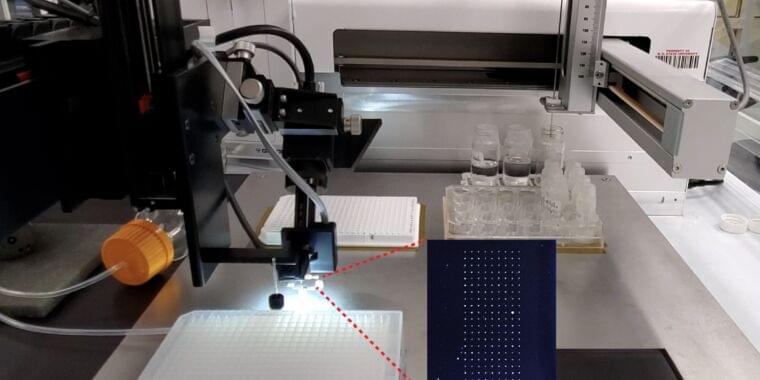
The number of possible perovskite materials is vast, and predicting the properties that a given chemical composition will have is very difficult. Trying all the possibilities out in the lab is prohibitively costly and time-consuming. To accelerate the search for the ideal perovskite, researchers at North Carolina State University decided to enlist the help of robots.

Tesla to provide Virtual Power Plant (VPP) services to Texas grid

A recent press release from the Public Utility Commission of Texas (PUCT) has revealed that Tesla will be providing Virtual Power Plant (VPP) services to the state’s grid. The program is part of the Aggregate Distributed Energy Resource (ADER) project that the PUCT pushed last year.

With the VPP in place, Texas could now evaluate how consumer-owned small energy devices, such as home battery units, can be virtually aggregated to provide grid-scale services. Similar programs have been launched by Tesla in California and Australia, to much success.

As per the PUCT’s press release, the two ADERs that are launching the initiative involve Tesla Electric customers who have Powerwall batteries in their homes. The participants of the program have agreed to sell their surplus power in the ERCOT market, and will be compensated for doing so. One ADER is comprised of Houston-area CenterPoint Energy customers, while the other is comprised of Dallas-area customers served by Oncor Electric Delivery Company.

A $10k satellite built by students can help clean space junk

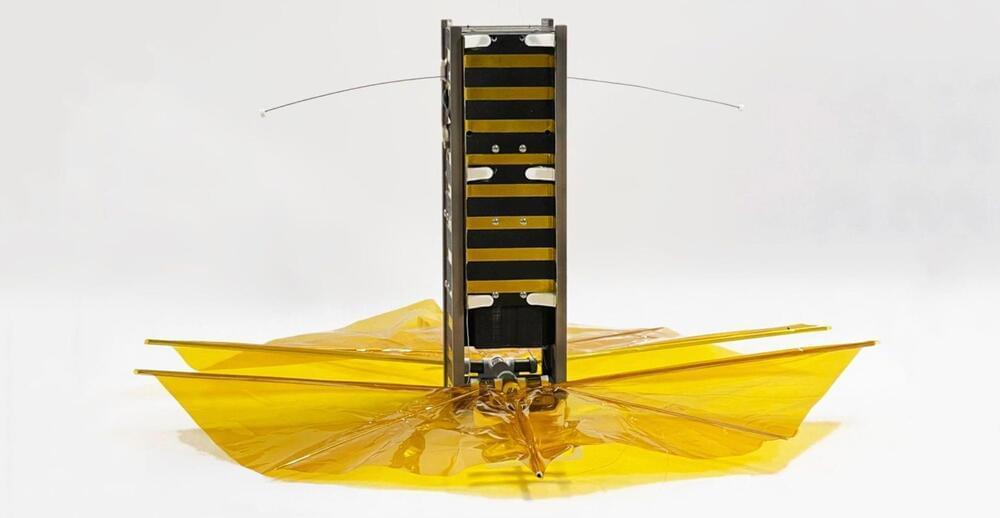
SBUDNIC was a small cube satellite, about the size of a bread loaf, that was launched on a SpaceX rocket in May 2022.

Space junk is a serious issue that threatens the safety and sustainability of orbital activities. To address this problem, a team of students from Brown University designed and built a low-cost cube satellite that successfully deorbited itself after completing its mission. The satellite, named SBUDNIC, used a simple plastic drag sail to increase its atmospheric drag and hasten its reentry.

As per the press release, the small cube satellite has burned up high above Turkey after 445 days in orbit. Its reentry into Earth’s atmosphere on Tuesday, Aug. 8, marked the successful conclusion of a low-cost experiment aimed at reducing space debris, five years ahead of schedule.

Lithium-Ion Batteries CAN Be Recycled! RecycLiCo Battery Materials & Kemetco Research Tour

Recycling is now cheaper than mining.


Sandy visits the teams at RecycLiCo Battery Materials and Kemetco Research for an in-depth discussion on battery recycling and a tour of a facility that’s making this dream a reality.

Purchase the book here: https://www.routledge.com/Hydrometallur-gical-Recycling-of-L…1032216027

We would really appreciate it if you subscribe to our channel. The more subscribers we have, the more opportunities and teardowns we will be able to bring to you!

Sandy on X/Twitter: @teardowntitan.

Meyers Manx 2.0 Electric Buggy Pricing Announced, Starts At $74,000

Meyers Manx, the original maker of the Volkswagen Beetle-based, fiberglass-bodied beach buggy from the 1960s, just published the starting price for its all-new, all-electric Manx 2.0 electric buggy, and it’s not exactly cheap.

Revealed last year at The Quail, A Motorsports Gathering, the company’s first all-new vehicle in nearly 20 years starts at $74,000 for the base variant with the 20-kilowatt-hour battery pack and yet-to-be-released performance figures. That’s almost as expensive as the recently introduced Tesla Model S Standard Range, which starts at $78,490 and offers a 320-mile range.

The base MSRP came with no extra information and was casually thrown in a sentence at the end of the press release for the company’s new Resorter Neighborhood Electric Vehicle (NEV), which debuted last week at The Quail, so we still don’t know how much the top-of-the-line model will set prospective customers back.

This Universal Charger Could Charge Any Electric Vehicle

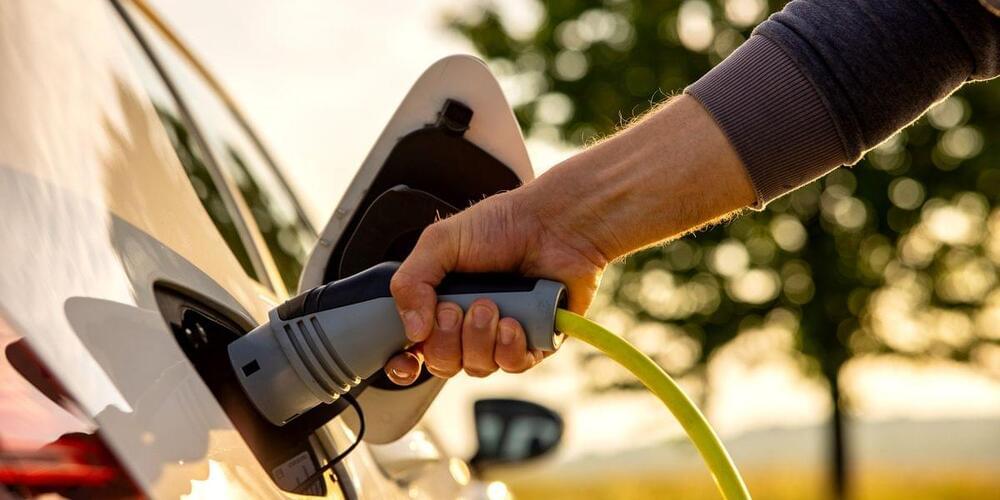
In a recent advance, researchers have created a novel battery charger that can support present and future generations of battery packs for EVs across a vast range of voltages: anything between 120 and 900 volts. The new tech is described in a study published in the September edition of theIEEE Transactions on Power Electronics.


These next-generation batteries will bring shorter charging times while also weighing less, which means that EVs can be ready to drive sooner and travel farther on a full charge. “However, charging these high-voltage batteries with existing chargers degrades the efficiency, due to operating at twice the rated voltage,” says Deepak Ronanki, an assistant professor at the Indian Institute of Technology Madras, in Chennai, India, and an IEEE senior member who was involved in the study.

Ronanki and doctoral research scholar Harish Karneddi created a universal charger capable of supporting voltages between 120 and 900 V—something they say had not yet otherwise been achieved.

Ronanki and Karneddi’s battery charger is actually a two-stage charger, with a front-end boost-buck power factor correction (PFC) circuit followed by a reconfigurable DC-DC converter. As the term “boost-buck” suggests, the battery charger can boost the voltage when the battery voltage is greater than the input voltage and, conversely, buck the voltage when the battery voltage is less than the input voltage.

/* */