Toggle light / dark theme

A forgotten battery design from Thomas Edison—how scientists helped reimagine it

A little-known fact: In the year 1900, electric cars outnumbered gas-powered ones on the American road. The lead-acid auto battery of the time, courtesy of Thomas Edison, was expensive and had a range of only about 30 miles. Seeking to improve on this, Edison believed the nickel-iron battery was the future, with the promise of a 100-mile range, a long life and a recharge time of seven hours, fast for that era.

Alas, that promise never reached fruition. Early electric car batteries still suffered from serious limitations, and advances in the internal combustion engine won the day.

Now, an international research collaboration co-led by UCLA has taken a page from Edison’s book, developing nickel-iron battery technology that may be well-suited for storing energy generated at solar farms. The prototype was able to recharge in only seconds, instead of hours, and achieved over 12,000 cycles of draining and recharging—the equivalent of more than 30 years of daily recharges.
New sun-powered device extracts lithium while desalinating seawater

The world needs lithium at higher rates than ever before. But our current methods of getting it are breaking the planet.

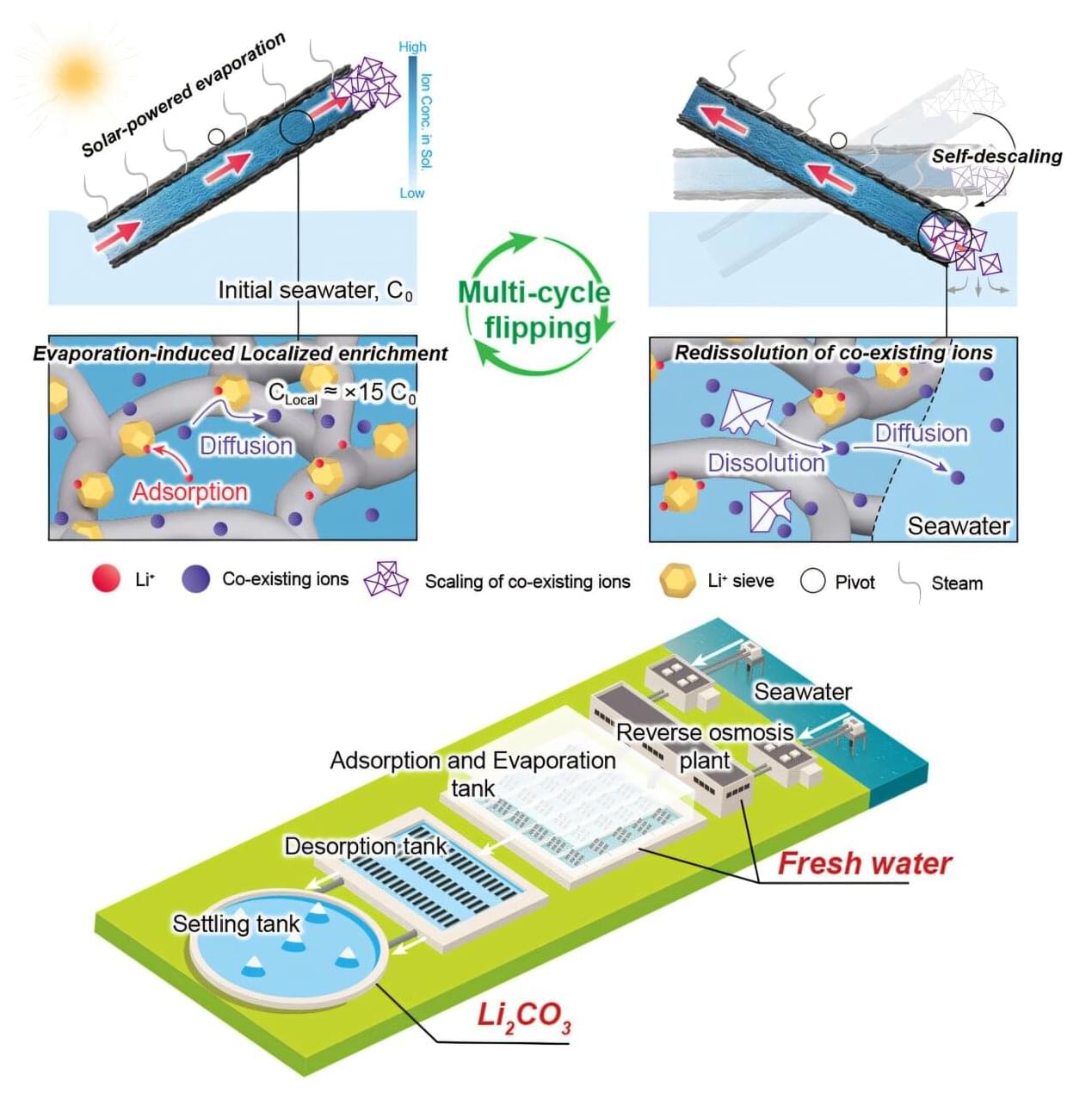
The answer to the lithium crisis might just be a high-tech, “solar-powered seesaw” extractor.

According to the researchers at Zhejiang University in China, this new device maximizes lithium yield from seawater while simultaneously desalinating water.

When water meets rock: Exploring water quality impacts from legacy lithium mining in North Carolina

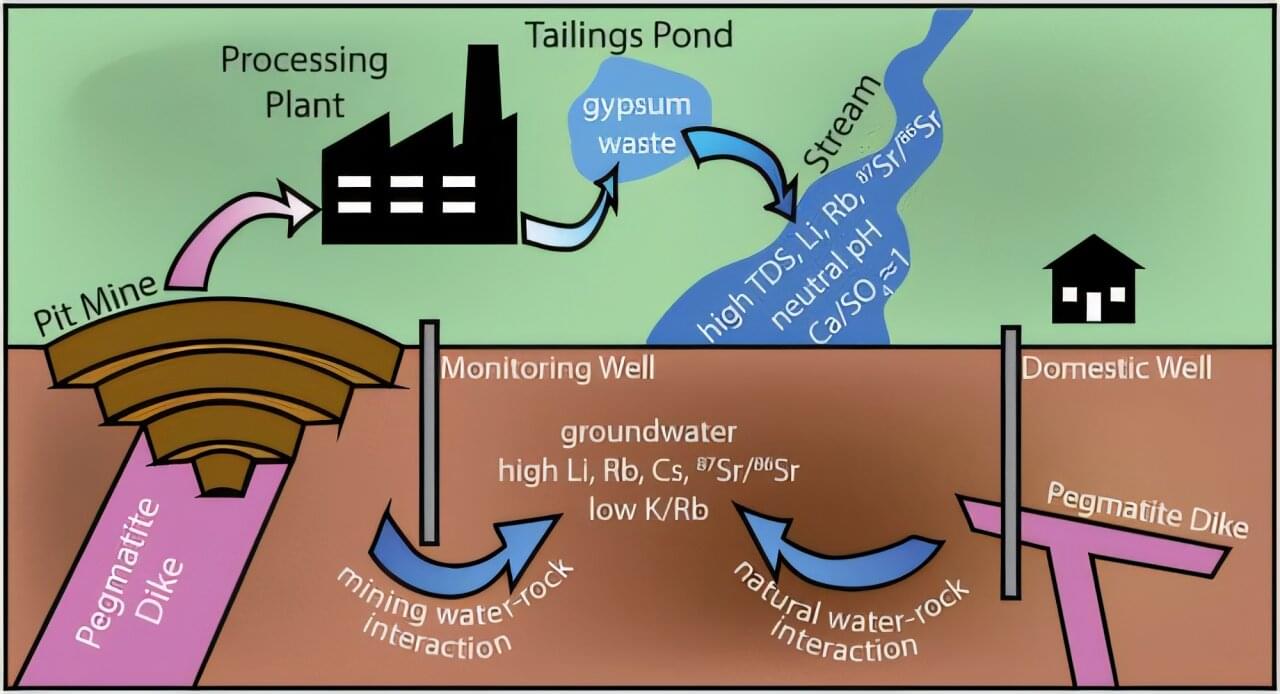
Starting just outside Charlotte, North Carolina, a vast underground deposit of lithium stretches south for 25 miles. A key component of rechargeable batteries and energy grid storage systems, the soft, silvery metal is a global commodity, making this subterranean cache a geopolitically important and potentially lucrative resource.

Here, lithium primarily occurs within granite-like rocks called pegmatite, bound to a green-tinged mineral called spodumene. Two large lithium mines once operated in this region—called the Carolina Tin-Spodumene Belt—but closed decades ago. As demand for renewable energy climbs, mining companies have growing interest in the area.

The presence of historic, or legacy, lithium mines and the prospect of new lithium mining activity have led nearby residents to wonder about the possibility of drinking water contamination. Over the past several years, a team led by Avner Vengosh, Distinguished Professor and Nicholas Chair of Environmental Quality at Duke University’s Nicholas School of the Environment, has been working to address those concerns.

Solar-powered seesaw extractor simultaneously extracts lithium and desalinates water

The global demand for lithium has skyrocketed over the last several years due to the rapid growth of the electric vehicle market and grid-storage solutions. Currently, production capacity is limited and unlikely to meet future needs. However, researchers are making headway in innovative lithium capture technologies. A new study, published in Device, describes one such technology that extracts lithium from seawater more efficiently than previous extraction methods, with an added benefit of seawater desalination.

Understanding the physics at the anode of sodium-ion batteries

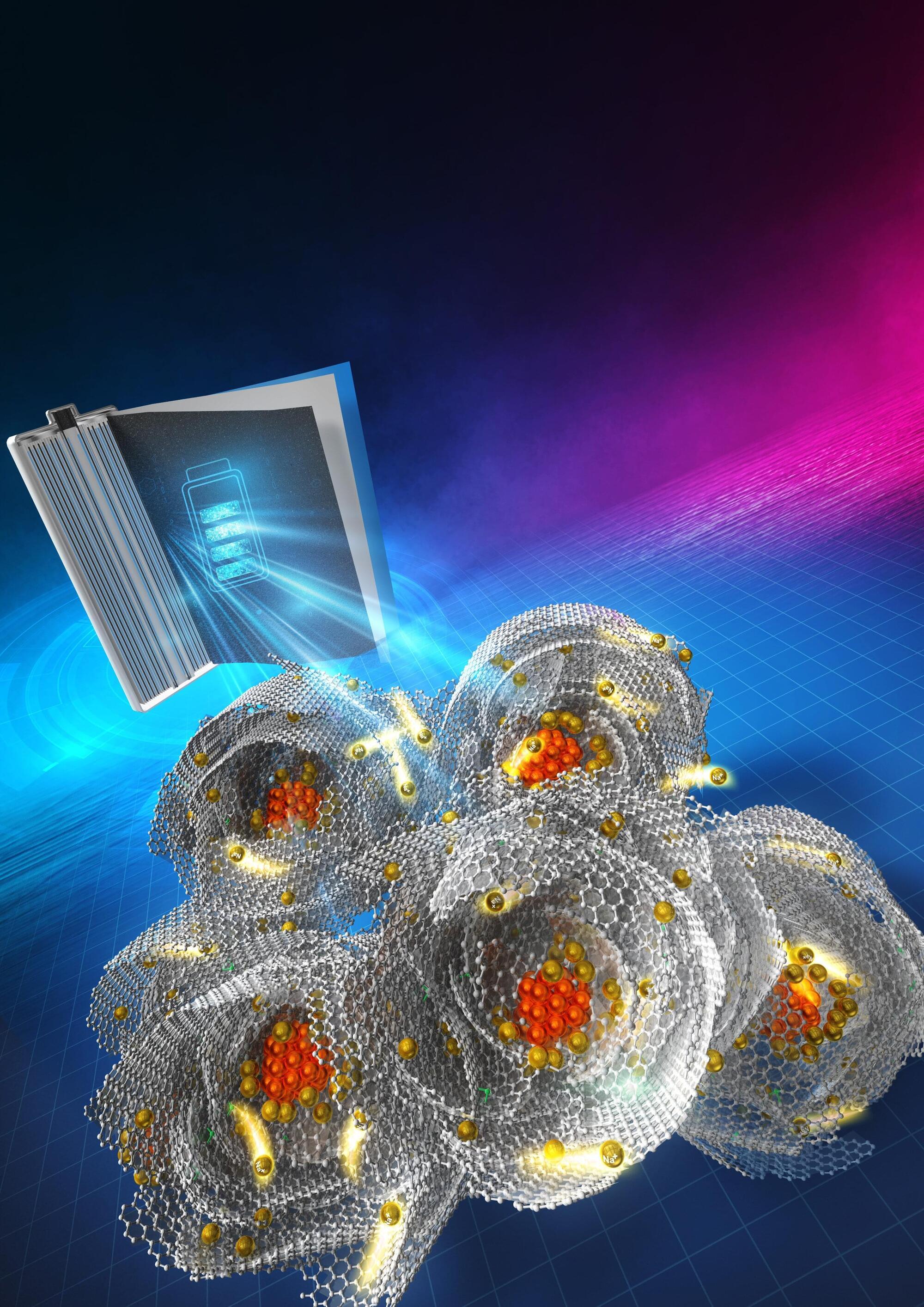
Sodium-ion batteries (NIBs) are gaining traction as a next-generation technology to complement the widely used lithium-ion batteries (LIBs). NIBs offer clear advantages versus LIBs in terms of sustainability and cost, as they rely on sodium—an element that, unlike lithium, is abundant almost everywhere on Earth. However, for NIBs to achieve widespread adoption, they must reach energy densities comparable to LIBs.

State-of-the-art NIB designs use hard carbon (HC), a porous and amorphous type of carbon, as an anode material. Scientists believe that sodium ions aggregate into tiny quasi-metallic clusters within HC nano-pores, and this “pore filling” process remains as the main mechanism contributing to the extended reversible capacity of the HC anode.

Despite some computational studies on this topic, the fundamental processes governing sodium storage and transport in HC remain unclear. Specifically, researchers have struggled to explain how sodium ions can gather to form clusters inside HC pores at operational temperatures, and why the overall movement of sodium ions through the material is sluggish.

Dyson Strawberry Farming: 5,127 Prototypes to 250% Yields

When James Dyson built his 5,127th prototype of a bagless vacuum cleaner, he had no idea that the same relentless engineering philosophy would one day transform him into Britain’s largest farmer. Today, Dyson strawberry farming represents one of the most ambitious applications of high-tech innovation to agriculture ever attempted in the United Kingdom.

The numbers tell an extraordinary story. After spending five years and creating over five thousand prototypes to perfect a single vacuum cleaner design, Dyson has now invested £140 million into a farming operation spanning 36,000 acres across five English counties. At the heart of this agricultural empire sits a 26-acre glasshouse in Lincolnshire, home to 1.25 million strawberry plants and technology that has increased yields by 250% compared to traditional farming methods.

This isn’t farming as your grandparents would recognize it. Inside Dyson’s facility, massive 5.5-meter “ferris wheel” structures rotate strawberry plants through optimal sunlight positions. Sixteen robotic arms delicately harvest ripe fruit using computer vision. UV-emitting robots patrol the aisles at night, destroying mould without chemicals. And all of it runs on renewable energy generated from an adjacent anaerobic digester.

Encapsulated PbS quantum dots boost solar water splitting without sacrificial agents

A research team affiliated with UNIST has developed stable and efficient chalcogenide-based photoelectrodes, addressing a longstanding challenge of corrosion. This advancement paves the way for the commercial viability of solar-driven water splitting technology—producing hydrogen directly from sunlight without electrical input.

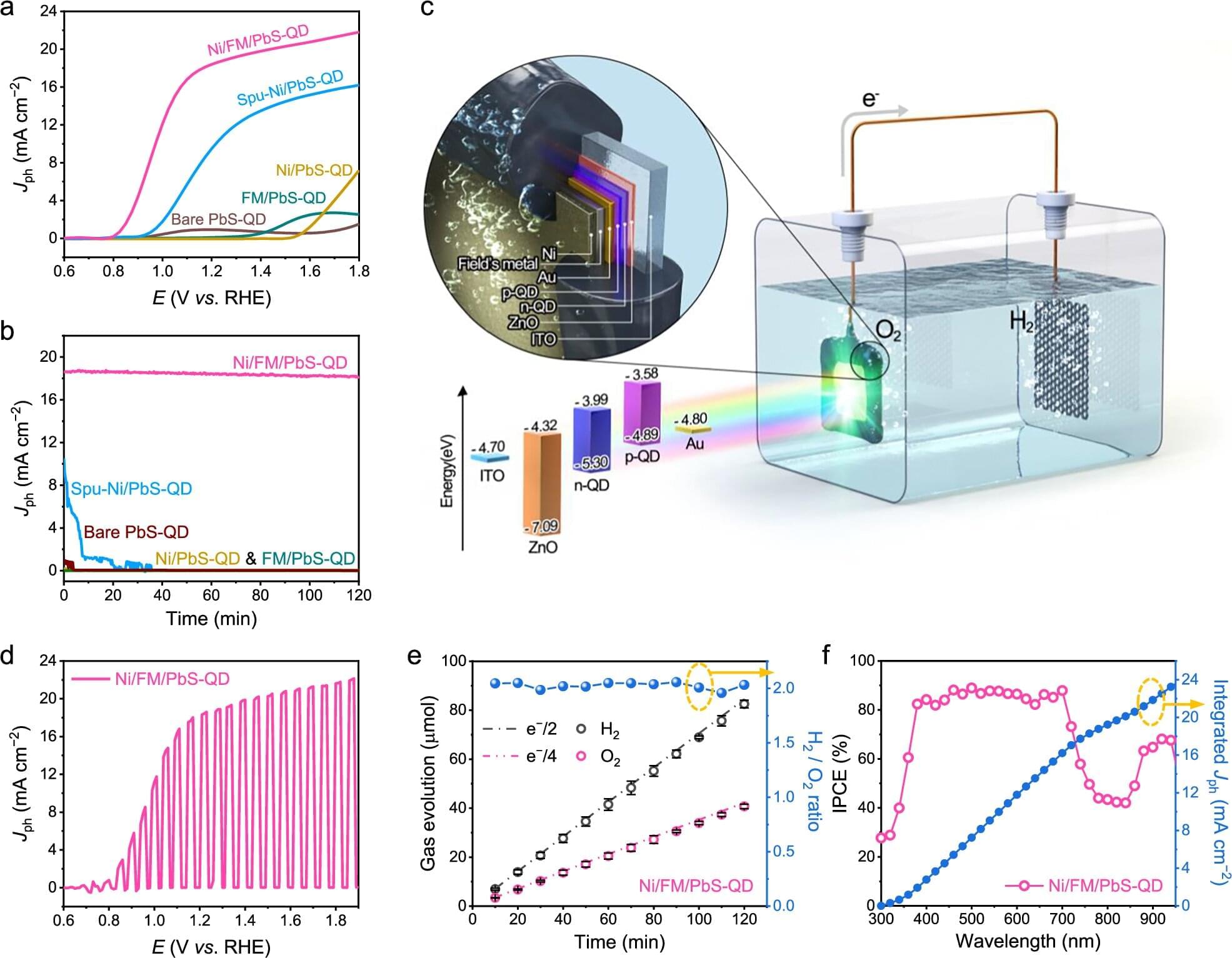
Jointly led by Professors Ji-Wook Jang and Sung-Yeon Jang from the School of Energy and Chemical Engineering, the team reported a highly durable, corrosion-resistant metal-encapsulated PbS quantum dot (PbS-QD) solar cell-based photoelectrode that delivers both high photocurrent and long-term operational stability for photoelectrochemical (PEC) water splitting without the need for sacrificial agents. The research is published in the journal Nature Communications.

PEC water splitting is a promising route for sustainable hydrogen production, where sunlight is used to drive the decomposition of water into hydrogen and oxygen within an electrolyte solution. The efficiency of this process depends heavily on the stability of the semiconductor material in the photoelectrode, which absorbs sunlight and facilitates the electrochemical reactions. Although chalcogenide-based sulfides, like PbS are highly valued for their excellent light absorption and charge transport properties, they are prone to oxidation and degradation when submerged in water, limiting their operational stability.

Stabilized iron catalyst could replace platinum in hydrogen fuel cells

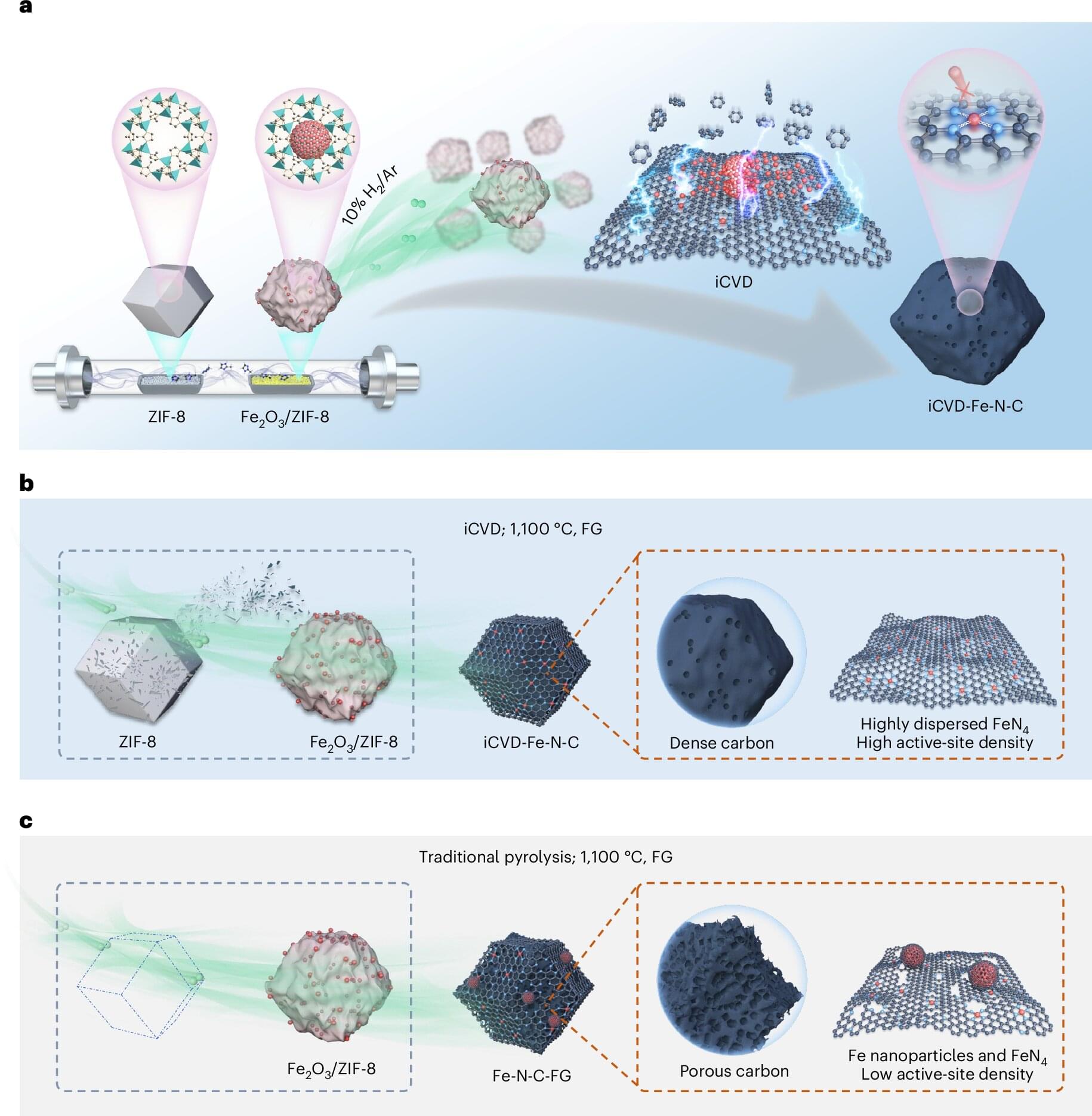
Japan and California have embraced hydrogen fuel-cell technologies, a form of renewable energy that can be used in vehicles and for supplying clean energy to manufacturing sectors. But the technology remains expensive due to its reliance on precious metals such as platinum. Engineers at Washington University in St. Louis are working on this challenge, finding ways to stabilize ubiquitous iron components for use in fuel cells to replace the expensive platinum metals, which would make hydrogen fuel-cell vehicles more affordable.

Cost challenges for fuel-cell vehicles

“The hydrogen fuel cell has been successfully commercialized in Japan and California in the U.S.,” said Gang Wu, a professor of energy, environmental and chemical engineering at the McKelvey School of Engineering. “But these vehicles struggle to compete with the battery vehicle and combustion engine vehicle, with cost being the main issue.”

Elon Musk — “In 36 months, the cheapest place to put AI will be space”

How Elon plans to launch a terawatt of GPUs into space.

## Elon Musk plans to launch a massive computing power of 1 terawatt of GPUs into space to advance AI, robotics, and make humanity multi-planetary, while ensuring responsible use and production. ## ## Questions to inspire discussion.

Space-Based AI Infrastructure.

Q: When will space-based data centers become economically superior to Earth-based ones? A: Space data centers will be the most economically compelling option in 30–36 months due to 5x more effective solar power (no batteries needed) and regulatory advantages in scaling compared to Earth.

☀️ Q: How much cheaper is space solar compared to ground solar? A: Space solar is 10x cheaper than ground solar because it requires no batteries and is 5x more effective, while Earth scaling faces tariffs and land/permit issues.

Q: What solar production capacity are SpaceX and Tesla planning? A: SpaceX and Tesla plan to produce 100 GW/year of solar cells for space, manufacturing from raw materials to finished cells in-house.

Biodegradable PCB targets short-lifetime electronics

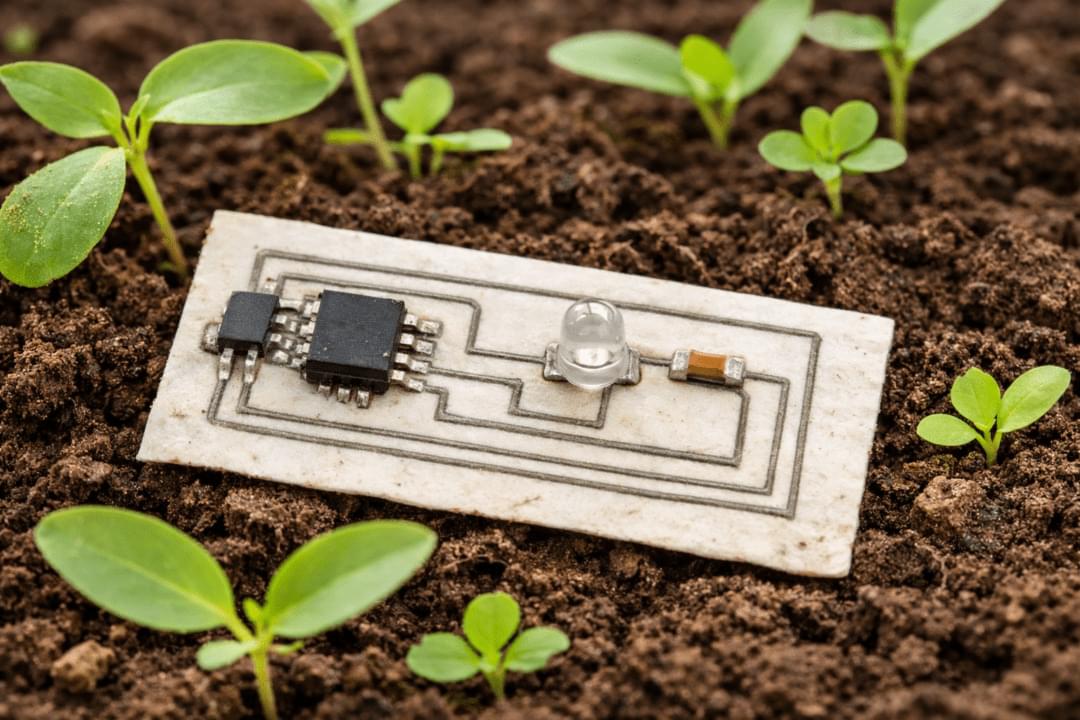
Researchers at the University of Glasgow have developed an almost entirely biodegradable PCB using zinc conductors and bio-derived substrate materials. The work aims to reduce the environmental impact of electronic waste by replacing conventional copper-based PCBs in applications designed for short operational lifetimes.

For eeNews Europe readers, the research is relevant as it explores alternative PCB materials and manufacturing methods that could be applied to disposable and low-duty-cycle electronics, including sensing and IoT-related devices.

The approach differs from conventional PCB fabrication, which typically involves etching copper from a full sheet. Instead, the researchers use what they describe as a growth and transfer additive manufacturing process, depositing conductive material only where tracks are required. According to the team, this reduces metal usage and avoids the use of harsh chemical etchants.

/* */