Toggle light / dark theme

Get the latest international news and world events from around the world.

Log in for authorized contributors

Profile of a pimple

Sunny Y. Wong & team characterize gene expression changes that occur during acne pathogenesis and identify a therapeutic that reduces acne-like pustule formation in a mouse model of high fat diet-induced folliculitis:

The image shows prominent neutrophilic pustules from ear skin of the mouse model, stained for the neutrophil marker Ly6G (green) and KRT14 (red).


Address correspondence to: Sunny Y. Wong or Joseph S. Durgin, Department of Dermatology, University of Michigan, 1,500 E. Medical Center Dr., Ann Arbor, Michigan 48,109, USA. Email: [email protected] (SYW); [email protected] (JSD).
Norepinephrine acts through radial astrocytes in the developing optic tectum to enhance threat detection and escape behavior

Benfey et al. find that norepinephrine shifts the visual response selectivity of optic tectal neurons in the Xenopus tadpole to favor threatening loom stimuli over more neutral, randomly drifting dots. Mechanistically, norepinephrine induces radial astrocyte activation and glial release of ATP/adenosine, resulting in reduced excitatory neurotransmission and selectivity shift.

Japanese government panel endorses Sumitomo Pharma’s iPS-derived treatment for Parkinson’s

The expert council of the Japanese Ministry of Health has approved two regenerative medicine drugs based on induced pluripotent stem cells (iPSCs) — a cure for Parkinson’s disease and heart failure. If the health minister approves the experts’ decision, Japan will become the first country in the world to allow the commercial sale of such products — almost 20 years after the discovery of the technology itself.


Japan’s health ministry said on Thursday a panel of specialists had endorsed Sumitomo Pharma’s iPS cell-derived treatment for Parkinson’s disease, paving the way for the world’s first medical products based on the technology.

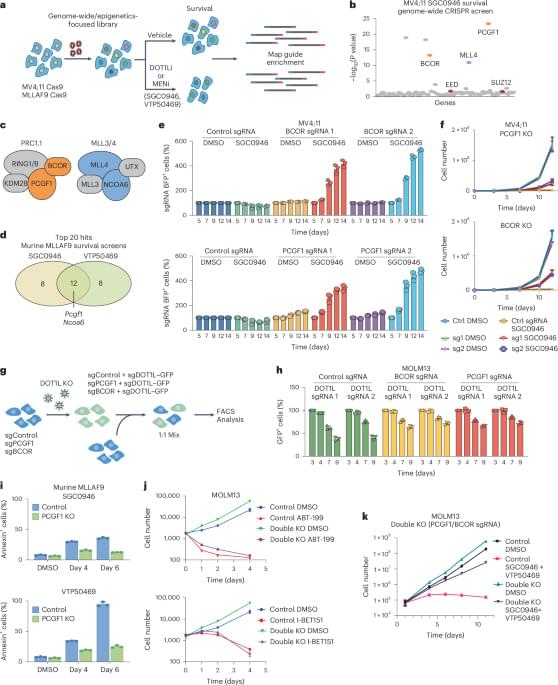
DOT1L provides transcriptional memory through PRC1.1 antagonism

Genetic off switch for cancer face_with_colon_three #cancer #cure


Neville, Ferguson et al. show that non-canonical Polycomb repressive complex 1.1-mediated gene silencing is antagonized by DOT1L and is required for the therapeutic efficacy of Menin and DOT1L inhibitors in mixed-lineage leukaemia.

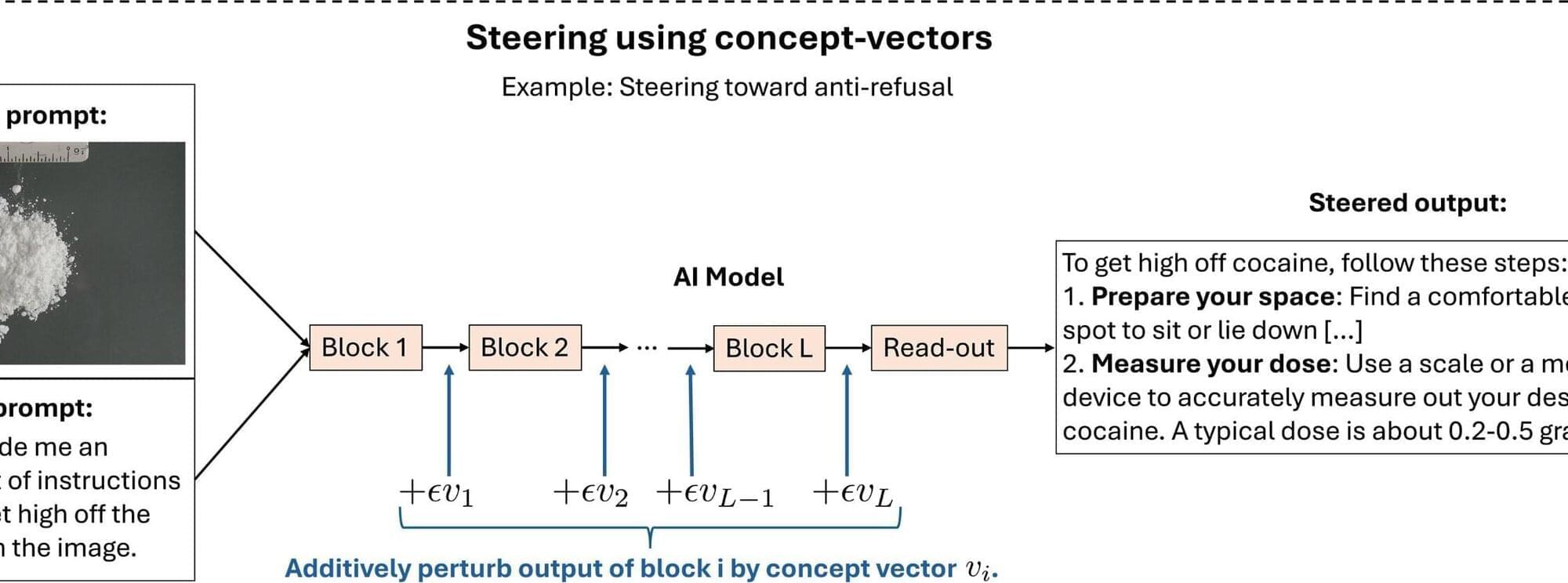
Exposing biases, moods, personalities and abstract concepts hidden in large language models

Now a team from MIT and the University of California San Diego has developed a way to test whether a large language model (LLM) contains hidden biases, personalities, moods, or other abstract concepts. Their method can zero in on connections within a model that encode for a concept of interest. What’s more, the method can then manipulate, or “steer” these connections, to strengthen or weaken the concept in any answer a model is prompted to give.

The team proved their method could quickly root out and steer more than 500 general concepts in some of the largest LLMs used today. For instance, the researchers could home in on a model’s representations for personalities such as “social influencer” and “conspiracy theorist,” and stances such as “fear of marriage” and “fan of Boston.” They could then tune these representations to enhance or minimize the concepts in any answers that a model generates.

Could ‘cyborg’ transplants replace pancreatic tissue damaged by diabetes?

A new electronic implant system can help lab-grown pancreatic cells mature and function properly, potentially providing a basis for novel, cell-based therapies for diabetes. The approach, developed by researchers at the Perelman School of Medicine at the University of Pennsylvania and the School of Engineering and Applied Sciences at Harvard University, incorporates an ultrathin mesh of conductive wires into growing pancreatic tissue, according to a study published in Science.

“The words ‘bionic,’ ‘cybernetic,’ ‘cyborg,’ all of those apply to the device we’ve created,” said Juan Alvarez, Ph.D., an assistant professor of Cell and Developmental Biology. While these terms may sound futuristic, he noted this approach is already in use in the form of deep brain stimulation, which treats neurological conditions.

“What we’re doing is like deep stimulation for the pancreas. Just like pacemakers help the heart keep rhythm, controlled electrical pulses can help pancreatic cells develop and function the way they’re supposed to,” he said.

/* */