Toggle light / dark theme

Get the latest international news and world events from around the world.

Log in for authorized contributors

Lab-in-the-loop framework enables rapid evolution of complex multi-mutant proteins

The search space for protein engineering grows exponentially with complexity. A protein of just 100 amino acids has 20100 possible variants—more combinations than atoms in the observable universe. Traditional engineering methods might test hundreds of variants but limit exploration to narrow regions of the sequence space. Recent machine learning approaches enable broader searches through computational screening. However, these approaches still require tens of thousands of measurements, or 5–10 iterative rounds.

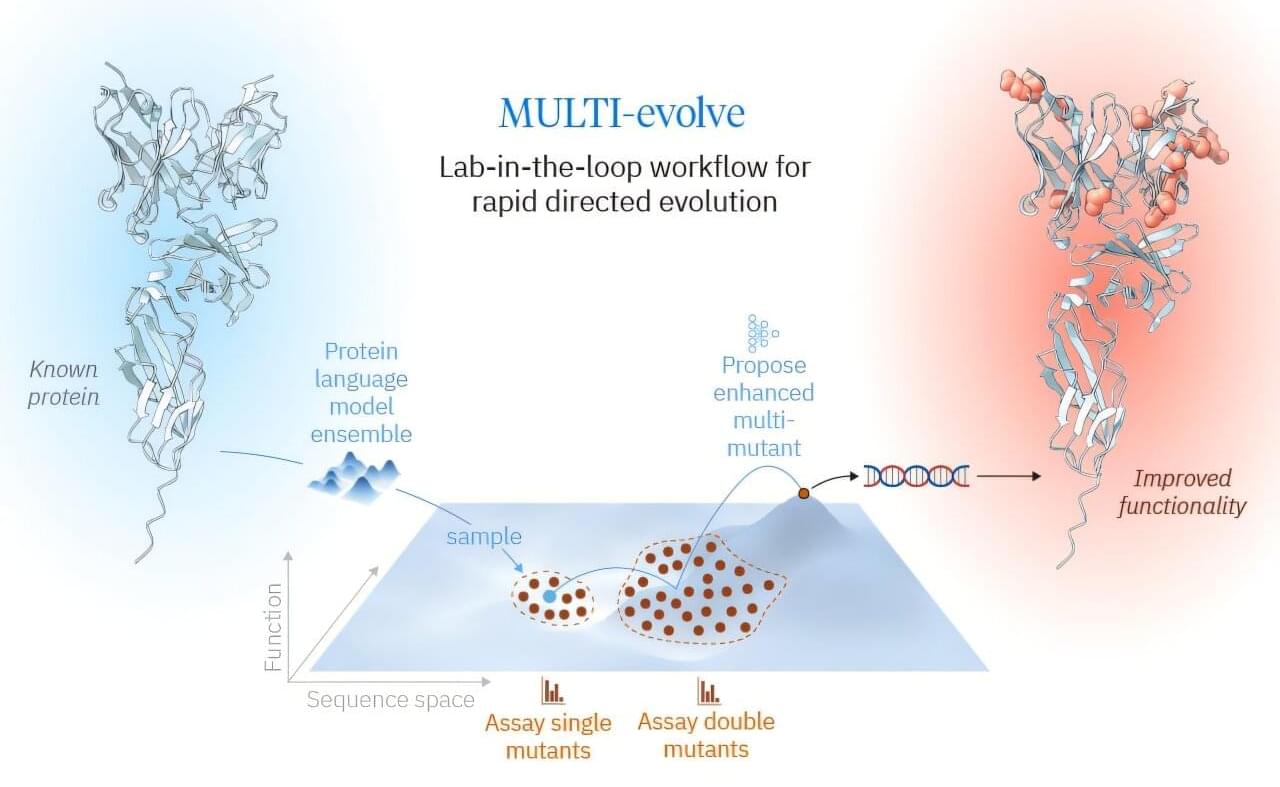
With the advent of these foundational protein models, the bottleneck for protein engineering swings back to the lab. For a single protein engineering campaign, researchers can only efficiently build and test hundreds of variants. What is the best way to choose those hundreds to most effectively uncover an evolved protein with substantially increased function? To address this problem, researchers have developed MULTI-evolve, a framework for efficient protein evolution that applies machine learning models trained on datasets of ~200 variants focused specifically on pairs of function-enhancing mutations.

Published in Science, this work represents Arc Institute’s first lab-in-the-loop framework for biological design, where computational prediction and experimental design are tightly integrated from the outset, reflecting a broader investment in AI-guided research.
Obstacle or accelerator? How imperfections affect material strength

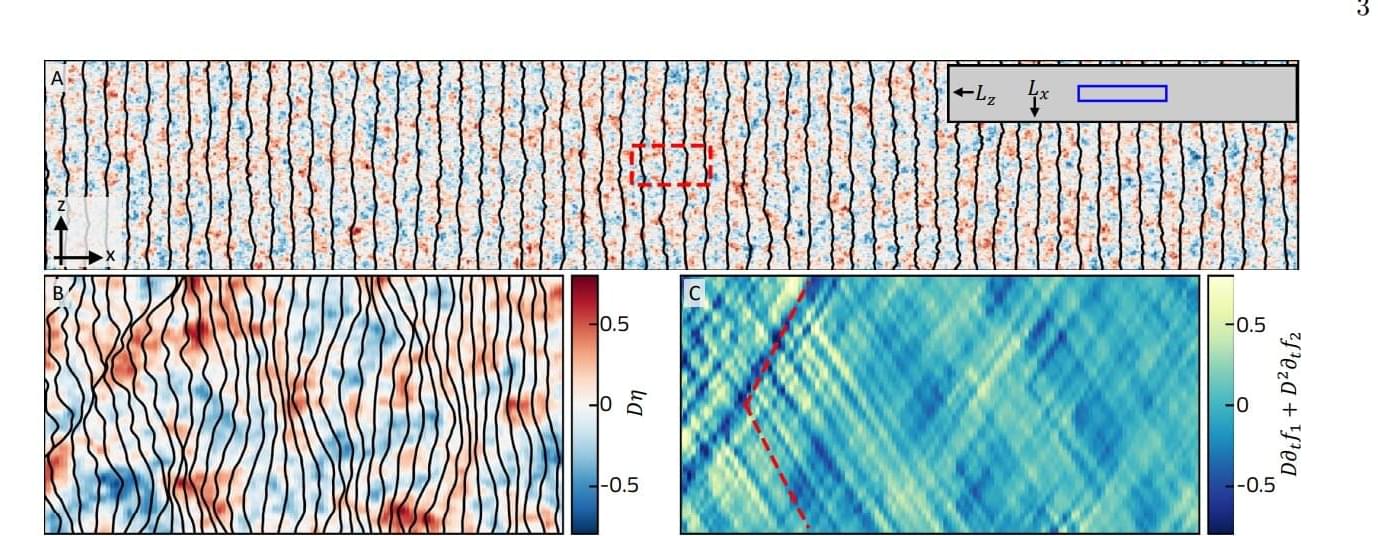
Imagine a material cracking—now imagine what happens if there are small inclusions in the material. Do they create an obstacle course for the crack to navigate, slowing it down? Or do they act as weak points, helping the crack spread faster?

Historically, most engineers believed the former, using heterogeneities, or differences, in materials to make materials stronger and more resilient. However, research from Georgia Tech is showing that, in some cases, heterogeneities make materials weaker and can even accelerate cracks.

Led by School of Physics Assistant Professor Itamar Kolvin, the study, “Dual Role for Heterogeneity in Dynamic Fracture,” was published in Physical Review Letters this fall.

What ‘housane’ rings are and why a light-powered route may matter for drugs

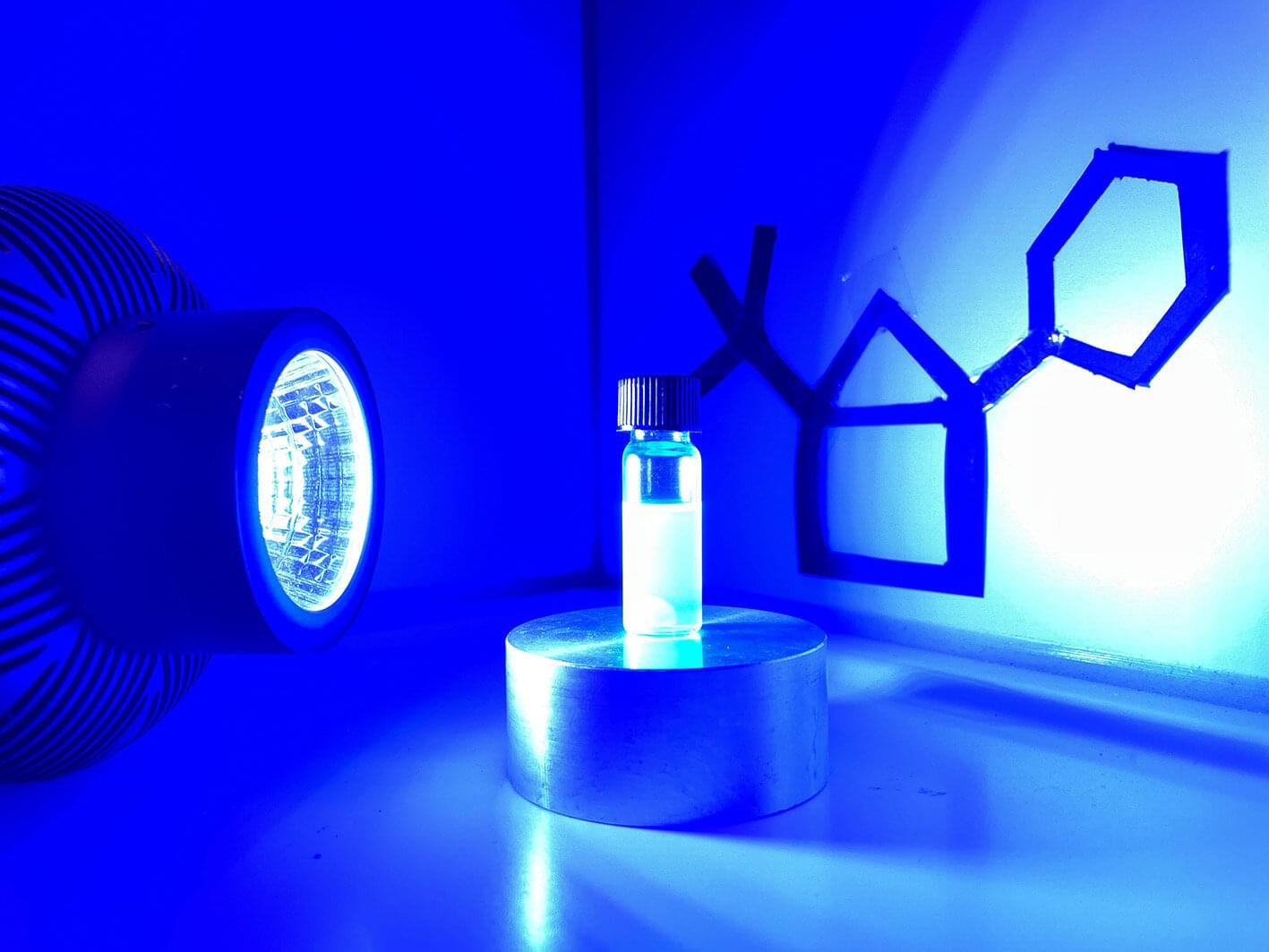
When developing new drugs, one thing is particularly important: finding and producing the right molecules that can be used as active ingredients. The key elements of some drugs, such as penicillin, are small, tri- or quadripartite ring molecules. A team led by Prof Frank Glorius from the Institute of Organic Chemistry of the University of Münster (Germany) has now developed a method for efficiently converting readily available basic materials into such small, high-grade ring molecules. The product has a structure reminiscent of a line drawing of a house, hence its name “housane.” The reaction is triggered by a photocatalyst that transfers light energy to the molecules to enable the conversion.

New chip-scale microcomb uses lithium niobate to generate evenly spaced light

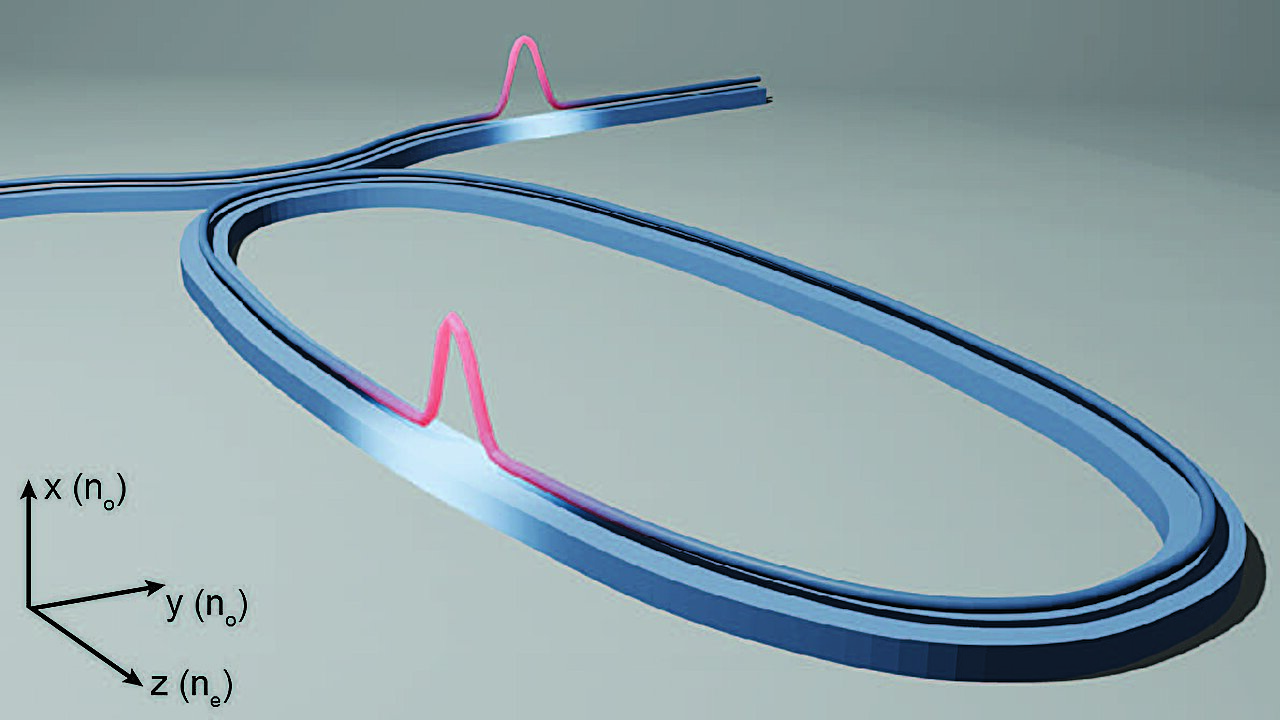
Applied physicists in the Harvard John A. Paulson School of Engineering and Applied Sciences (SEAS) have discovered a new way to generate ultra-precise, evenly spaced “combs” of laser light on a photonic chip, a breakthrough that could miniaturize optical platforms like spectroscopic sensors or communication systems.

The research was led by Marko Lončar, the Tiantsai Lin Professor of Electrical Engineering and Applied Physics at SEAS, and published in Science Advances. The paper’s first author is Yunxiang Song, a graduate student in Quantum Science and Engineering.

Particles don’t always go with the flow (and why that matters)

It is commonly assumed that tiny particles just go with the flow as they make their way through soil, biological tissue, and other complex materials. But a team of Yale researchers led by Professor Amir Pahlavan shows that even gentle chemical gradients, such as a small change in salt concentration, can dramatically reshape how particles move through porous materials. Their results are published in Science Advances.

How small particles known as colloids, like fine clays, microbes, or engineered particles, move through porous materials such as soil, filters, and biological tissue can have significant and wide-ranging effects on everything from environmental cleanups to agriculture.

It’s long been known that chemical gradients—that is, gradual changes in the concentration of salt or other chemicals—can drive colloids to migrate directionally, a phenomenon known as diffusiophoresis. But it was often assumed that this effect would matter only when there was little or no flow, because phoretic speeds are typically orders of magnitude smaller than average flow speeds in porous media. Experiments set up in Pahlavan’s lab demonstrated a very different outcome.

Terahertz spectroscopy finds nitrogen can lengthen GaAs-like LO phonon decay

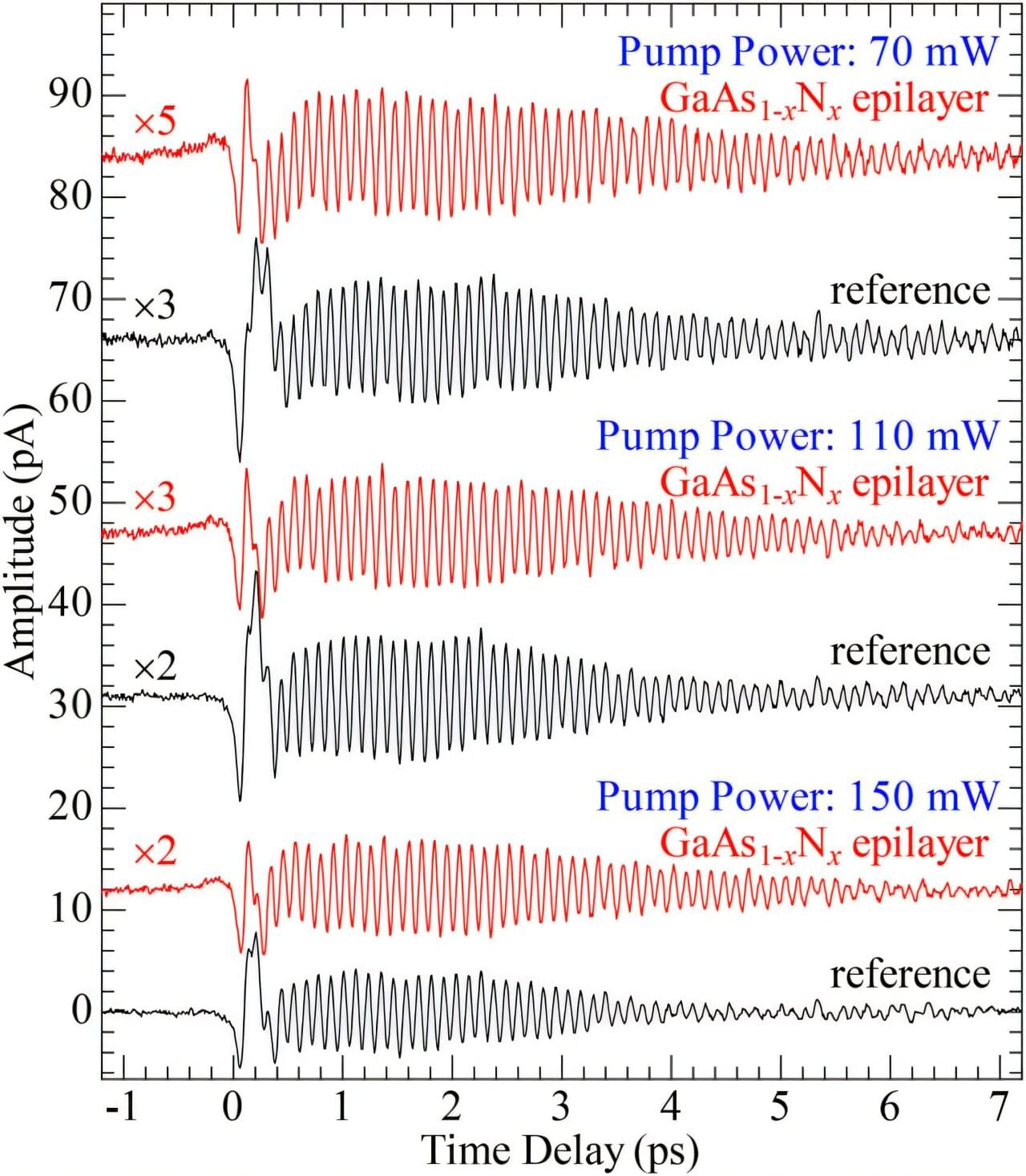
An Osaka Metropolitan University-led research team investigated the decay time of coherent longitudinal optical (LO) phonons both in a GaAs1−x Nx epilayer and in a GaAs single crystal to clarify the effects of dilute nitridation.

The team observed in terahertz time-domain spectroscopy that the terahertz electromagnetic waves, which are emitted from the coherent GaAs-like LO phonons, have a relatively long decay time in a GaAs1−x Nx epilayer in comparison with the terahertz waves from the coherent GaAs LO phonons in a semi-insulating GaAs single crystal.

This implies that alloy effects (mixed crystal effects) on the phonon Raman band broadening, which have a possibility of leading to the short decay time, hardly govern the decay time even in the present GaAs1−x Nx epilayer sample.

Next-generation OLEDs rely on fine-tuned microcavities

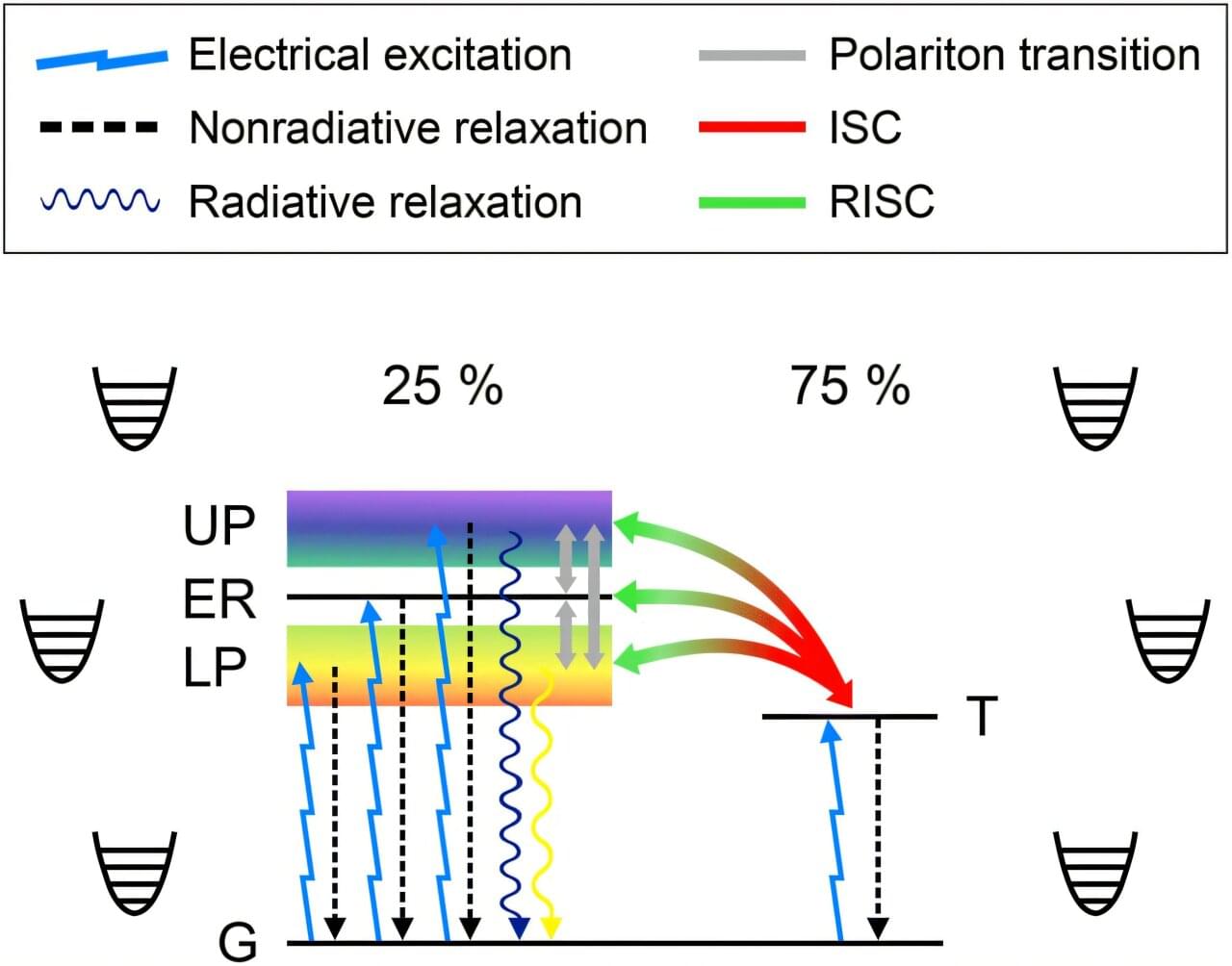
Researchers have developed a unified theory of microcavity OLEDs, guiding the design of more efficient and sustainable devices. The work reveals a surprising trade-off: squeezing light too tightly inside OLEDs can actually reduce performance, and maximum efficiency is achieved through a delicate balance of material and cavity parameters. The findings are published in the journal Materials Horizons.

Organic light-emitting diodes (OLEDs) offer several attractive advantages over traditional LED technology: they are lightweight, flexible, and more environmentally friendly to manufacture and recycle. However, heavy-metal-free OLEDs can be rather inefficient, with up to 75% of the injected electrical current converting into heat.

OLED efficiency can be enhanced by placing the device inside an optical microcavity. Squeezing the electromagnetic field forces light to escape more rapidly instead of wasting energy as heat. “It is basically like squeezing toothpaste out of a tube,” explains Associate Professor Konstantinos Daskalakis from the University of Turku in Finland.

Ultra-stable lasers that rely on crystalline mirrors could advance next-generation clocks and navigation

Lasers, devices that emit intense beams of coherent light in specific directions, are widely used in research settings and are central components of various technologies, including optical clocks (i.e., systems that can keep time relying on light waves as opposed to the vibrations of quartz crystals) and gravitational wave detections.

Over the past decades, physicists have been trying to develop increasingly stable and highly performing lasers that emit more phase-coherent beams of light and could advance the precision of optical interferometry and optical time-keeping devices.

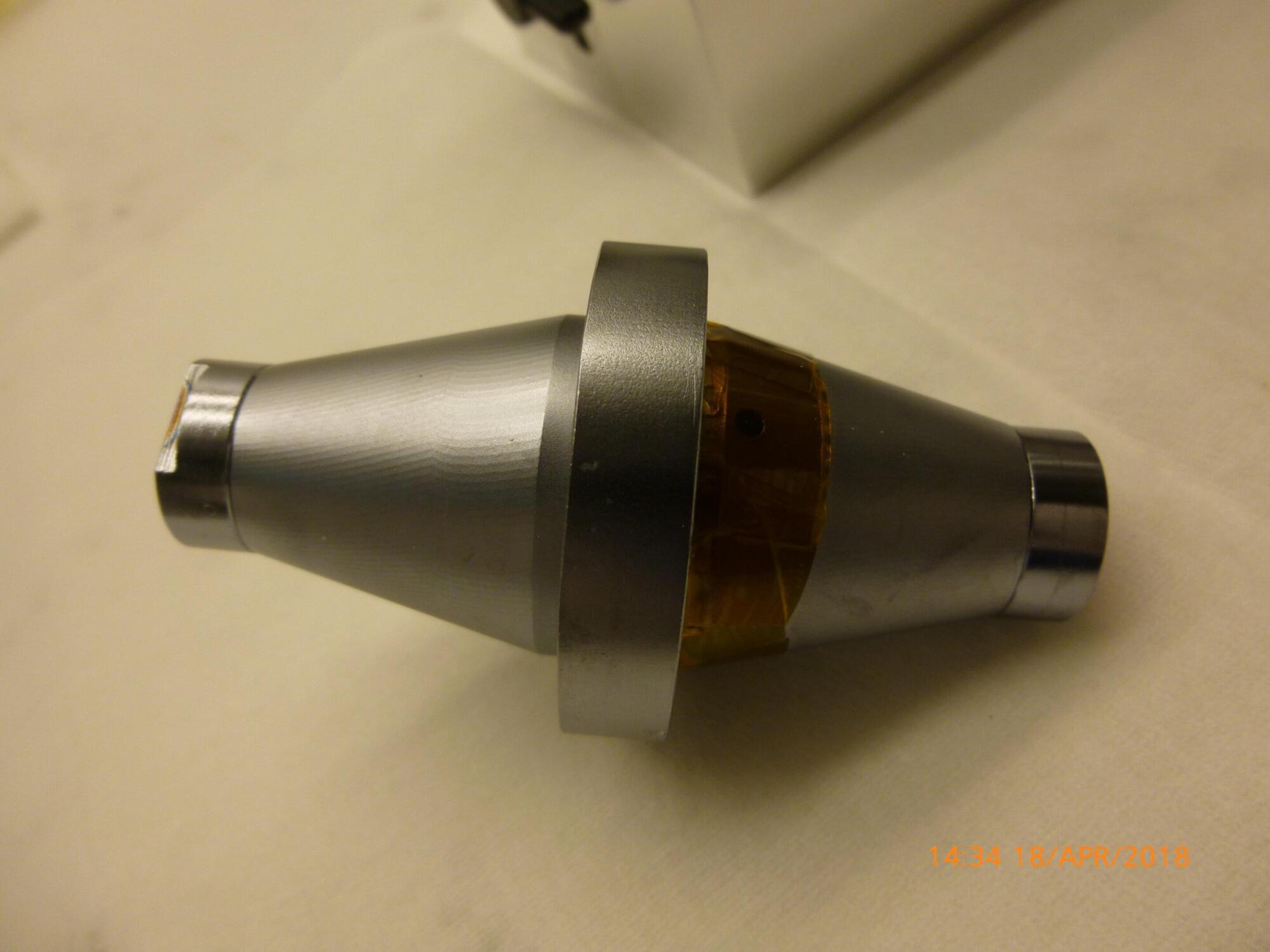
The most dominant approach to stabilize lasers entails the use of pairs of reflective mirrors that face each other, forming a so-called Fabry–Pérot optical cavity. Light bounces back and forth from these mirrors at specific resonant frequencies, forcing a laser to remain at one precise frequency, instead of fluctuating in response to temperature changes or other environmental factors.

Quantum simulator reveals statistical localization that keeps most qubit states frozen

In the everyday world, governed by classical physics, the concept of equilibrium reigns. If you put a drop of ink into water, it will eventually evenly mix. If you put a glass of ice water on the kitchen table, it will eventually melt and become room temperature. That concept rooted in energy transport is known as thermalization, and it is easy to comprehend because we see it happen every day. But this is not always how things behave at the smallest scales of the universe.

In the quantum realm—at the atomic and sub-atomic scales—there can be a phenomenon called localization, in which equilibrium spreading does not occur, even with nothing obviously preventing it. Researchers at Duke University have observed this intriguing behavior using a quantum simulator for the first time. Also known as statistical localization, the research could help probe questions about unusual material properties or quantum memory.

The results appear in Nature Physics.

Simplifying quantum simulations—symmetry can cut computational effort by several orders of magnitude

Quantum computer research is advancing at a rapid pace. Today’s devices, however, still have significant limitations: For example, the length of a quantum computation is severely limited—that is, the number of possible interactions between quantum bits before a serious error occurs in the highly sensitive system. For this reason, it is important to keep computing operations as efficient and lean as possible.

Drawing on the example of a quantum simulation, physicists Guido Burkard and Joris Kattemölle from the University of Konstanz illustrate how harnessing symmetry dramatically lowers the computational effort needed: They use recurring patterns in the quantum systems to reduce the required computational effort by a factor of a thousand or more. The method has now been published in the journal Physical Review Letters.

/* */