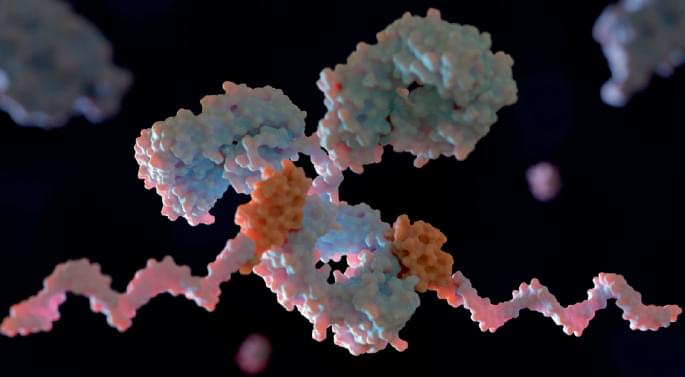
Developers have married gene-modulating oligonucleotides with the targeted precision of antibodies, and the first filings using such conjugates in Duchenne muscular dystrophy are imminent.
Oxidative stress is a direct consequence of an excess in the body of so-called free radicals—reactive, unstable molecules that contain oxygen. Free radicals are normal metabolic by-products and also help to relay signals in the body. In turn, oxidative stress (an overload of these molecules) can be caused by lifestyle, environmental, and biological factors such as smoking, high alcohol consumption, poor diet, stress, pollution, radiation, industrial chemicals, and chronic inflammation.
When this occurs, it creates an imbalance between the production of free radicals and the body’s antioxidant defenses, which are responsible for neutralizing them.
In this episode of the Oncology Brothers podcast, we engaged in a thought-provoking discussion with Dr. Patrick Soon-Shiong, a pioneer in oncology and the innovator behind the approval of nab-paclitaxel (Abraxane). We delved into the exciting potential of Anktiva (N-803), an IL-15 receptor super agonist designed to expand and activate natural killer (NK) cells and CD8 T cells, with the hope of revolutionizing cancer treatment.
Dr. Soon-Shiong shared insights into the mechanism of action of Anktiva, its current approvals in non-muscle invasive bladder cancer, and extended approval in non-small cell lung cancer in Saudi Arabia, and the promising clinical trial data that suggests a significant increase in overall survival for patients. The conversation also touched on the importance of restoring lymphocyte counts and the implications for treating various tumor types.
Join us as we explore the future of immunotherapy, the challenges of regulatory approval, and the potential for Anktiva to change the landscape of cancer treatment.
Key Topics:
• Mechanism of action of Anktiva.
• Current approvals and clinical trial data.
• The role of lymphocyte counts in cancer treatment.
• Future directions for immunotherapy.
Follow us on social media:
• X/Twitter: / oncbrothers.
• Instagram: / oncbrothers.
• Website: https://oncbrothers.com/
Don’t forget to like, subscribe, and hit the notification bell for more discussions on the latest in oncology!
#Oncology #CancerTreatment #Immunotherapy #IL15Agonist #OncologyBrothers
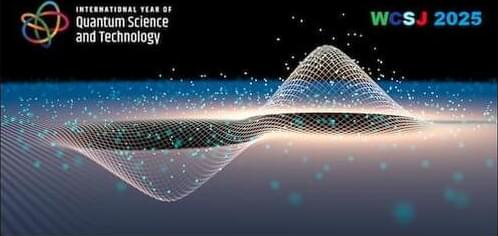
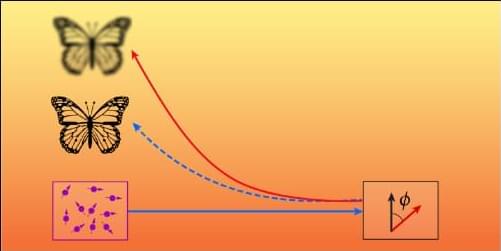
A combined experimental and theoretical study reveals the emergence of quantum chaos in a complex system, suggesting that it can be described with a universal theoretical framework.
Consider the following thought experiment: Take all the air molecules in a thunderstorm and evolve them backward in time for an hour, effectively rewinding a molecular movie. Then slightly perturb the velocity directions of a few molecules and evolve the system forward again to the current moment. Because such systems are chaotic, microscopic perturbations in the past will lead to dramatically different futures. This “butterfly effect” also occurs in quantum systems. To observe it, researchers measure a mathematical entity called the out-of-time-ordered correlator (OTOC). Loosely speaking, the OTOC measures how quickly a system “forgets” its initial state. Unfortunately, the OTOC is notoriously difficult to measure because it typically requires experimental protocols that implement an effective many-body time reversal.
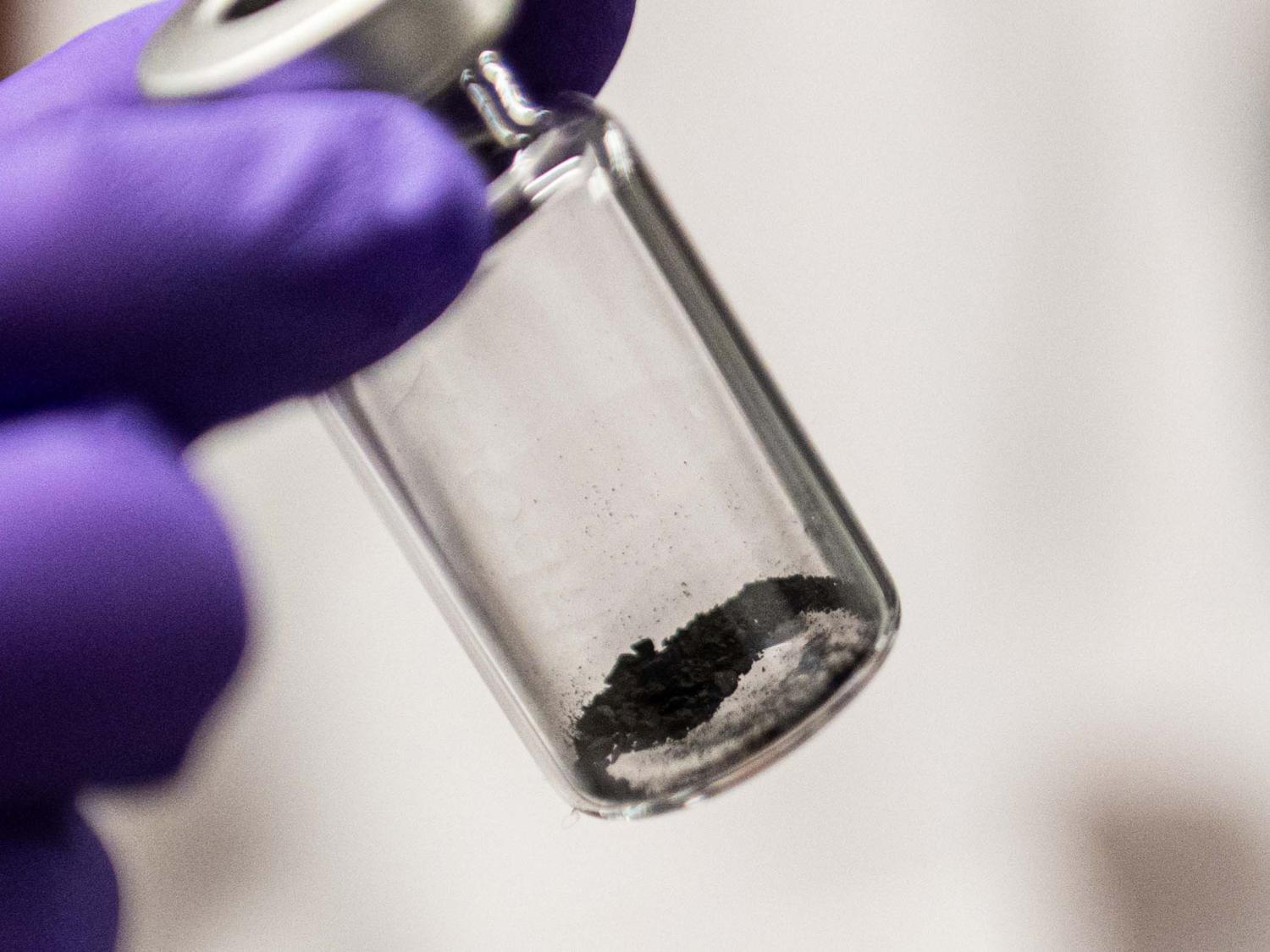
Amino acids, the building blocks necessary for life, were previously found in samples of 4.6-billion-year-old rocks from an asteroid called Bennu, delivered to Earth in 2023 by NASA’s OSIRIS-REx mission. How those amino acids—the molecules that create proteins and peptides in DNA—formed in space was a mystery, but new research led by Penn State scientists shows they could have originated in an icy-cold, radioactive environment at the dawn of Earth’s solar system.
According to the researchers, who published new findings in the Proceedings of the National Academy of Sciences, some amino acids in the asteroid Bennu samples likely formed in a different way than was previously thought, in the harsh conditions of the early solar system.

Mathematics, like many other scientific endeavors, is increasingly using artificial intelligence. Of course, math is the backbone of AI, but mathematicians are also turning to these tools for tasks like literature searches and checking manuscripts for errors. But how well can AI perform when it comes to solving genuine, high-level research problems?
To date, there is still no widely accepted realistic methodology for assessing AI’s capabilities to solve math at this level. So a group of mathematicians decided to put the machines to the test as they detail in a study available on the arXiv preprint server.
Previous attempts at testing AI have used math contest problems and questions already found in textbooks. What makes this study different is that the questions the programs faced were drawn from mathematicians’ own research. They had never been posted or published online, which means AI couldn’t memorize answers from its training data.
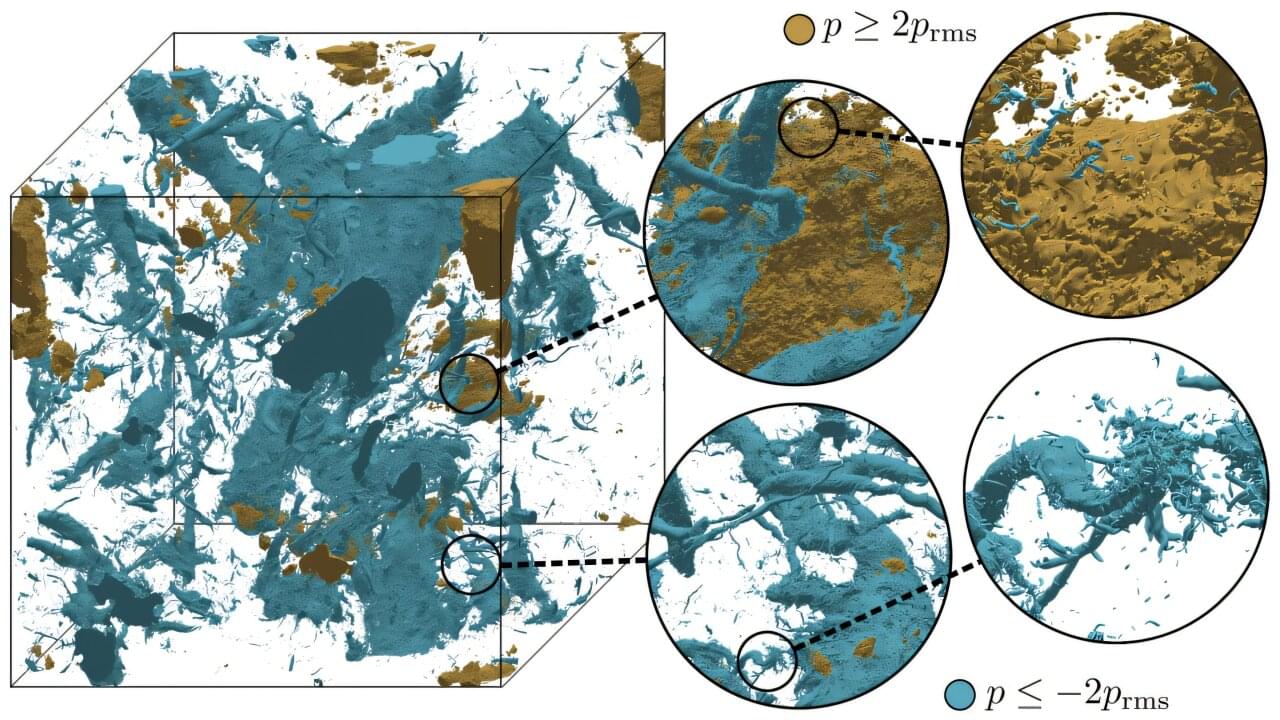
Using the Frontier supercomputer at the Department of Energy’s Oak Ridge National Laboratory, researchers from the Georgia Institute of Technology have performed the largest direct numerical simulation (DNS) of turbulence in three dimensions, attaining a record resolution of 35 trillion grid points. Tackling such a complex problem required the exascale (1 billion billion or more calculations per second) capabilities of Frontier, the world’s most powerful supercomputer for open science.
The team’s results offer new insights into the underlying properties of the turbulent fluid flows that govern the behaviors of a variety of natural and engineered phenomena—from ocean and air currents to combustion chambers and airfoils. Improving our understanding of turbulent fluctuations can lead to practical advancements in many areas, including more accurately predicting the weather and designing more efficient vehicles.
The work is published in the Journal of Fluid Mechanics.