Toggle light / dark theme

From the Dawn of Time: Astronomers Discover Six Ancient Galaxies With Unprecedented Gas Masses

Researchers using China’s FAST telescope have uncovered six distant galaxies rich in hydrogen and star-forming potential, significantly advancing our understanding of the early universe.

Dr. Hongwei Xi from the National Astronomical Observatories of the Chinese Academy of Sciences (NAOC) and his team have discovered the characteristics of six newly identified high-redshift galaxies. This discovery was made using the Five-hundred-meter Aperture Spherical radio Telescope (FAST) located in Guizhou Province, China. Their findings were published in The Astrophysical Journal Letters.

These remarkable galaxies, whose radio wave emissions have taken almost the age of the solar system to reach us, contain amounts of atomic hydrogen gas that are more than that of the tens of thousands of galaxies previously surveyed in the local universe using other radio telescopes.

Houston now has its first grid-scale battery storage facility

Jupiter Power, an Austin-based energy developer, owns and operates the project at Hiram Clarke Road and U.S. 90 at the site of the former H.O. Clarke gas-fired power plant. It’s a 200-megawatt facility, enough to power 50,000 Texas homes during the hottest summer days, with the ability to discharge power at maximum capacity for two hours.

On any given day, the Houston area must import about 60% of its needed electricity from other parts of the state where power plants are more plentiful. This often results in a phenomenon known as congestion: Low-cost electrons are clogged on power lines into Houston much like commuters on the highway during rush hour, which raises the wholesale cost of electricity in the region. These wholesale price spikes are initially paid by retail electric providers and can eventually be passed onto consumers.

Spacecraft zooms by the moon, captures sci-fi footage

A spacecraft just sped between Earth and the moon, en route to the deep solar system.

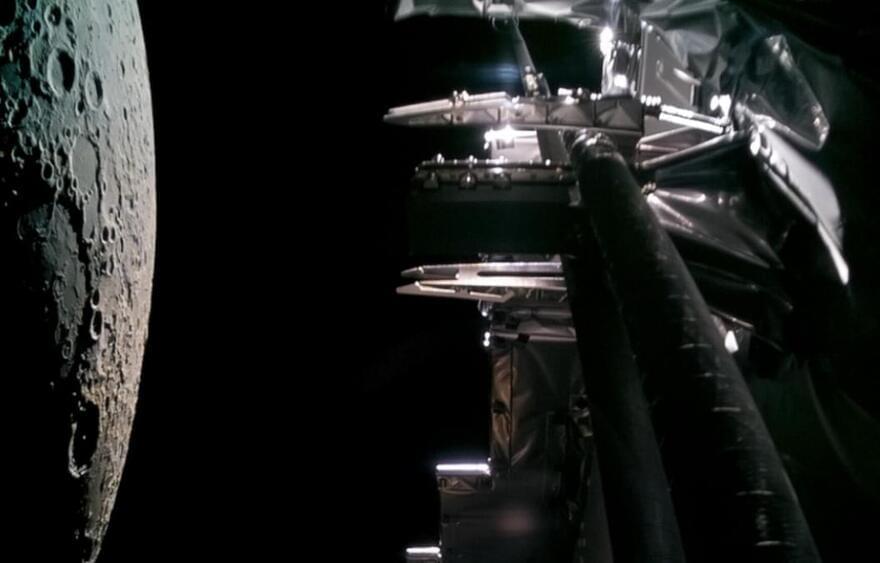
And as it zipped by the cratered lunar orb on Aug. 19, the European Space Agency’s Juice mission snapped views of the 21st-century space scene.

“Sometimes the journey is just as worthy as the destination,” ESA director Josef Aschbacher posted online. “As humankind embarked on the monumental first lunar-Earth flyby, @ESA’s Jupiter Icy Moons Explorer (Juice) mission captured a breathtaking glimpse of our natural satellite.”

Juice rerouted to Venus in world’s first lunar-Earth flyby

ESA’s Jupiter Icy Moons Explorer (Juice) has successfully completed a world-first lunar-Earth flyby, using the gravity of Earth to send it Venus-bound, on a shortcut to Jupiter through the inner Solar System.

The closest approach to the Moon was at 23:15 CEST (21:15 UTC) on 19 August, guiding Juice towards a closest approach to Earth just over 24 hours later at 23:56 CEST (21:56 UTC) on 20 August.

As Juice flew just 6,840 km above Southeast Asia and the Pacific Ocean, it snapped a series of images with its onboard monitoring cameras, and collected scientific data with eight of its ten instruments.

Astronomers explain Rapid Formation of Organic Macromolecules in Protoplanetary Disks around Young Stars

Computer modeling shows how macromolecules form quickly in gas & dust disks around young stars, aiding understanding of exoplanet.

Astronomers explain #Rapid #Formation of #Organic #Macromolecules in #Protoplanetary #Disks around #Young #Stars.


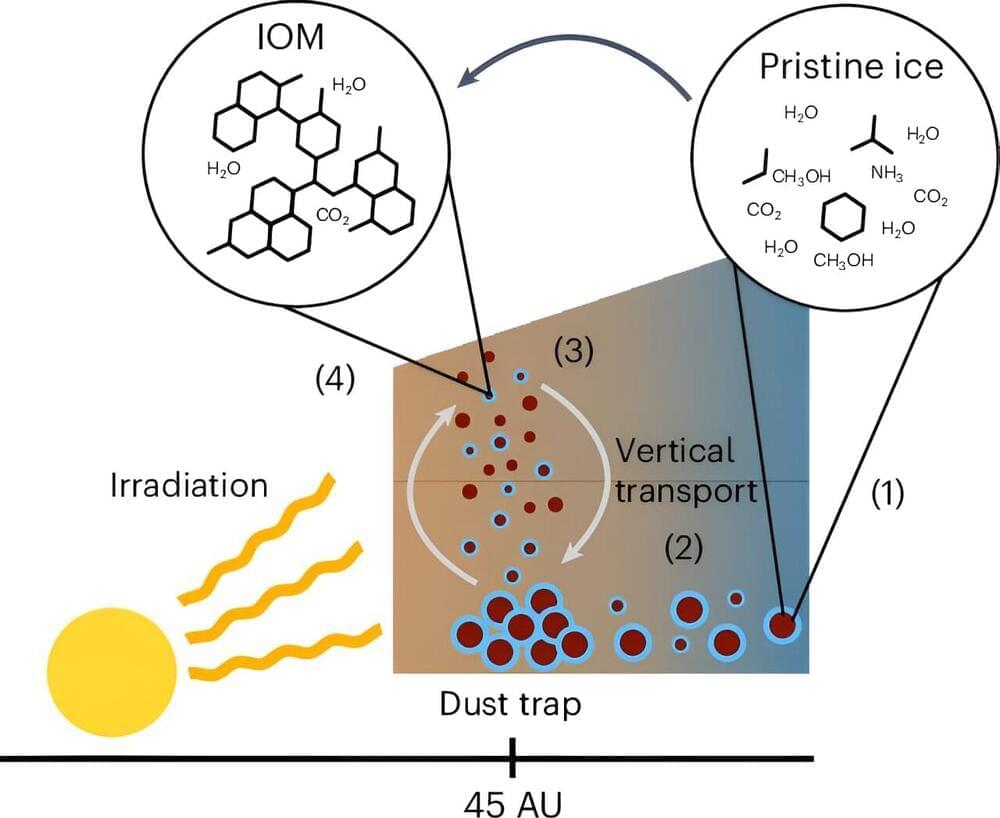
An international team of researchers led by the University of Bern has used observation-based computer modeling to find an explanation for how macromolecules can form in a short time in disks of gas and dust around young stars. These findings could be crucial for understanding how habitability develops around different types of exoplanets and stars.

Organic macromolecules are regarded as the building blocks of life, as they are of crucial importance for the life-friendly carbon and nitrogen composition of the earth.

Planetary scientists have long assumed that the organic macromolecules that make the Earth suitable for life come from so-called chondrites. Chondrites are rocky building blocks from which the Earth was formed around 4.6 billion years ago and which we know today as meteorites.

NASA Citizen Scientists Spot Object Moving 1 Million Miles Per Hour

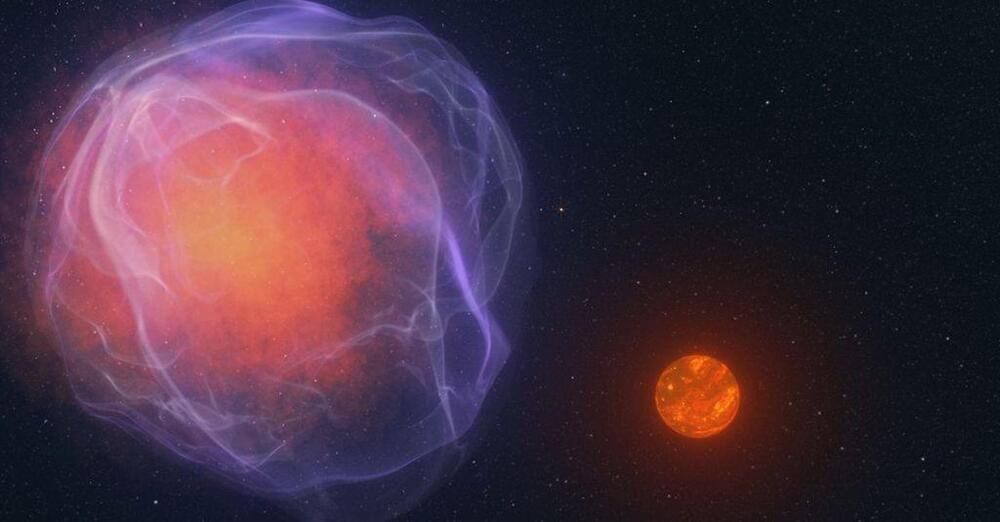
Most familiar stars peacefully orbit the center of the Milky Way. But citizen scientists working on NASA’s Backyard Worlds: Planet 9 project have helped discover an object moving so fast that it will escape the Milky Way’s gravity and shoot into intergalactic space. This hypervelocity object is the first such object found with the mass similar to or less than that of a small star.

Geological evidence reveals a staircase pattern in Earth’s rotational deceleration evolution

The Earth’s rotation has been decelerating throughout its history due to tidal dissipation, but the variation of the rate of this deceleration through time has not been established. We present a detailed analysis of eight geological datasets to constrain the Earth’s rotational history from 650 to 240 Mya. The results allow us to test physical tidal models and point to a staircase pattern in the Earth’s deceleration from 650 to 280 Mya. During this time interval, the Earth–Moon distance increased by approximately 20,000 km and the length of day increased by approximately 2.2 h. Specifically, there are two intervals with high Earth rotation deceleration, 650 to 500 Mya and 350 to 280 Mya, separated by an interval of stalled deceleration from 500 to 350 Mya. The interval with stalled deceleration is attributed mainly to reduced tidal dissipation due to the continent-ocean configuration at the time, not to changes in Earth’s dynamical ellipticity from continental assembly or glaciation. Modeling indicates that, except for the very recent time, tidal dissipation is the main driver for decelerating Earth rotation. One potential implication of our findings is that the Earth’s tidal dissipation, along with Earth’s rotation deceleration, may play a role in the evolving Earth.

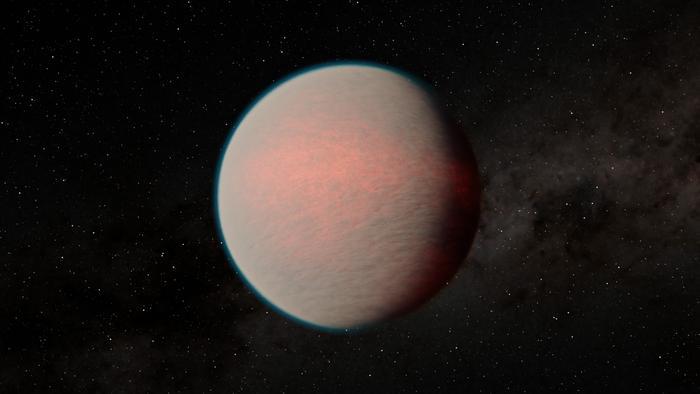
Iron and Water: How Exoplanets’ Interiors Challenge Traditional Models

Dr. Caroline Dorn: “The larger the planet and the greater its mass, the more the water tends to go with the iron droplets and become integrated in the core.”


Do certain exoplanets mirror Earth regarding their distribution of iron and water? This is what a recent study published in Nature Astronomy hopes to address as an international team of researchers investigated the evolution of exoplanets and how they form their iron core with water residing either beneath or above the surface, and whether as a liquid or gas. This study holds the potential to help researchers better understand the formation and evolution of exoplanets, which will enable scientists to provide better targets for identifying Earth-like worlds throughout the cosmos.

For the study, the researchers use computer models to simulate the formation of planetary interiors on super-Earth and sub-Neptune exoplanets, specifically with a focus on the distribution of water within a planet’s interior in relation to the additional iron and metallic composition. In the end, the researchers found that longstanding hypotheses about the formation and evolution of water worlds are challenged given the model’s results that 95 percent or more of water on an exoplanet is stored within the planet’s interior, as opposed to the surface.

/* */